


Evaluating the reliability of a new portable device to diagnose nocturnal bruxism
Lara Figini
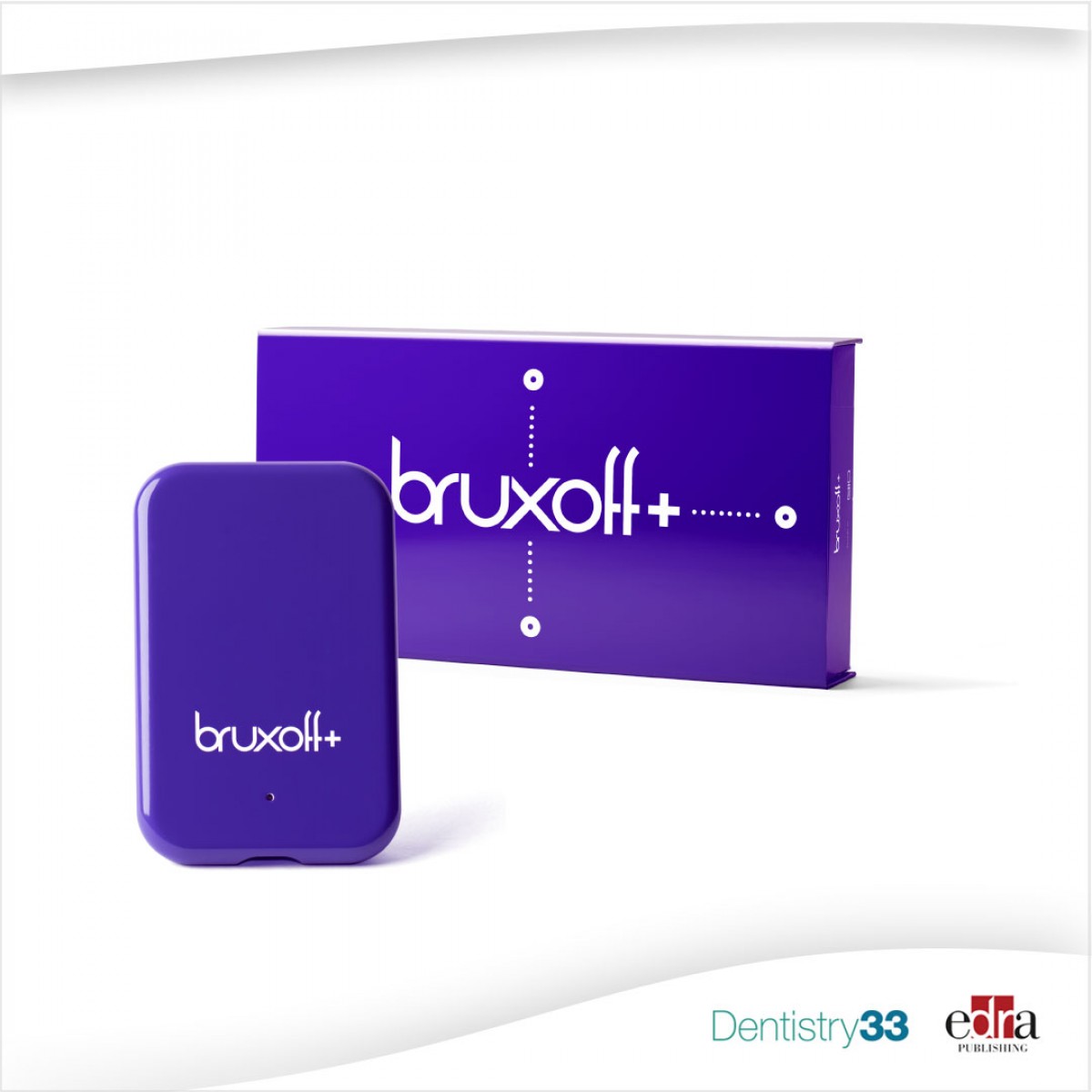
Bruxism can lead to various clinical problems such as wear of the teeth, their fracture, failure of conservative and prosthetic restorations, irritation of the tongue and cheeks, muscle hypertrophy and even orofacial pain.
The diagnosis of nocturnal or sleep bruxism (SB) is demanding and the current methods to arrive at it are not easily accessible for dentists. Hence the need to develop a reliable method capable of assessing SB in a simple and easily accessible way, with acceptable sensitivity and specificity.
Based on current knowledge, the gold standard for the diagnosis of SB is laboratory polysomnography (PSG), but it is costly, with limited availability and long waiting times for evaluation, all of which are limiting factors.
Therefore, alternative approaches have been developed for the purpose of diagnosing SB including self-report questionnaires, clinical examination of the masticatory muscles and portable devices.
Bruxoff is a portable SB assessment device that combines electromyography and heart rate assessment.
Materials and methods
In a study published in the April issue of the Journal of Oral Rehabilitation, the authors investigated the reliability and validity of the Bruxoff device for the diagnosis of nocturnal bruxism-SB in comparison with polysomnography (PSG). Forty-nine subjects underwent a full-night polysomnographic study with simultaneous recording using the Bruxoff device.
The rhythmic masticatory muscle activity index (RMMA) was evaluated according to the pre-established criteria. Pearson correlation, Bland-Altman results, and receiver operating characteristics (ROC) curve were used to quantify the agreement between the two methods.
Results
Analysis of receiver operating characteristics showed acceptable accuracy for Bruxoff with sensitivity of 83.3% and specificity of 72% when the cut-off was set at two events per hour.
Pearson's analysis showed a nearly significant correlation between PSG and Bruxoff by RMMA index (r = .282 p = .071) and by total SB episodes per night (r = .295 p = .058). Furthermore, the Bland-Altman plot revealed a consistent and systematic difference in event measurement between the two methods.
Conclusions
From the data of this study, researchers concluded that the Bruxoff device appears to be a promising diagnostic method for clinical use. The team also said additional studies should be conducted.
For more information, see "Diagnostic accuracy of a portable device (Bruxoff®) to measure sleep bruxism."
 Related articles
Orthodontics 08 November 2021
Interceptive orthodontic treatment with elastomeric appliances: literature review and case reports

Authors: C. Ricciardi, M.G. Cagetti, S. Cattaneo, Y. Qing Hu, L. Strohmenger
The aim of this study is to describe preformed elastomeric appliances, soft plastic orthodontic devices that are recommended for interceptive treatment and are frequently used in combination with...
McEnhill’s father was a dentist and she said that she spent part of her teenage years working at his dental practice. “I learned very quickly how to work with patients in an extremely busy...

Dr. Andrea Shepperson talked about her background in dentistry and her new book, “Managing Tooth Wear,” available for pre-order in April 2023.
Prosthodontics 01 October 2022
Pilot study: 24 months in vivo wear of enamel antagonists to lithium disilicate implant crowns

To evaluate whether there is a significant difference between the ratio of wear of lithium disilicate implant crowns and their enamel antagonists and adjacent enamel or enamel antagonist contacts.
Oral pathology 12 July 2021

Tooth wear / Tooth surface loss (TSL) is a normal yet irreversible physiological process that occurs throughout life. It is however, considered pathological when the degree of destruction of...
Read more

Jen Kim Field, chief sustainability officer at Henry Schein and president of the Henry Schein Cares Foundation, answers questions for Dentistry Today about the group’s achievements
News 12 October 2026
The education-first program offered learning for the entire dental practice, with practical insights spanning the full patient journey and focused on improving workflows, collabora
News 12 October 2026
AAO and Stand for the Silent Unite Communities This Month to Shine a Light on Bullying Prevention
Editorials 12 October 2026
Expanded coverage: Texas A&M’s Plemons named 2026 Texas Dentist of the Year

Sometimes a small act of generosity can make a tremendous impression, especially on a 7-year-old.
Endodontics 12 October 2026
This peer-reviewed endodontics article summarizes clinical evidence from Journal of dentistry (2026). It focuses on findings that may help dental professionals evaluate treatment decisions, patient...



Copyright © 2026 - All Rights Reserved
ISSN 2767-1178