


Do the markets dance?
Luigi Campopiano

In the markets in 2022, financial conditions have been tight around the world and things are now undergoing similar pressures to a continental drift along the lines of what we saw with Pangea, a super continent that existed up to 300 million years ago.
The Fed has announced a change in its monetary policy, the European Central Bank has aligned itself, and the People’s Bank of China lowered rates in the face of the slowdown in its economy. Meanwhile, the central banks of England and many emerging countries have already made several rate hikes.
These movements of the various "tectonic plates" in the world of finance — American, European and Asian — are generating instability. The flare-up of inflation, the increase in rates, the economic slowdown in China, the high levels reached by some markets and the explosion in the price of raw materials.
And 2022 immediately records the earthquakes resulting from this new situation. We are in a correction phase for the S&P 500 and the European stock exchanges, with a downward movement between 10-20%. On the NASDAQ, we are already in a bear market phase, with a downward movement of over 20%.
How long will this continental drift last? Volatility always destabilizes most savings despite all the good intentions made at the time of the investment. Volatility also arrives in the quieter bond market, with the German Bund returning to positive territory after about three years being underwater.
Since March 2009, the lowest peak reached by the markets after the Lehman crisis, this downward movement is ranked number 26, an average decline in the order of 7.6% and three peaks in 2011, 2018 and 2020 of 20% and more. Although the market has scared us several times, this has not prevented it from rising from 666 points on March 6, 2009, to 4,397 on January 21, 2022.
My advice may sound familiar: Do not let yourself be guided by fear but follow the investment plan drawn up at the beginning. Trust in the historical ability of the markets to reward long-term investment, the only bulwark against short-term volatility.
 Related articles
Editorials 15 September 2023

The first reaction during a period of high market volatility could be to panic. But it’s better to avoid that and to instead plan.
Editorials 26 May 2023

A financial professional's proven ability to build client confidence and help them stay invested can be considered invaluable, especially in these exceptionally challenging times.

Long live simplicity
In the life of someone who is trying to save money for the future, mistakes can be made. After all, we all make mistakes in life.
Editorials 30 December 2022

From the point of view of savings and investments, this means bringing added value through choices which appear illogical in terms of achieving what is shared. ...
Editorials 02 December 2022
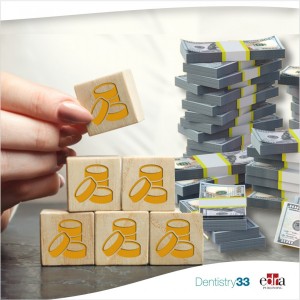
If we focus on portfolio choices, we should avoid reacting with fear to what could be short-term market factors.
Read more
Products 14 October 2026
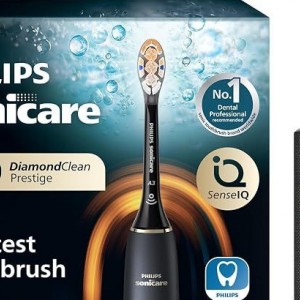
Royal Philips (NYSE: PHG, AEX: PHIA) announced that the Philips Sonicare Next-Generation DiamondClean 9900 Prestige, its most advanced and intelligent toothbrush to date, is now av

Key transaction by Heartland Dental and its supported practices expands opportunities for supported doctors, teams, and practices while strengthening Heartland Dental’s supported f
News 14 October 2026
Henry Schein Cares Celebrates 25 Years of Corporate Citizenship

Henry Schein Cares, Henry Schein, Inc.’s global corporate citizenship program, is celebrating a quarter century of bringing together Team Schein Members, customers, supplier partne
Editorials 14 October 2026
Scholarship at the CU Anschutz School of Dental Medicine reflects the collective contributions of our faculty, staff, residents and students.
Oral Hygiene & Prevention 14 October 2026
Propolis-containing formulations in caries prevention - a systematic review and meta-analysis.
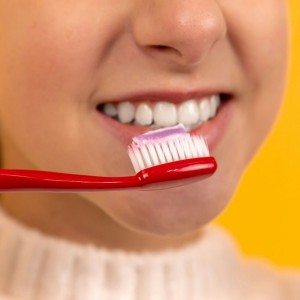
This peer-reviewed oral hygiene & prevention article summarizes clinical evidence from Clinical oral investigations (2026). It focuses on findings that may help dental professionals evaluate...



Copyright © 2026 - All Rights Reserved
ISSN 2767-1178