


Colorado-based startup aims to help treat bruxism
Mary Guiden

Statistics on bruxism are hard to uncover, since many people do not realize that they grind or clench their teeth at night. According to the Sleep Foundation, bruxism while sleeping is more common in children, adolescents and young adults than middle-aged and older adults.
Botulinum toxin, or Botox, is an effective treatment for nocturnal bruxism when injected into the masseter muscle, but there are currently no other treatment options. Sleeping with a mouthguard helps lessen the effects, but it does not eliminate waking up with a tight or sore jaw. The force from grinding or clenching can also cause teeth to move or be damaged.
Michael Duckwitz knows firsthand the pain caused by this type of clenching and grinding. A product development engineer based in Longmont, Colorado, Duckwitz said that he was talking with his wife one day about bruxism. He decided he wanted to make a device that could help people who suffer from the condition.
As he described on his website: “I wanted to sleep better, to be free of pain.”
Duckwitz is the CEO and founder of abrux, a startup that had a presence at the Greater New York Dental Meeting in November. The company’s presence at the convention was supported by Revere Partners, a firm that identifies opportunities for investors and provides capital for cutting-edge innovations in the oral and systemic health sectors.
The senior engineer, who currently works at Ball Aerospace & Technologies, has 15 years of experience developing products with companies including Medtronic and Honeywell.
“That experience has been so helpful, since I want to develop a product for the market,” he said.
Duckwitz is working with a design team and has an aim to create the world’s best bruxism treatment.
He launched abrux in 2021 and currently has a working prototype that detects biting and clenching and provides feedback to the wearer.
Similar to the way a watch or other device detects a heartbeat or pulse, the abrux device will measure movement of the temporalis muscle on the temples. This muscle can be seen and felt when a person is clenching their jaw.
The device uses electromyography to assess or record this movement, Duckwitz explained. If a person is clenching or grinding their teeth, the device will provide haptic feedback through a headband worn on the forehead.
“It’s sort of like when your phone is vibrating,” he said. “But it’s vibrating at a low level, so it doesn’t wake you up.”
Duckwitz said the amazing part of his invention is that — if all goes as planned — it will only take three minutes a day for three days for the brain to associate the vibration feedback with relaxing a person’s jaw.
“After that, when you feel the vibration in your sleep, you will relax your jaw,” he said. “And that’s the amazing part.”
Duckwitz is currently looking for investors to cover the costs of additional engineering work on the device. Once he has the needed capital, he and his team will develop the working prototype to a point where it can be introduced and sold in the market.
“I wear a nightguard myself, which I wouldn’t give up,” he said. “It’s great but I still wake up with the soreness. The biofeedback will allow us to train our minds to stop bruxing even at night without waking up. So, it will really provide actual pain relief.”
Learn more about the company at: https://www.abruxdevices.com/
 Related articles
Implantology 07 March 2024

The longevity of teeth, dental restorations and dental implants is influenced by a number of factors, those related to the materials used, technical factors and patient-related factors.

The inconclusiveness and scarcity of research focusing on the association between oral behavior and painful TMD accentuates the necessity for further studies in this specific area.

Almost 55% of adolescents have tooth sensitivity, bleeding gums, clenching or grinding of teeth and pain or difficulty opening or closing the mouth, according to the Sanitas Oral Health Study 2023.
Oral pathology 14 June 2023

Tooth wear is the loss of hard tooth tissue from the surface not due to caries, trauma or developmental disorders. There are various causes of wear including friction, erosion, abrasion and...
Prosthodontics 18 May 2023
Evaluating the reliability of a new portable device to diagnose nocturnal bruxism

Bruxoff is a portable sleep bruxism assessment device that combines electromyography and heart rate assessment. In this study, authors investigated the reliability and validity of the device...
Read more
Products 13 October 2026
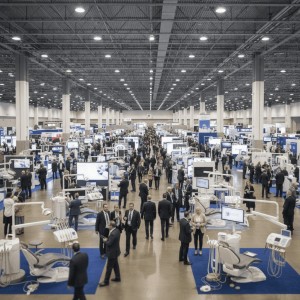

New Resources Help Dental Exhibitors Evaluate Their Investment and Explore the Personify ShowFlow™ Trade Show Success System
News 13 October 2026

New patient apps extend The Aspen Group’s mission to remove barriers to care, giving patients greater visibility, convenience, and control from booking through treatment
Editorials 13 October 2026

The forerunner of what’s now Texas A&M College of Dentistry opened 120 years ago in Dallas with the mission of educating dentists to provide quality care to patients in North Texas
Oral pathology 13 October 2026
This peer-reviewed oral pathology article summarizes clinical evidence from Oral oncology (2026). It focuses on findings that may help dental professionals evaluate treatment decisions, patient...



Copyright © 2026 - All Rights Reserved
ISSN 2767-1178