


Solutions: the paradigms of conservative dentistry
SOLUTIONS: Adhesive restoration techniques restorative and integrated surgical procedures. - the work of Marco Veneziani, whom we interviewed - examines all possible solutions to the many clinical problems inherent in adhesive restorations of the posteri

Adhesive techniques turn thirty: what have they changed in professional practice, and what are the elements highlighted in this text?
The evolution of adhesive aesthetic materials has significantly changed the restorative approach of the posterior sectors. Today, composites and modern enamel-dentinal adhesives are increasingly able to guarantee excellent long-term results if used correctly. The major advantages of adhesive restorations concern aesthetics, maximum preservation of healthy tissue, and the possibility of reinforcing the residual tooth structure. Although it is possible to perform extensive restorations with direct technique, the main problem of composite materials, polymerization shrinkage, has not yet been completely solved. Therefore, in large cavities with cusp covering with possible reduced or absent cervical enamel, aesthetic restorations cemented adhesively both in composite and in ceramic (lithium disilicate) are indicated.
Direct techniques are evolving: can you give us some ideas about the themes expressed in the book?
The part relating to direct adhesive restorative techniques is treated innovatively. Chapter 2 describes the glazing-dentinal adhesive systems, the materials, the specific tools for the operation, and the different systems of sectional matrices to constantly obtain effective contact points. ¬ be there. The different clinical solutions are instead extensively analyzed in Chapter 3, highlighting the possibility of using different procedures in different clinical situations: therefore, from preventive restorations to stratification techniques with 3-4-5 increments per cavity of I and II class of small-medium size up to the most extensive restorations with freehand or guided by silicone alignment techniques in several increments (Silicon index guided technique). Also described are techniques for pressing flo¬wable or paste composites (build-up and press tecni¬que) with a hint of using the most recent one-shade or bulk-fill materials. Protocols aimed at preserving pulp vitality are analyzed in cases of proximity or even exposure of the pulp itself.
The truly innovative part relates to the surgical-restorative procedures integrated in a single session for the treatment of lesions at subgenital margins for caries or external root resorption with the step-by-step description of all procedures, including the difficult phase intra- or post-operative field isolation that I have personally coded.
In the second volume, a large part is devoted to adhesively cemented restorations: are there new indications and a new cavity design?
Adhesively cemented restorations (RCA) are the first choice therapeutic option in large restorations attributable to large carious lesions / or coronal fractures with or without the involvement of the attachment complex, wear of the dental surfaces from mechanical abrasion canica (bruxism, nocturnal shutters), and/or loss of tissue due to chemical causes
The book revises - in the light of clear clinical evidence and the development of materials - the classic indications brought back from the literature of the mid-nineties (Geneva School 1994), defining what the current indications of adhesive cemented restorations ¬ synthesized in Class II large cavities with cusp coverage (of one or more cusps) are; restoration of large occlusal tables lost due to wear and/or bio-corrosion (erosion). The advantages that the RCAs allow are also defined: ideal anatomical modeling of the occlusal table with optimal management of the contact points and emergence profiles and verification of the occlusion in the joint; maximum reduction of polymerization shrinkage of the material; possibility of using traditional ceramic materials such as feldspar ceramic, but much more frequently glass-ceramic reinforced with lithium disilicate (die-cast or CAD / CAM) and a whole series of newer CAD / CAM polymers reinforced with ceramic.
A large part is dedicated to simultaneous restorative and periodontal therapy, one of its strong points.
In my opinion, although an interdisciplinary approach involving various professionals is unquestionably the current trend, a thorough knowledge of all conservative, endodontic, surgical, implant, and periodontal techniques allows us to evaluate the treatment plan ¬ment of the patient in an optimal way guaranteeing the solutions to the various problems with a multidisciplinary approach. The multi-disciplinary mono-professional approach allows you to combine different procedures (endodontic-reconstructive-surgical) in a "one-stage" mode with obvious advantages from an ergonomic point of view and optimization of operating times, but also and above all from a clinical point of view made possible minimally invasive adhesive solutions, not otherwise possible with a deferred approach divided between different operators. All this opens up new highly conservative therapeutic scenarios that allow you to change the boundary between conservative and prosthetic with a view to ever-greater preservation of residual healthy tissues, not only dental but also pulp and periodontal.
Who is this text for?
In my opinion, the text constitutes an extraordinary teaching tool that is useful and indispensable for both the student and the more experienced operator who wants to implement their knowledge. Thanks to its strictly clinical setting and the extensive bibliographic support, it allows a consultation that is also free from the systematic reading of the whole book (which, however, is highly recommended) as each case described is an opportunity to deepen a technique, an operative sequence, a solution to a clinical problem.
Finally, the text constitutes the ideal complement of integration to my theoretical-practical training and improvement courses that I hold at the course center in Vigolzone.
In conclusion, I would like to quote a passage from the Preface that I wrote and which in my opinion constitutes the essence of the book itself: "I would like to be able to think that this text constitutes the concrete testimony of my path, made up of choices, of study and of talent (the talent that each of us has as a dowry and that each of us is called to grow and nurture), the testimony of the need for change, for evolution in the right direction and with adequate means to obtain winning results, which can be the testimony of how the backbone of our professional activity grows in everyday life and, through the elaboration of experience, can give us stability in the decision-making process that inevi¬ tabularly we are called to face to find the right solutions to problems.
This book contains my clinic, manual skills, de ¬ diction, tenacity, passion, and competitive spirit. This book is me! ”.
Discover more at: https://www.edrapublishing.com/home/554/solutions-adhesive-restoration-techniques-and-integrated-surgical-procedures.html
 Related articles
Editorials 24 January 2024
The market grew by 30% in 2021 after the decline in 2020, and in 2022, it also grew significantly. If we add up the volume of these last three years, we practically recover the half million implants...

Dr. William Nudera, author of “NuEndo: rethinking endodontics,” by Edra Publishing spoke with Dentistry33 at the American Association of Endodontists 2023 annual meeting in Chicago. In the...
Digital Dentistry 13 April 2023 - 30 November -0001
In this interview, Giacamo Anselmo, director of sales and marketing for 3D Systems Corporation, discussed his role with the company and its impact on the dental ...
Digital Dentistry 12 April 2023 - 30 November -0001
Video: Gianfranco Berrutti, advisor, National Union of Italian Dental Industries (UNIDI)
Berrutti is currently an advisor to UNIDI and previously served as its president. He also has a leadership role with Major Prodotti Dentari, one of the...

Anderson is currently the solo practitioner in his dental practice. He has 12 people on his dental team, and they make the practice run, he said. The team...
Read more
Products 14 October 2026
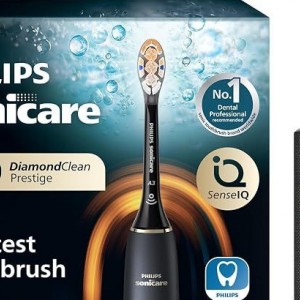
Royal Philips (NYSE: PHG, AEX: PHIA) announced that the Philips Sonicare Next-Generation DiamondClean 9900 Prestige, its most advanced and intelligent toothbrush to date, is now av

Key transaction by Heartland Dental and its supported practices expands opportunities for supported doctors, teams, and practices while strengthening Heartland Dental’s supported f
News 14 October 2026
Henry Schein Cares Celebrates 25 Years of Corporate Citizenship
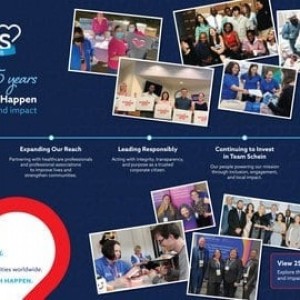
Henry Schein Cares, Henry Schein, Inc.’s global corporate citizenship program, is celebrating a quarter century of bringing together Team Schein Members, customers, supplier partne
Editorials 14 October 2026
Scholarship at the CU Anschutz School of Dental Medicine reflects the collective contributions of our faculty, staff, residents and students.
Oral Hygiene & Prevention 14 October 2026
Propolis-containing formulations in caries prevention - a systematic review and meta-analysis.
This peer-reviewed oral hygiene & prevention article summarizes clinical evidence from Clinical oral investigations (2026). It focuses on findings that may help dental professionals evaluate...


Copyright © 2026 - All Rights Reserved
ISSN 2767-1178