


Woman’s skull likely proof of ancient nose amputation, says College of Dentistry professor
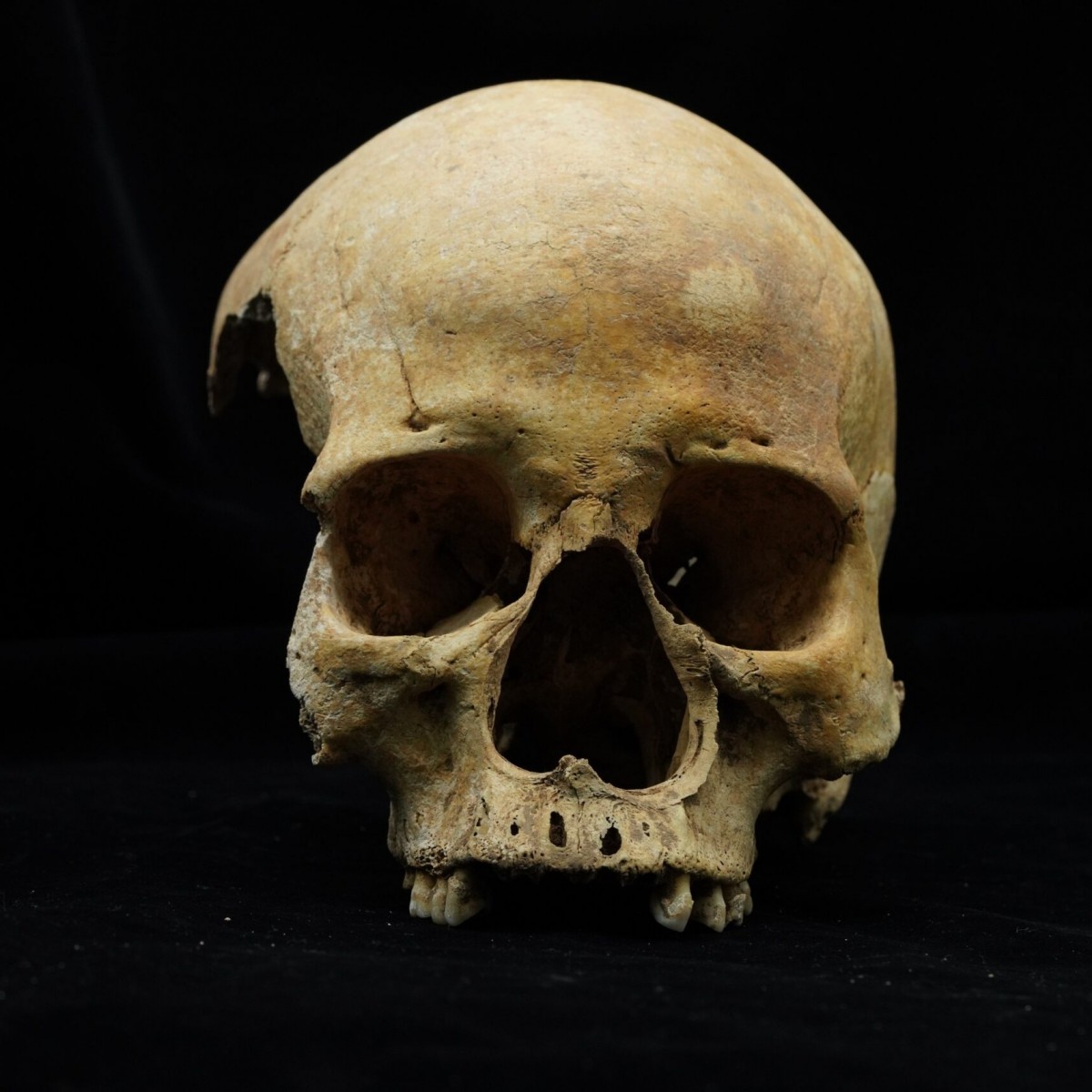
Qian Wang, professor in biomedical sciences at Texas A&M College of Dentistry in Dallas, identified what he and other researchers believe is likely one of the first examples of an ancient nose amputation.
Research highlights
Dr. Qian Wang, professor in biomedical sciences at Texas A&M College of Dentistry in Dallas, identified what he and other researchers believe is likely one of the first examples of an ancient nose amputation. It’s from the skull of a woman who lived in central China about 700 years ago.
Ancient legal texts describe nose and limb amputations as forms of criminal punishment, along with decapitation, facial inking/tattooing and castration, according to Wang.
The Yuan Dynasty , which ran from about 1271 to 1368, cut off the noses of those convicted of stealing horses, cattle or other high-value livestock or for repeat theft offenses of lesser livestock. It also was used as punishment for other serious crimes.
Why it matters
Texts document thousands of cases, but this is likely the only known physical evidence of nose amputation, said biological anthropologist Wang. He joined researchers from Sanmenxia Municipal Institute of Cultural Relics in China and nearby Zhengzhou University in their archeological investigation in July 2024 to examine bone pathology, tooth wear and other skeletal markers.
More about their findings will be released in the November issue of the Journal of Archaeological Science: Reports.
The woman, who may have survived into the early Ming Dynasty (1368-1644), was the only body buried face downward, indicating she received special treatment to cover her facial disfigurement. Wang said she likely lived a few years after the amputation, possibly wearing some kind of prosthesis.
“Body reduction was the principal form of penal punishment in ancient times,” Wang said. “The survival of amputees, whether they lost their noses, feet or legs, would suggest advanced care procedures to stop bleeding, prevent infection and reduce pain. Thus, this woman received a certain level of medical care and health management.”
Academic context
The woman was probably in her 40s when she died. Her skeleton was screened and assessed for diseases and trauma, and more skeletons will be screened in the future, Wang said. The original archaeological dig was in 2018.
“Hopefully there will be similar cases to be found in the future in a clearer archaeological context,” he said. “We believe this woman was a kind of castoff after death. She’s buried face-down, suggesting a discriminatory attitude toward her and her circumstances, and she’s buried alone in place without her family or community; in this regard, it could be a decision of disapproval.”
 Related articles

New details have emerged in the lawsuit filed against oral surgeon Kirk E. Scott, M.D., D.D.S., and Stonebriar Facial and Oral Surgery in Frisco
In the original suit, filed in April 2021, a Texas woman claimed the dental specialist left a metal drill bit inside her jaw, failed to tell her about it, and then minimized the incident when it was...
Products 27 September 2021
Interview with Lisa Ashby, CEO at Carestream Dental: Woman Leadership in Dentistry

Editorial Team
As CEO of Carestream Dental, Lisa Ashby leads the company in its mission to transform dentistry, simplify technology and change lives. Ashby first joined the company as president of the Dental...
News 21 September 2023

By Katharine Gammon, Ostrow School of Dentistry News
Congenital conditions can cause either premature or delayed fusion of the cranial bones — both of which can lead to serious developmental problems.
Products 22 November 2024
Productive Dentist Academy Unveils Cyber Monday Deal With Recession-Proof Strategies for Dentists

Productive Dentist Academy (PDA), the premier dental coaching, marketing, and business advisory company, announces a limited-time Cyber Monday special designed to empower dentists to grow while...
Products 28 June 2024
Golden Proportions Marketing Hosting a Free Webinar for Dentists: “Economy-Proof Marketing”

Golden Proportions Marketing is hosting a free webinar for dentists on July 25 at 7 PM (EST), titled “Economy Proof Marketing: Become a Marketing Master in a Down Economy.
Read more

Continuous innovation across the DEXIS ecosystem helps clinicians work with greater clarity, confidence, and efficiency
News 07 October 2026
Lightspun and SDB Partner to Speed Dental Provider Onboarding

Lightspun’s AI automation cuts provider onboarding from up to 12 weeks to under two weeks across SDB’s 300-provider, 25-state network
News 07 October 2026

Smile Train invites New York City to share moments of joy and raise awareness for people affected by cleft at Grand Central Terminal.
Oral surgery 07 October 2026
This peer-reviewed oral surgery article summarizes clinical evidence from International journal of oral and maxillofacial surgery (2026). It focuses on findings that may help dental professionals...
Products 06 October 2026



Copyright © 2026 - All Rights Reserved
ISSN 2767-1178