


PFE: a rare eruption disorder
Lara Figini
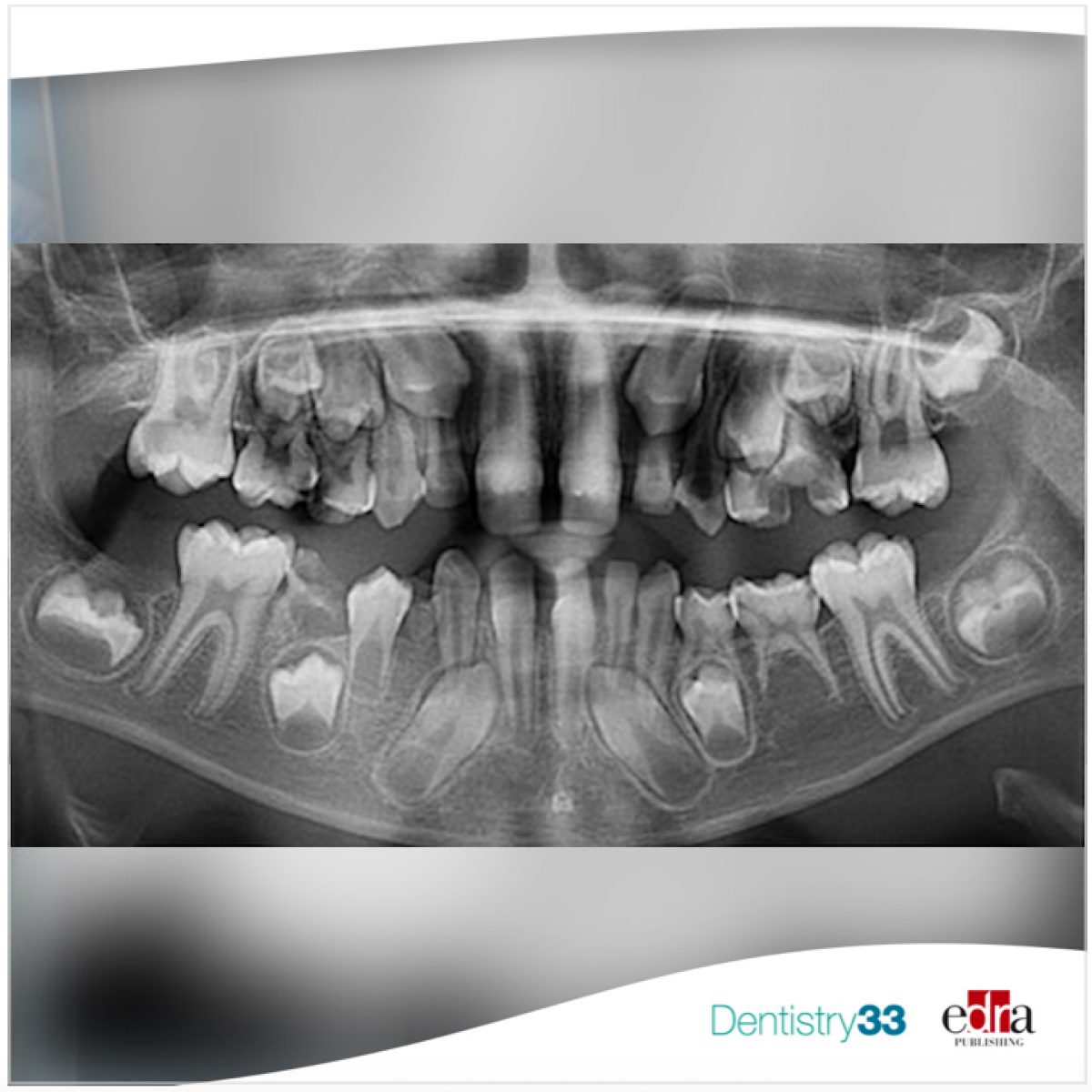
PFE is defined as incomplete tooth eruption despite the presence of a clear eruption pathway. The primary failure eruption (PFE) was first described by Proffit and Vig in 1981, in which nonankylosed teeth fail to erupt owing to malfunction of the eruption mechanism. Mostly posterior teeth are affected, leading to a posterior open bite. The tooth affected by PFE is likely to become ankylosed when orthodontic force is applied. The disease is commonly seen unilaterally but bilateral involvement has also been reported. The cause of PFE is still not clear, but genetic predisposition is often implicated.
Few studies has systematically analysed the clinical and genetic features of PFE and its associated factors.
Therefore, the aim of the study published in 2018 was to systematically evaluate the literature from 2006 to 2017.
Materials and Methods
A systematic search was performed using the PubMed/Medline database for studies reporting on PFE following the PRISMA guidelines. The reference lists of all relevant articles were also screened manually. The article types included were case reports, case series, observational studies, review articles, and retrospective studies.
Results
17 articles reporting on PFE were included. These articles contain case reports (n = 5), case series (n = 3), observational study (n = 5), and retrospective analysis (n = 4). Overall, 314 patients were studied. In all the reported cases, the molars were affected. In 38 cases (24.3%), the primary teeth were affected, while in 118 patients (75.7%), the deciduous teeth were not affected. In 39 cases, additional dental anomalies were described.
Conclusions
No studies reported PFE in teeth other than molars and premolars, indicating that PFE only affects these teeth.
As deciduous teeth were impacted by PFE in 38 patients, it can be said that PFE affects both dentitions. The dental anomaly most commonly reported in this study is alteration in the root morphology (n = 11), but the small number of reported cases indicates that additional dental anomalies are not significantly associate with PFE.
It is unclear whether only mutations in the PTH1R gene cause PFE because not all patients with PFE had the PTH1R mutation.
Infraocclusion of the posterior teeth of both sides, could help differentiate PFE from isolated ankylosis, which affects usually only one arch.
Generally, treatment depends on the patient’s age and the clinical situation. In young patients, direct or indirect composite build-ups could ensure occlusal stability and preserve alveolar bone level until an implant placement is possible.
In addition to the extraction of teeth affected by PFE, further surgical measure to correct the extreme posterior open bite may also be performed, however, few successful cases have been reported.
For additional information: Primary failure of eruption (PFE): a systematic review
 Related articles
Editorials 01 December 2025

Four Adams School of Dentistry students were recently selected for the ADEA Academic Dental Careers Fellowship Program.
Pediatric dentistry 29 April 2026
Exploration and innovative application of digital technology in pediatric dentistry
Pediatric dentistry treats patients aged 0-18 years, encompassing the characteristics of general dentistry.
Pediatric dentistry 14 April 2026
Comparison between dexmedetomidine and esketamine in pediatric dentistry surgery
Dexmedetomidine (D) and esketamine (K) are used for the sedation of pediatric dental surgery. This study was designed to compare the effect of intranasal D and K in producing moderate sedation for...
Existing studies on adverse events (AEs) in pediatric dentistry have been limited in scope.
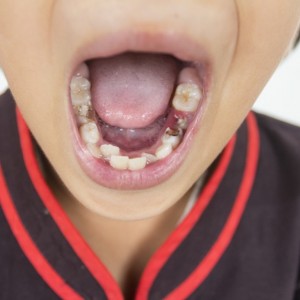
Read more
Europe 27 September 2026 - 30 November -0001
Digital Dentistry Society Global Congress 2026: Event Preview and Professional Highlights

The Digital Dentistry Society Global Congress 2026 will take place from October 22, 2026 to October 24, 2026 in TBD, Rotating Europe, offering dental professionals a focused environment for...
Editorials 27 September 2026
Dentistry33 survey highlights replacement care, deep caries and evolving restorative workflows
Reader survey finds direct composites remain dominant, secondary caries is the leading reason for restoration replacement, and clinicians want more training in pulp preservation
Reader survey finds direct composites remain dominant, secondary caries is the leading reason for restoration replacement, and clinicians want more training in pulp preservation
Edra Professional Books 26 September 2026
Manual of oral surgery: A Practical Reference for Dental Professionals
Manual of oral surgery is an Edra professional dentistry reference focused on clinical practice, education and treatment planning.
Products 25 September 2026
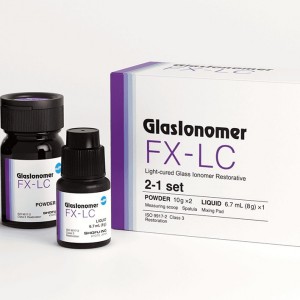
Shofu Dental’s line of dental restorative materials now includes FX-LC, a next-generation, light-cure, resin-reinforced glass ionomer formulated to deliver high strength, efficient 4
News 25 September 2026

The scholarships are part of an ongoing workforce solutions strategy to help address the need for skilled dental hygienists



Copyright © 2026 - All Rights Reserved
ISSN 2767-1178