


Oral microbial colonization on titanium and polyetheretherketone dental implant healing abutments: An in vitro and in vivo study
Statement of problem
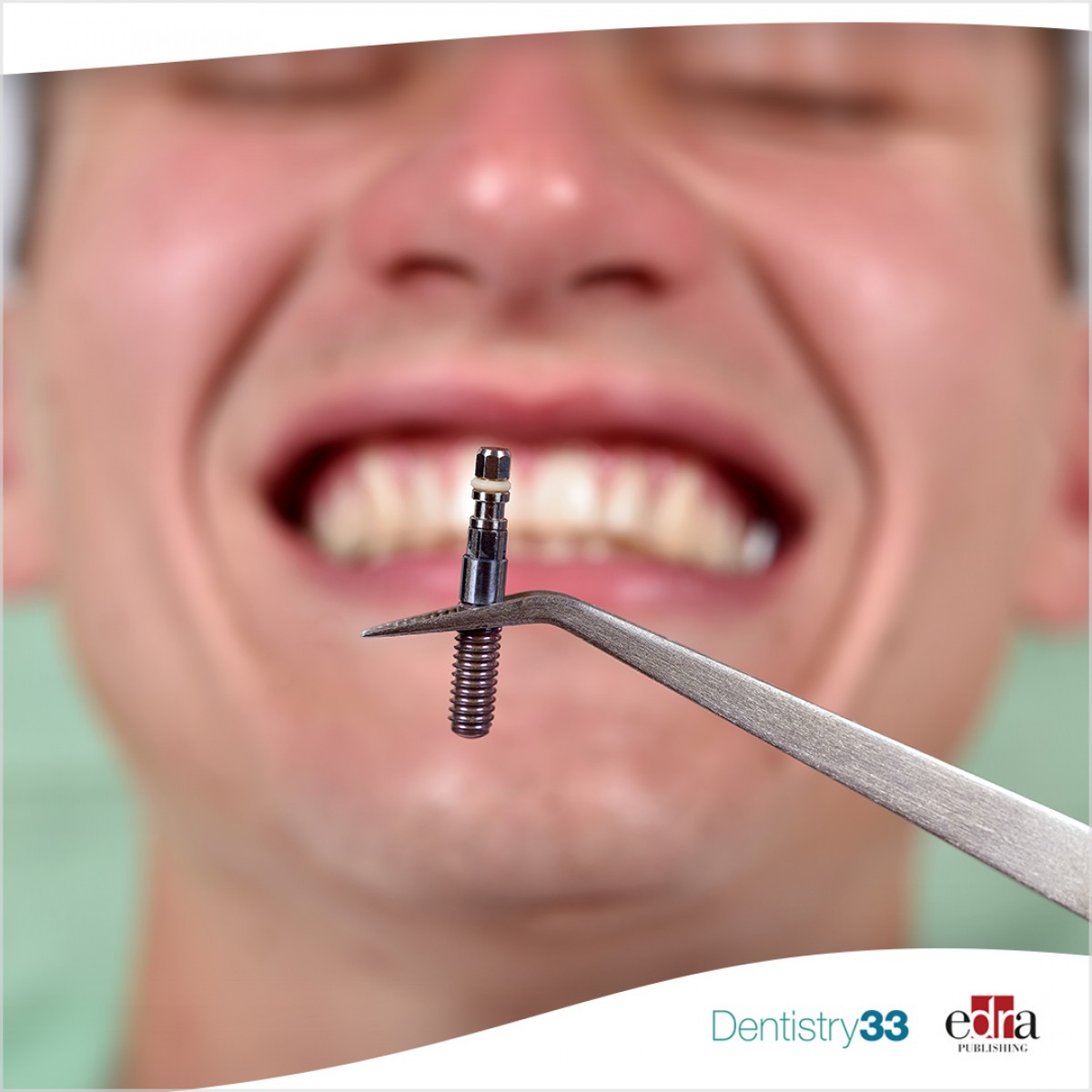
Although polyetheretherketone (PEEK) implant healing abutments have become popular because of their esthetic, mechanical, and chemical properties, studies analyzing oral polymicrobial adhesion to PEEK abutments are lacking.
Purpose
The purpose of this in vitro and in vivo study was to evaluate oral microbial adhesion and colonization on titanium (Ti) and PEEK healing abutments.
Material and methods
Ti (N=35) and PEEK substrates (N=35) were evaluated in vitro in terms of the initial adhesion (1 hour) or biofilm accumulation (48 hours) of Candida albicans and a polymicrobial inoculum using stimulated human saliva to mimic a diverse oral microbiome. Surface decontamination ability was evaluated after 24 hours of in vitro biofilm formation after exposure to an erbium-doped yttrium aluminum garnet (Er:YAG) laser. Conventional and flowable composite resin veneering on PEEK was also tested for microbial adhesion. In addition, an in vivo model with 3 healthy volunteers was conducted by using a palatal appliance containing the tested materials (3 or 4 specimens of each material per appliance) for 2 days to evaluate the effect of substrate on the microbial profile. Biofilms were evaluated by live cell counts and scanning electron microscopy images, and the microbial profile by Checkerboard deoxyribonucleic acid (DNA)-DNA hybridization. The t test and Mann-Whitney test were used to compare the groups (α=.05).
Results
PEEK and Ti materials showed similar fungal adhesion (P>.05). Although the PEEK surface limited the initial in vitro polymicrobial adhesion (approximately 2 times less) compared with Ti (P=.040), after 48 hours of biofilm accumulation, the microbial load was statistically similar (P=.209). Er:YAG laser decontamination was more effective on PEEK than on Ti surfaces, reducing approximately 11 times more microbial accumulation (P=.019). Both composite resins tested showed similar microbial adhesion (1 hour). In vivo, the PEEK material showed reduced levels of 6 bacterial species (P<.05), including the putative pathogen Treponema denticola.
Conclusions
Although PEEK and Ti had similar bacterial and fungus biofilm attachment and accumulation, PEEK promoted a host-compatible microbial profile with a significantly reduced T. denticola load.
Authors
Celeste Cecilia Urdaniga Hung, DDS, MSc - Raphael Cavalcante Costa, DDS, MSc - Gabriele Pereira, DDS - Victória Lopes Abdo, DDS, MSc - Mayara do Santos Noronha, DDS, MSc, PhD - Belén Retamal-Valdes, DDS, MSc, PhD - Martinna Bertolini, DDS, MSc, PhD - Magda Feres, DDS, MSc, PhD - Jamil Awad Shibli, DDS, MSc, PhD - Valentim A.R. Barão, DDS, MSc, PhD - João Gabriel Silva Souza, DDS, MSc, PhD
Source: www.thejpd.org
 Related articles
Implantology 12 March 2023
Early bird registration rates end March 15: 12th Annual Ceramic Implantology Congress

World class clinicians will conduct workshops on clinical skills and attendees will learn more about the implementation and business aspects of promoting ceramic implants in dental practices.
Implantology 14 October 2022

'Zirconia is a diva'
Dentistry33’s Paola Omini recently discussed the use of zirconia implants with Dr. Sammy Noumbissi, founder, and current president of the International Academy of Ceramic Implantology.
Implantology 10 October 2022

'Zirconia is a diva'
Dentistry33’s Paola Omini recently discussed the use of zirconia implants with Dr. Sammy Noumbissi, founder, and current president of the International Academy of Ceramic Implantology. This is the...
Implantology 07 October 2022

'Zirconia is a diva'
Dentistry33’s Paola Omini recently discussed the use of zirconia implants with Dr. Sammy Noumbissi, founder, and current president of the International Academy of Ceramic Implantology. This is the...
Implantology 22 April 2021
Zirconia Implants Vs. Titanium implants: radiographic and histometric crestal bone response

Titanium implants have been successfully used for the replacement of teeth for over 40 years, mechanical and biological stability and excellent long-term results make titanium the gold...
Read more

Jen Kim Field, chief sustainability officer at Henry Schein and president of the Henry Schein Cares Foundation, answers questions for Dentistry Today about the group’s achievements
News 12 October 2026
The education-first program offered learning for the entire dental practice, with practical insights spanning the full patient journey and focused on improving workflows, collabora
News 12 October 2026
AAO and Stand for the Silent Unite Communities This Month to Shine a Light on Bullying Prevention
Editorials 12 October 2026
Expanded coverage: Texas A&M’s Plemons named 2026 Texas Dentist of the Year

Sometimes a small act of generosity can make a tremendous impression, especially on a 7-year-old.
Endodontics 12 October 2026
This peer-reviewed endodontics article summarizes clinical evidence from Journal of dentistry (2026). It focuses on findings that may help dental professionals evaluate treatment decisions, patient...


Copyright © 2026 - All Rights Reserved
ISSN 2767-1178