


Which therapy is more effective for the treatment of fluorosis?
Simona Chirico

INTRODUCTION
Dental fluorosis is a chronic condition due to excessive ingestion of fluoride. This leads to a disturbed enamel formation characterized by hypomineralization of tooth enamel, seen as diffuse, symmetrical, discolored white opaque stains and striations. Enamel surface lesions, such as pitting, porosity, and brownish areas often occur in the more severe forms of fluorosis. These clinical signs depend on the amount of fluoride uptake, duration of fluoride exposure and stage of amelogenesis. A wide range of interventions have been proposed to treat fluorotic enamel, such as:
- microabrasion: based on the application of an etching gel (mostly HCl) followed by pumicing with slow rotation handpiece;
- external bleaching: based on the application of acids (mostly H2O2) that produces peroxide ions to penetrate enamel and dental tubules;
- enamel infiltration with low viscosity light-cured resins: to hide fluorotic stains, because of the resin’s similar to enamel refractive index.
Which of these is the best? A review published on the 2018 Journal of Esthetic and Restorative Dentistry compared all these treatments to give an answer.
MATERIALS AND METHODS
The authors searched from nine database only randomized clinical trials from 2016. Only six studies were included, with a total of 348 patients (40% male and 60% female) with a mean age of 17,7 years. They were divided into three groups and treated with bleaching, microabrasion or resin infiltration. All the groups were compared by calculating: mean differences (MD), relative risks (RR) and the corresponding 95% confidence intervals (CI).
RESULTS
Bleaching was adopted as a reference intervention, because it contributed with the largest number of trials.
Compared to no treatment, bleaching improved all colorimetric aspects, even if fewer bleached fluorotic areas tended to have discernable color differences from healthy enamel (RR = 0.68; 95% CI = 0.43-1.08).
In the comparison between microabrasion and bleaching, microabrasion resulted in smaller esthetic improvement compared to bleaching (MD: -2,9; 95% CI: -3,4 to -2,5).
In the comparison between resin infiltrations and bleaching, resin infiltrations had a greater esthetic improvement compared to bleaching (MD: 3,6; 95% CI: 2,7 to 4,6).
CONCLUSIONS
Based on current evidence, resin infiltrations seems to be the most effective treatment for dental fluorosis, followed by bleaching and microabrasion.
For additional informations:
Interventions for dental fluorosis: A systematic review
 Related articles
Restorative dentistry 17 April 2026
Patient Perceptions of New Robotic Technologies in Clinical Restorative Dentistry
Patient perception research has failed to focus on burgeoning technology within the dental field.
Prosthodontics 16 April 2026
The use of orthodontics before fixed prosthodontics in restorative dentistry
For a variety of reasons, orthodontic intervention is often overlooked as a viable modality to correct occlusal, axial, rotational, and space discrepancies before undertaking fixed prosthetic...
Digital Dentistry 16 February 2026
An original procedure for the ovoid pontic technique in ortho-restorative cases

In the multidisciplinary treatments, especially in case of missing teeth in aesthetic area, the compliance of patient during retention time post orthodontic therapy is evidently very high, even among...
Restorative dentistry 29 January 2026
Current trends in restorative dentistry in the UK: a Delphi approach
The purpose of the study was to obtain insight into current trends in restorative dentistry in the UK by means of a Delphi technique.
Read more
Restorative dentistry 17 April 2026
Patient Perceptions of New Robotic Technologies in Clinical Restorative Dentistry
Patient perception research has failed to focus on burgeoning technology within the dental field.
Editorials 17 April 2026
Some admissions experiences can make an applicant feel like a statistic being analyzed or, as first-year Florida dental student Nate Fordham put it, like a “mushroom”: kept in the dark and fed...
Products 17 April 2026
BioHorizons’ Tapered Pro Conical Named to 16th Annual Readers’ Choice Top 25 Implant Products
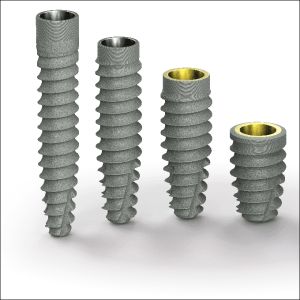
Streamline your workflow with BioHorizons. Tapered Pro Conical offers a single, color-coded prosthetic platform for all full-arch cases.
News 17 April 2026

Following AI Voice Perio, voice-driven charting expands to restorative exams, enabling single-provider clinical documentation in Denticon.
Cosmetic & Reconstructive Dentistry recently announced the creation of a new scholarship program supporting graduating seniors from Fairfield’s public high schools who plan to pursue studies in...



Copyright © 2026 - All Rights Reserved
ISSN 2767-1178