


Prosthetic stability: Which preparation is better between the parallel and the convergent one?
Massimo Gagliani
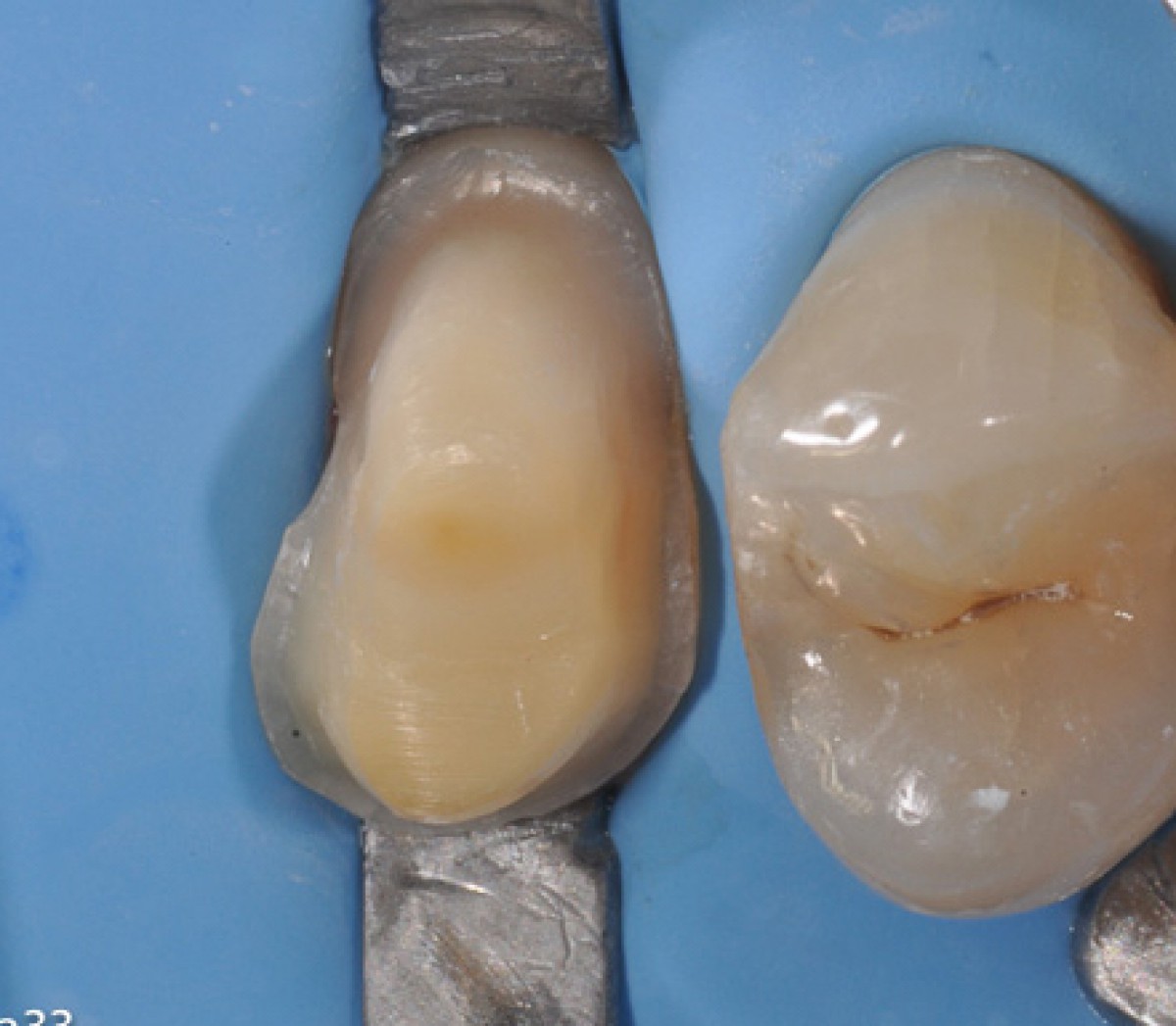
The types of prosthetic preparations in the anterior teeth have always raised more or less heated debates. Regardless of the line or end of preparation area, it has always seemed of great interest to consider the vestibular and palatal walls as determining the stability of the final prosthetic device. Safeguarding the palatal girdle has been considered by most as an element of resistance and stability that can not be disregarded for the future duration of the final restoration.
In this study published in the Journal of Prosthetic Dentistry, the authors examined two types of preparation: a group of incisors was prepared keeping the buccal and palatal walls parallel to each other, while a second group of analogous dental elements was prepared keeping the buccal and palatal walls converging, with an angle of about 20°. The preparations thus obtained were then coated with ceramic prosthetic products and these items were loaded with compressive and tensile forces, used to verify the retentive capacity obtainable with the two different types of preparation. The results, as regards the retentive force, were in favor of the group in which the preparation was carried out with the parallel walls while, on the contrary, the resistance to the compressive load was in favor of the group in which the preparations were carried out with converging walls.
CONCLUSIONS
The preparation has always determined different mechanical behaviors in prosthetic products, the evidence of this study highlights some aspects that, clinically, could be interesting. That is, to reserve types of preparation parallel to those cases in which the resistance to the occlusal load is not relevant while it is possible to envisage wall preparations converging to those patients in which the chewing forces could urge the anterior dental elements significantly.
For additional informations:
In vitro assessment of retention and resistance failure loads of two preparation designs for maxillary anterior teeth.
 Related articles
Digital Dentistry 25 July 2022
Digital approach to replicate aesthetic and functional parameters in complete implant rehabilitation

Authors: C. Monaco, N. Ragazzini, L. Card, E. Evangelisti
The introduction of digital technologies in implant-prosthetic dentistry has allowed an improvement in the predictability of clinical results, the reduction...
Prosthodontics 23 May 2021
The clinical success of three-unit fixed prosthetic restorations in zirconia with 14-year follow-up

Zirconia (ZrO2) is a high-strength polycrystalline ceramic and is considered a suitable material for single crowns (SC) and fixed multi-unit dental prostheses (FDP), as it tolerates higher occlusal...
Prosthodontics 29 September 2020
Fixed dental prostheses: which is the gold standard material?
Metal ceramic has always been the golden standard for implant‐supported reconstructions in the past and the most investigated material in literature,...
Prosthodontics 12 February 2020
Which is the best adhesive cementation protocol for glass ceramic restoration?

Dentists must regularly determine the best adhesive cementation protocol for glass-ceramic restorations on posterior teeth. A few in vivo follow-up...
Prosthodontics 23 October 2019
Rehabilitation of endodontically treated molars: is better to choose endocrown or crown with post?

The restoration of endodontically treated teeth is always a topic of crucial attention for dentists. If until a few years ago, the therapeutic choice of...
Read more
Restorative dentistry 17 April 2026
Patient Perceptions of New Robotic Technologies in Clinical Restorative Dentistry
Patient perception research has failed to focus on burgeoning technology within the dental field.
Editorials 17 April 2026
Some admissions experiences can make an applicant feel like a statistic being analyzed or, as first-year Florida dental student Nate Fordham put it, like a “mushroom”: kept in the dark and fed...
Products 17 April 2026
BioHorizons’ Tapered Pro Conical Named to 16th Annual Readers’ Choice Top 25 Implant Products
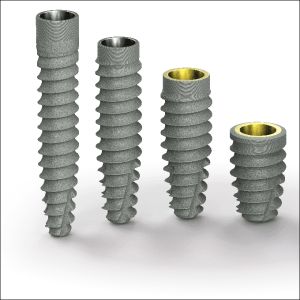
Streamline your workflow with BioHorizons. Tapered Pro Conical offers a single, color-coded prosthetic platform for all full-arch cases.
News 17 April 2026

Following AI Voice Perio, voice-driven charting expands to restorative exams, enabling single-provider clinical documentation in Denticon.
Cosmetic & Reconstructive Dentistry recently announced the creation of a new scholarship program supporting graduating seniors from Fairfield’s public high schools who plan to pursue studies in...



Copyright © 2026 - All Rights Reserved
ISSN 2767-1178