


Virtual reality to manage dental fears
Lara Figini
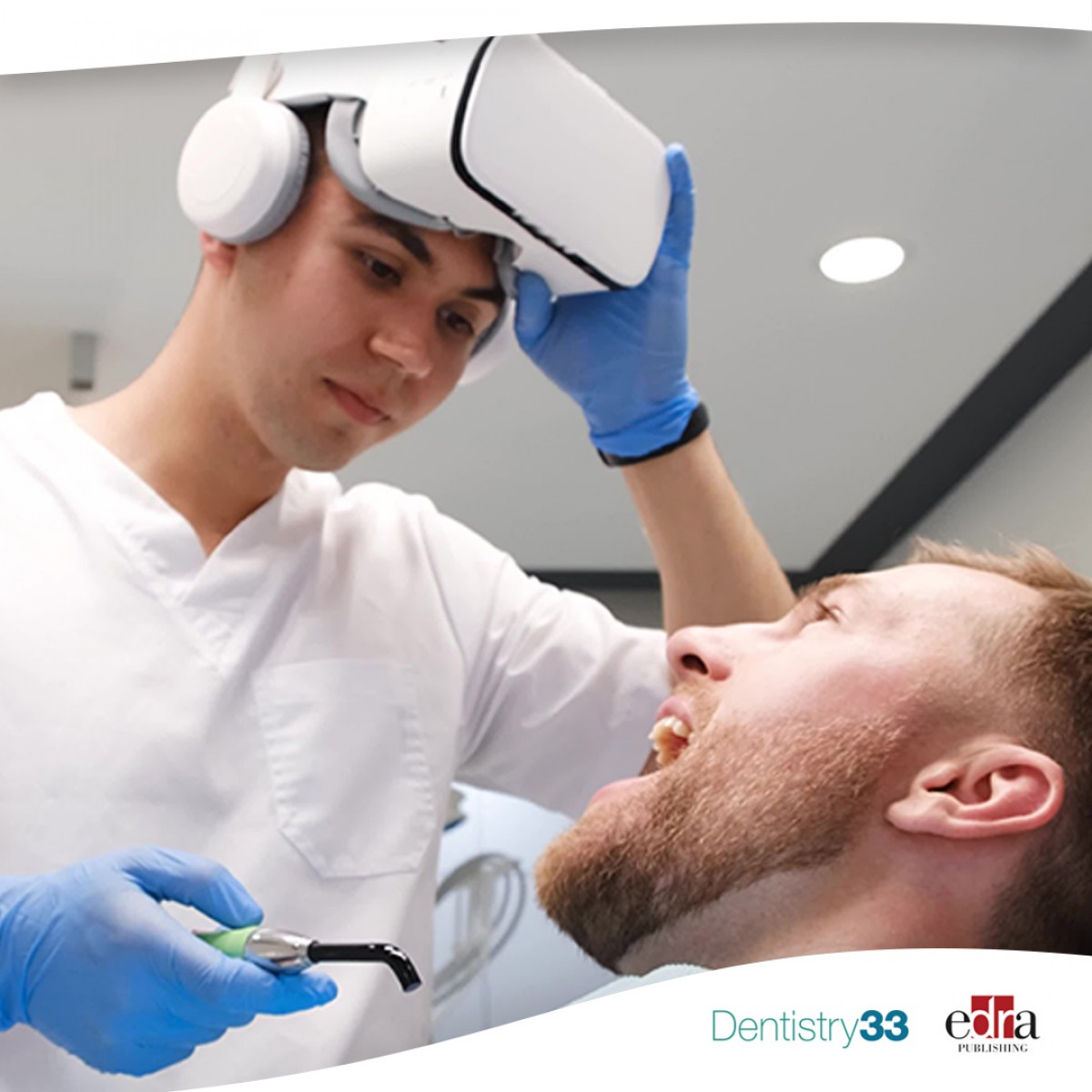
Fear of dental treatment is quite common. It is estimated that up to 75% of U.S. adults experience dental fear ranging from mild to severe. In the U.K., 15% of adults suffer from extreme dental fear. Scientific studies have shown that fear of and phobias for dental treatments result in reduced dental visits, poor oral health and reduced quality of life.
Dental fear makes people avoid dental care until they are confronted with an emergency requiring invasive treatment that further reinforces their fear of dental objects and situations. Recently, an innovative method – virtual reality exposure therapy (VRET) – has been used to treatment different phobia subtypes, including flight phobia, arachnophobia, height phobia and for dental treatments.
The results of five independent meta-analyzes show that VRET is considered an effective method to reduce anxieties and phobias.
Materials and methods
In a study published in the Journal of the California Dental Association in August 2019, a research team led by Dr. Kumar Raghav of Charles Sturt University applied the VRET method to manage severe anxiety or phobia on two adult patients. The VRET device consists of a computer with a user interface, a computer simulator and a head-mounted display (HMD) for the patient. The virtual simulator systematically exposes the patient to a virtual dental environment by displaying a 3D stereoscopic scene through the HMD worn by the patient.
The virtual dental environment consists of a simulated dental clinic with a dental chair, ceiling light, dental instruments and a virtual dentist. The VRET device exposes the patient to a gradual series of virtual scenarios:
- VR1 — Sitting in the dental chair and looking around the dental operatory surrounded with instruments and a virtual dentist on the right-hand side.
- VR2 — Virtual dentist moves with a dental mirror toward the patient to do an oral examination.
- VR3 — Virtual dentist carries a dental syringe toward the patient.
- VR4 — Virtual dentist carries a dental drill (with no sound).
- VR5 — Virtual dentist carries a dental drill (with sound) toward the patient.
Patients are encouraged to keep their mouths open during all scenarios and to focus on the stimuli that arouse their fear and to describe any strange sensations or feelings. They are asked to rate their level of distress on the Subjective Unit of Distress Score (SUDS) ranging from 0 to 10 where zero is “no discomfort” and 10 is “the worst distress experienced” during the session. The sessions are repeated several times cyclically or suspended depending on the reaction of the patient.
Results
This was the first worldwide study that tested the VRET method on patients suffering from phobia or severe anxiety for the dentist. VRET has shown noteworthy results in the reduction of anxiety towards dental treatments, resulting in behavioral changes in patients when planning their dental appointments and undergoing dental treatment.
In both cases the phobia also disappeared at the six-month follow-up.
Conclusions
From the data of this study, performing multiple sessions with the VRET method in an adult patient and a single VRET session in a pediatric patient allows the successful management of their dental phobia by drastically reducing it and allowing the dentist to complete the necessary dental treatments.
Clinical implications
The authors suggest that dentists carefully screen patients for their suitability to undergo this type of therapy, because not all patients — and not all dentists — are suitable candidates for the use of this type of method. It may also be necessary in more severe cases to evaluate the need for a collaboration with mental health professionals.
Dr. Kumar Raghav received the 2020 Giddon Award from the International Association of Dental Research for his research on virtual reality exposure therapy.
Kumar Raghav Gujjar, and Ad de Jongh. "Is Virtual Reality Exposure Therapy the Future Treatment for Anxious Dental Patients?" CDA Journal, 2019, Vol. 47, No. 8, pp. 513- 520.
 Related articles
Pediatric dentistry 09 October 2026
This peer-reviewed pediatric dentistry article summarizes clinical evidence from BMC oral health (2026). It focuses on findings that may help dental professionals evaluate treatment decisions,...
Pediatric dentistry 29 April 2026
Exploration and innovative application of digital technology in pediatric dentistry
Pediatric dentistry treats patients aged 0-18 years, encompassing the characteristics of general dentistry.
Pediatric dentistry 14 April 2026
Comparison between dexmedetomidine and esketamine in pediatric dentistry surgery
Dexmedetomidine (D) and esketamine (K) are used for the sedation of pediatric dental surgery. This study was designed to compare the effect of intranasal D and K in producing moderate sedation for...
Existing studies on adverse events (AEs) in pediatric dentistry have been limited in scope.
Read more

Jen Kim Field, chief sustainability officer at Henry Schein and president of the Henry Schein Cares Foundation, answers questions for Dentistry Today about the group’s achievements
News 12 October 2026

The education-first program offered learning for the entire dental practice, with practical insights spanning the full patient journey and focused on improving workflows, collabora
News 12 October 2026

AAO and Stand for the Silent Unite Communities This Month to Shine a Light on Bullying Prevention
Editorials 12 October 2026
Expanded coverage: Texas A&M’s Plemons named 2026 Texas Dentist of the Year

Sometimes a small act of generosity can make a tremendous impression, especially on a 7-year-old.
Endodontics 12 October 2026
This peer-reviewed endodontics article summarizes clinical evidence from Journal of dentistry (2026). It focuses on findings that may help dental professionals evaluate treatment decisions, patient...



Copyright © 2026 - All Rights Reserved
ISSN 2767-1178