


Immediate implants after extractions for dental trauma in the aesthetic sectors
Lara Figini
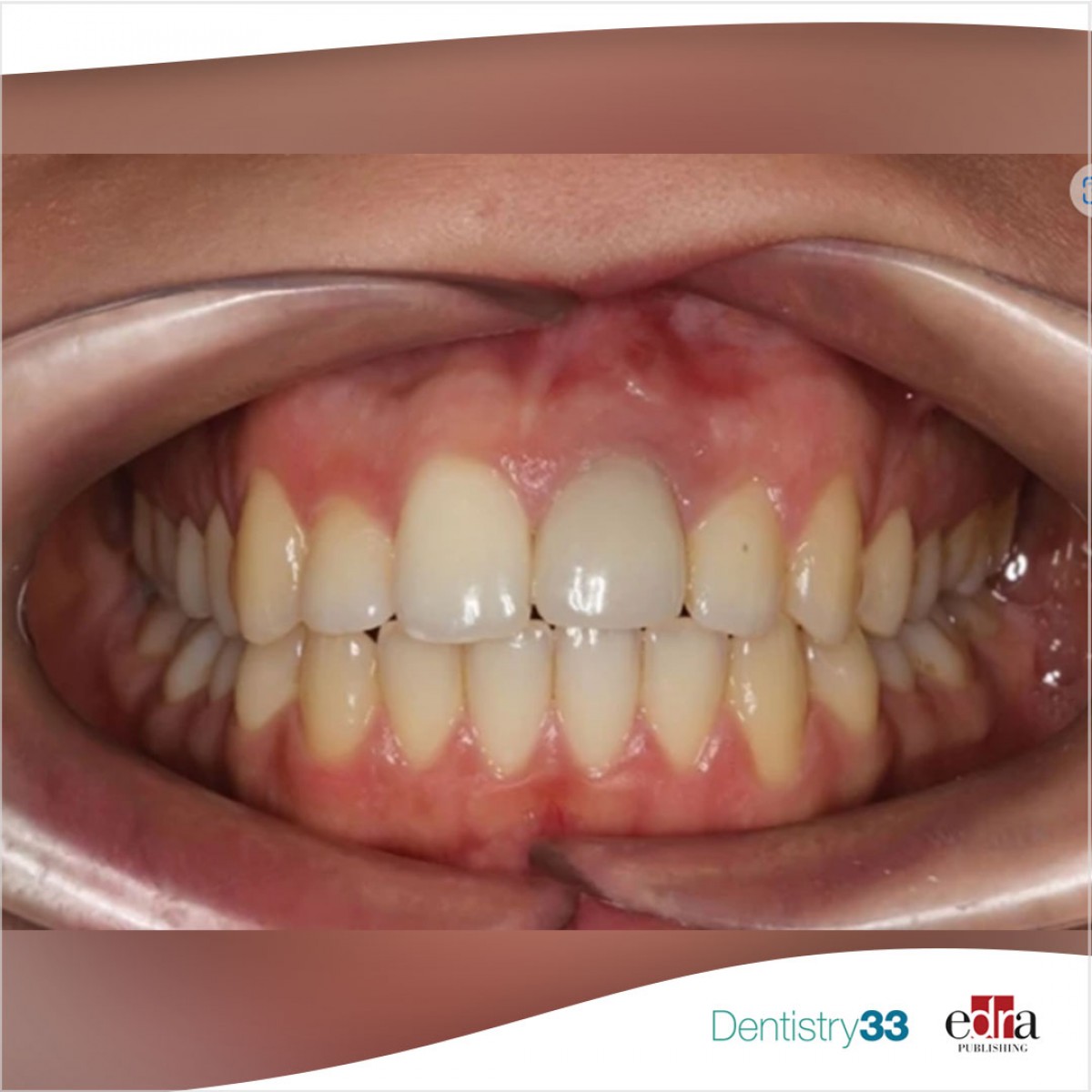
After extractions for dental trauma, the labial wall undergoes the highest degree of resorption and the nature of the impact itself can cause further trauma to the alveolar bone and soft tissue, resulting in non-negligible horizontal and vertical bone atrophy.
Therefore, prior to implant placement, it may be indicated to perform soft tissue augmentation or a thickening treatment to compensate for the marked bone resorption and scar tissue that may develop following dental trauma injury.
Immediate placement of the implant in the extraction sites can provide advantages, the main ones being the least number of surgical interventions to be undertaken, a reduction in the overall treatment time and better maintenance of the soft tissues.
Although in theory, immediate placement could prevent oral hard tissue resorption that can follow tooth extraction, literature studies have demonstrated that changes in alveolar ridge morphology can still occur despite these placement protocols.
Materials and methods
In a retrospective study, published in the British Dental Journal in February 2023, the authors evaluated the clinical outcomes of implants immediately placed at extraction sites in the anterior maxilla following dental trauma.
Researchers included 60 patients, all at least 19 years of age, healthy and free from oral and periodontal disease, in the study.
Following a delayed loading protocol, clinicians restored the implants with definitive single crowns or bridges.
The immediate implants were left to heal for four months. After that time, clinicians checked their stability with a probe and light digital pressure, without local anesthesia, to see if the patient had kept the gingival tissues clean and healthy and without inflammation.
If there was gingival overgrowth that had gone to cover the healing abutment, this was removed under local anesthesia before taking the impression for the prosthetic device.
During the follow-up, implant and prosthetic survival, the dental team recorded complications and periodontal health.
Results
Seventy implants were placed in the anterior maxilla. Three failures were reported, with a survival rate of 95.7% over a three-year follow-up period. No additional bone graft was undertaken, and the prosthetic survival recorded was 100%, with favorable periodontal outcomes achieved overall.
Conclusions
From the data of this study, researchers concluded that implants placed immediately in the extraction sites after a dental trauma constitute a predictable treatment strategy, presenting high survival rates of the implant at three years of follow-up.
Hirani, M., Moshtofar, Z., Devine, M. et al. "Survival of immediate implants replacing traumatised teeth in the anterior maxilla." Br Dent J (2023). https://doi.org/10.1038/s41415-023-5504-7.
 Related articles
Endodontics 26 September 2023

In a growing child, preservation of traumatized immature permanent upper incisors is challenging. This study aimed to evaluate the long-term outcome of endodontically treated traumatized immature...
Endodontics 10 September 2023
Regenerated treated incisors subjected to orthodontic movement

With an increasing number of anterior traumatized teeth treated with regenerative endodontic procedures nowadays, orthodontic movement of such teeth is expected to become a common scenario in...
Restorative dentistry 05 May 2020
Fragment reattachment on 2.1 and direct composite reconstruction on 1.1: a clinical case

A 22-year-old female patient came to my attention after trauma involving the elements of the upper frontal sector. The patient reported having stored in water...
Pediatric dentistry 08 April 2025
Oral rehabilitation in pediatric dentistry: a clinical case report

Despite the emphasis and effort devoted to preventive dentistry, massive coronal destruction caused by dental caries or trauma is still seen in pediatric dentistry practice today.
Editorials 15 May 2024
Mouthguards Protect Your Mouth—and Potentially Your Brain—from Sports-Related Injuries

Matthew Mauck, DDS ’11, says it’s funny that he’s a dentist. Back when he played professional football, he thought wearing a mouthguard was annoying. Now the former NFL and MLB player spends...
Read more
Products 22 October 2026
News 22 October 2026

Royal Philips (NYSE: PHG, AEX: PHIA), a global leader in oral healthcare, today announced the formation of the Philips Sonicare Global Clinical Advisory Board, a group of external
News 22 October 2026
Opalescence Launches Limited-Edition Teeth Whitening Flavors

Opalescence whitening , the #1-selling professional teeth whitening brand, is introducing two limited-edition flavors, available only while supplies last: Pumpkin Spice and Birthda
Editorials 22 October 2026
2025 in Review: Highlights from the CU Anschutz School of Dental Medicine
From collaborative research to exceptional patient care and education , 2025 was a year of innovation and impact at the University of Colorado Anschutz School of Dental Medicine.
Implantology 22 October 2026
This peer-reviewed implantology article summarizes clinical evidence from Clinical oral implants research (2026). It focuses on findings that may help dental professionals evaluate treatment...


Copyright © 2026 - All Rights Reserved
ISSN 2767-1178