


Total implant prosthetic rehabilitation in guided surgery with immediate loading in patient with periodontal disease
Authors: F. Zingari F. Gallo S. Ghezzi E. Carozzi
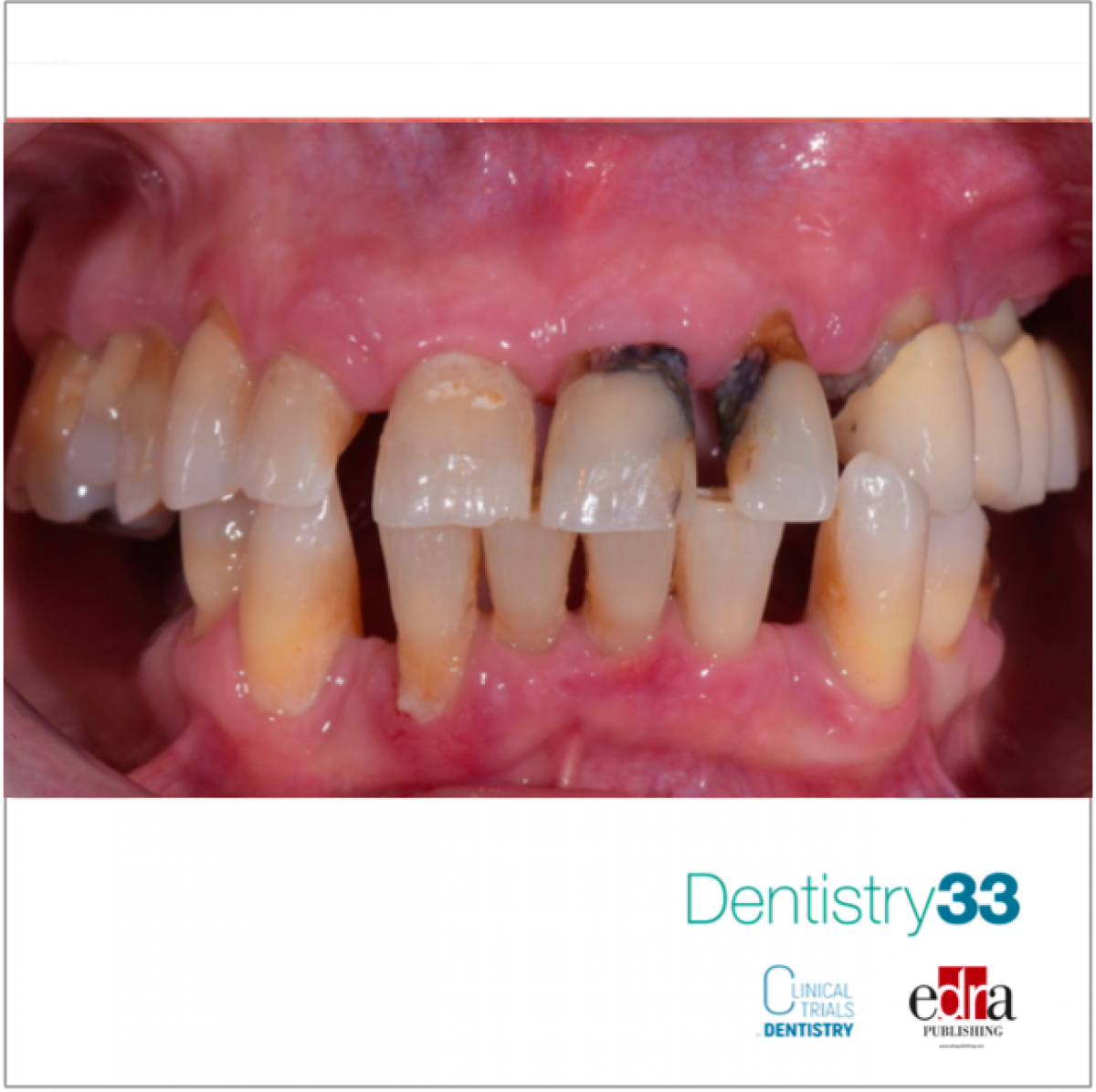
A 50-year-old female patient, with no notable systemic pathologies, came to our attention reporting serious aesthetic and functional problems.
Oral and radiographic examination showed severe periodontal disease involving all the teeth. All pre-sent teeth presented grade 3 mobility. An incongruous bridge from 23 to 27 was reported. Moreover, a severe bone atrophy in the upper left hemiarch and edentulousness of both lower posterior sectors with consequent loss of vertical dimension were observed.
TREATMENT PLAN
The established treatment plan provides, first of all, for the restoration of a correct vertical dimen-sion, and then for an implant-prosthetic rehabilitation of both arches in immediate load.
The entire implant-prosthetic project is carried out with a completely digital workflow.
PRE-SURGICAL PHASE
The treatment project begins with taking impressions with an intraoral scanner. Based on the digital impression, the dental technician makes a temporary restoration for the upper jaw. This provisional prosthesis, which is anchored to some of the less compromised dental elements, allows the restora-tion of the correct vertical dimension of the patient, before proceeding to the surgical and prosthetic phase.
During this initial phase, photos are taken, one with a forced smile and one with a mouth opener of the occluded arches. Afterwards, these data are entered into DSD (Digital Smile Design), an aesthetic pre-visualisation software, which allows to create and show to the patient a simulation of the possible new smile.
At this point, once the temporary prosthesis got functionalised, the patient's joint movements are recorded with Prosystom, a digital axiograph.
These records collect the condylar movements of right, left laterality, opening and closing detected individually and in complete masticatory pattern. From this examination it is possible to obtain data that are essential for the technician to design the future prosthetic rehabilitation, respecting the ver-tical dimension and the joint movements of the patient.
SURGICAL PHASE
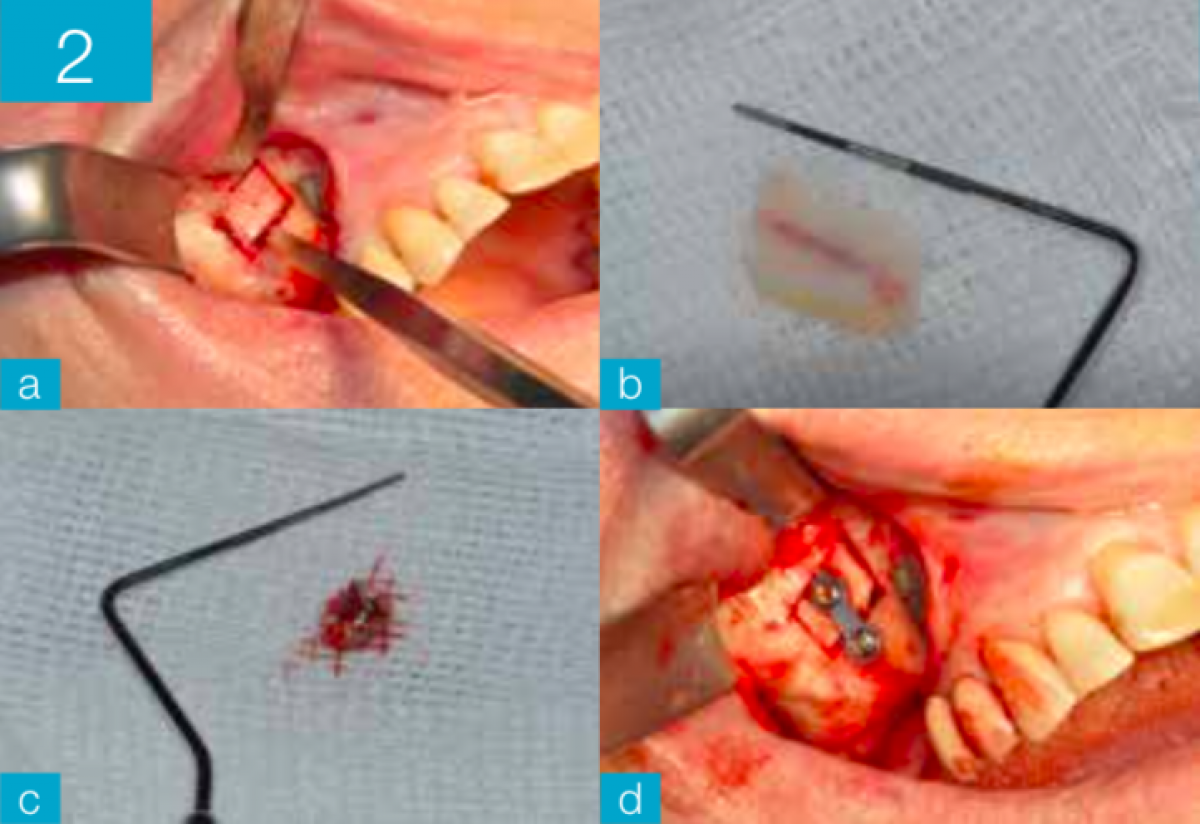
The first surgical phase that the patient undergoes is the extraction of the elements 23, 25 and 27. A block bone graft was procured from the mandibular branch and fixed with 2 screws. Simultaneously the large sinus lift was carried out to compensate for the severe atrophy.
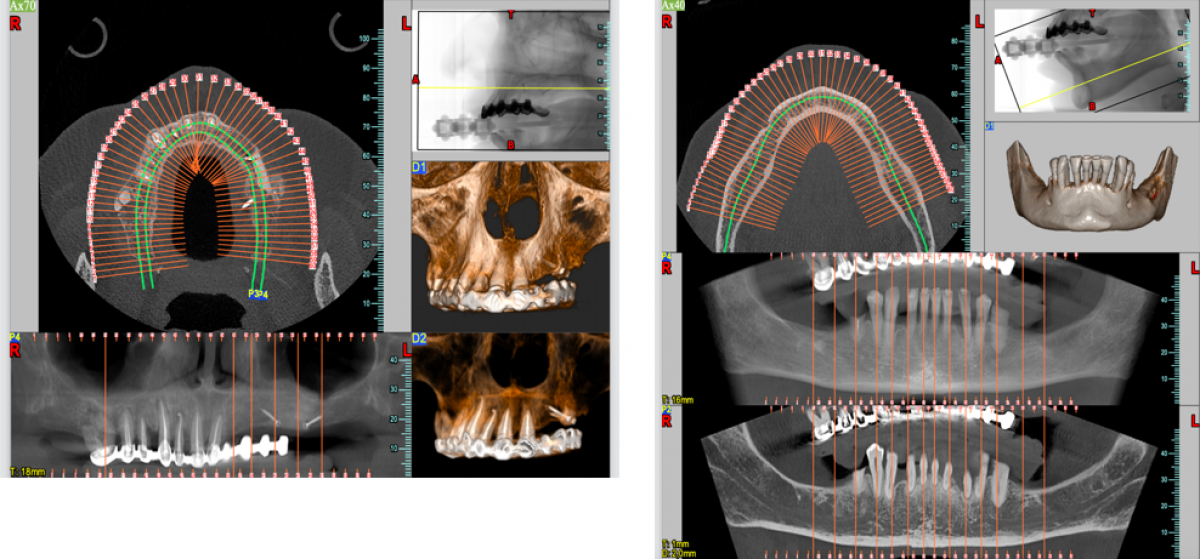
Subsequently, the patient underwent a CBCT with stent, an extraoral geometry that allows the rea-lignment of the files during the design.
At this point the files of the intra-oral scan, the axiography and the CBCT are paired and allow to make a digital diagnostic wax-up with individual values and to decide the best implant position according to the quantity and quality of bone and prosthetic design. The result is an implant-prosthetic project in-volving the placement of 8 post-extractive implants in guided surgery with subsequent immediate loading in both the upper and lower arch
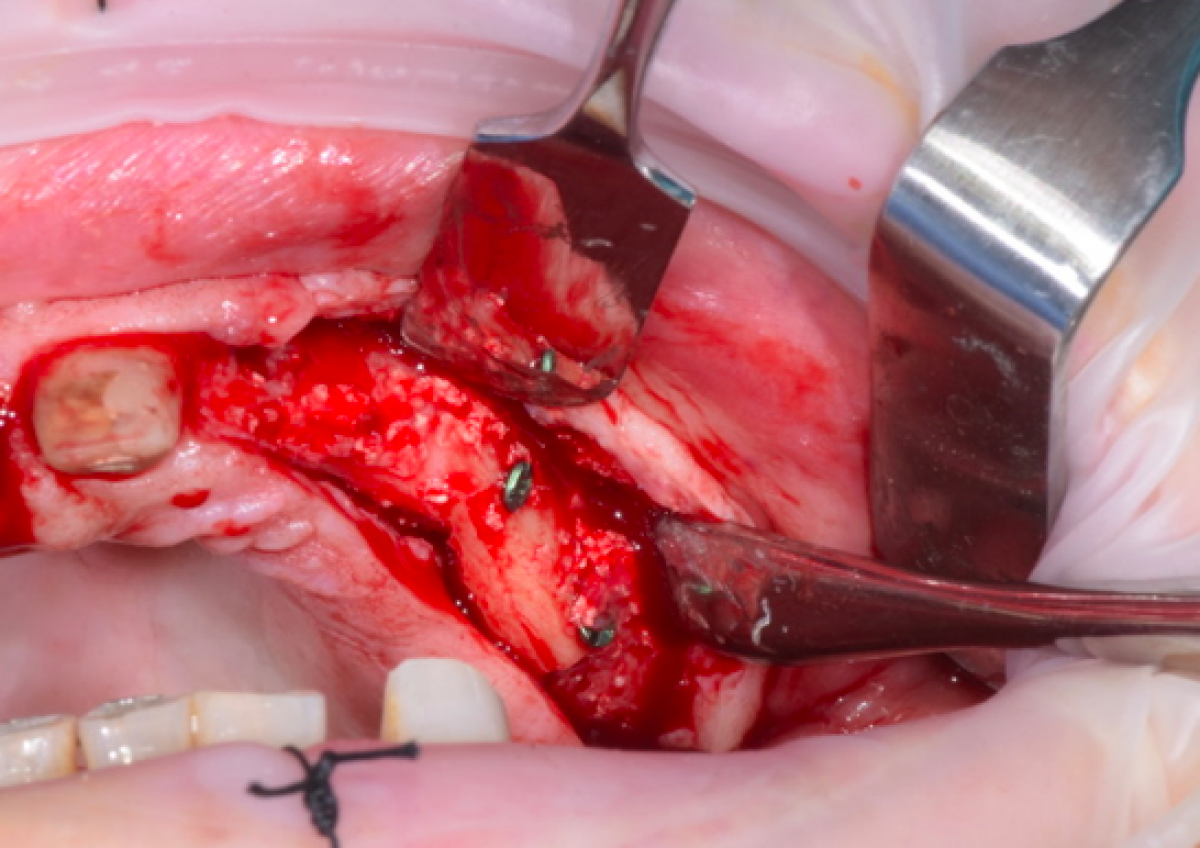
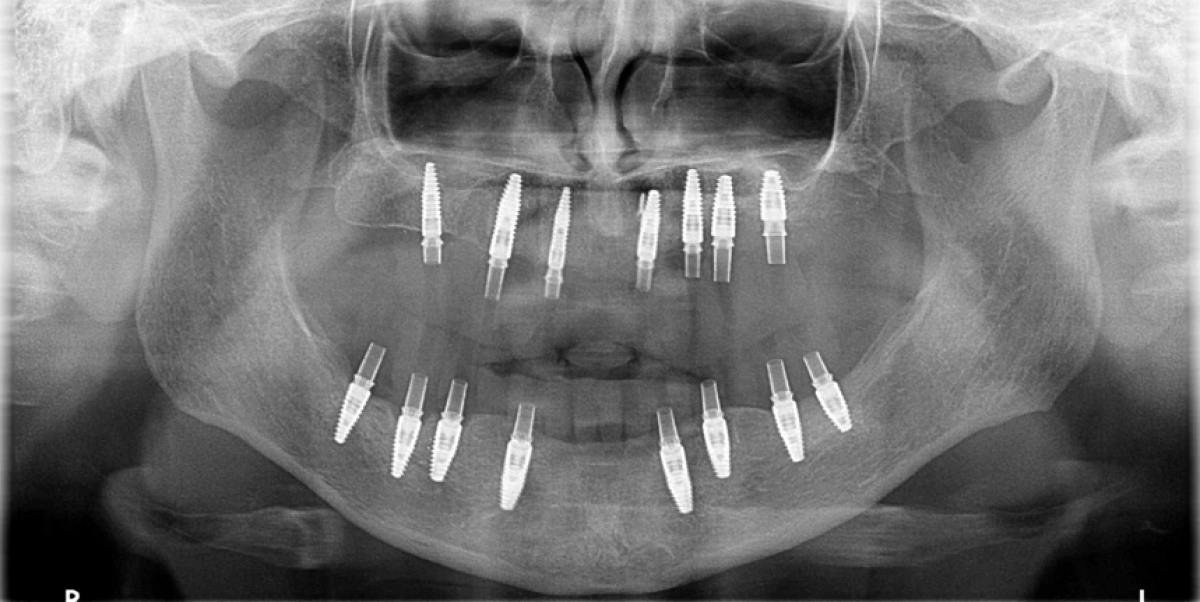
The patient is now ready to face the second surgical phase. First of all the dental elements 16, 15, 14, 13, 12, 11, 21 in the upper arch and 35, 34, 33, 32, 31, 41, 42, 43, 44, 45, in the lower arch were extracted. Once the extractions have been carried out, the surgical templates can be positioned in the oral cavity. Once the fit has been checked, the template can be fixed to the bone with position pins.

The following steps involve a succession of burs that reach the predetermined working length, ream-ing the neoalveolus and defining its diameter. The sequence of drills that is used must be methodical-ly respected in order to achieve a predictable result.
Guided surgery, to be defined as such, requires all steps to be driven by guided holes in which the drills can be uniquely positioned in a three-dimensional sense with a working length stop, and also requires the implant to be inserted through the same bushings without removing the template.
PROSTHETIC PHASE
Thanks to the implant-prosthetic design carried out in the pre-surgical phase, it is possible to place the implant-retained temporary restorations within 48 hours after surgery, regaining a correct occlu-sion, vertical dimension and satisfactory aesthetics in a brief amount of time.
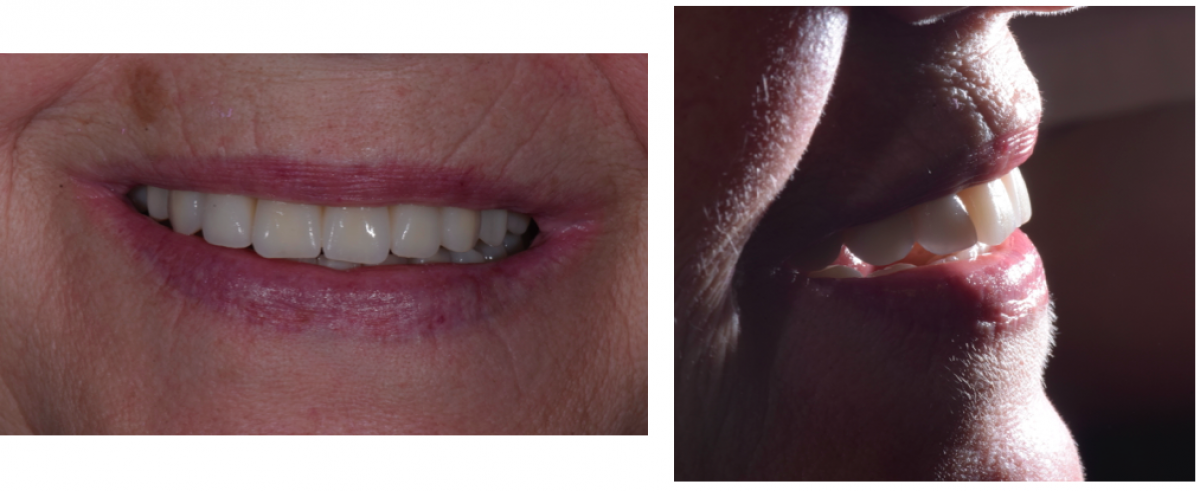
The patient wears the temporary prosthesis approximately 6 months. Once this time has passed, which is necessary for the osseointegration of the implants and the complete healing of the soft tis-sues, the following step is the finalisation of the prosthetic rehabilitation. The first operation involves taking new impressions with an intraoral scanner, which will provide the dental technician the exact position of the implants and above all the actual condition of the soft tissue. Thanks to this new in-formation, the laboratory is able to create two prototypes, upper and lower, in PMMA which are tried in the oral cavity and allow the final aesthetic evaluations and modifications to be made.

Still, with the prototypes in position, the patient is subjected to electromyography, which allows the last assessments to be made regarding the restored vertical dimension. When this test is completely satisfying, it is possible to move on to the fabrication of the zirconia and ceramic prosthetic compo-nents. The last ones require several aesthetic tests before being definitively positioned in the oral cavity and so screwed in at 35 Ncm

 Tag
Tag
Related articles

The aim of the present study was to conduct a critical literature review about the technique of computer-guided surgery in implantology to highlight the indications, purposes, immediate loading of...
News 22 September 2023

The new software aims to streamline the guided surgery workflow and provide dentists with a comprehensive guided surgery solution.
USA 09 June 2023 - 11 June 2023
Freehand vs. guided: from start to finish - 2023 AAID Central District Meeting

The program will cover the many challenges with free-hand and guided surgery in patients with inadequate bone.
Prosthodontics 23 March 2023
Video: Dr. Nick Fahey, author of “Guided Surgery: Making Implant Placement Simpler”

Dentistry is a hard and rewarding career, Fahey added. “With technology and the things available to us, it’s an incredibly interesting career option,” he said.
Implantology 23 March 2023
Dr. Yaste's new book, “Pragmatic AOX,” highlights the use of a stackable surgical guide systems to perform full-arch implantology and rehabilitation.
Read more
Products 14 October 2026

Royal Philips (NYSE: PHG, AEX: PHIA) announced that the Philips Sonicare Next-Generation DiamondClean 9900 Prestige, its most advanced and intelligent toothbrush to date, is now av

Key transaction by Heartland Dental and its supported practices expands opportunities for supported doctors, teams, and practices while strengthening Heartland Dental’s supported f
News 14 October 2026
Henry Schein Cares Celebrates 25 Years of Corporate Citizenship
Henry Schein Cares, Henry Schein, Inc.’s global corporate citizenship program, is celebrating a quarter century of bringing together Team Schein Members, customers, supplier partne
Editorials 14 October 2026
Scholarship at the CU Anschutz School of Dental Medicine reflects the collective contributions of our faculty, staff, residents and students.
Oral Hygiene & Prevention 14 October 2026
Propolis-containing formulations in caries prevention - a systematic review and meta-analysis.
This peer-reviewed oral hygiene & prevention article summarizes clinical evidence from Clinical oral investigations (2026). It focuses on findings that may help dental professionals evaluate...



Copyright © 2026 - All Rights Reserved
ISSN 2767-1178