


The vertical dimension in occlusal rehabilitation
An interview with Dr. Nazzareno Bassetti

After the positive welcome of the Italian edition and the translations into Portuguese, Spanish, Chinese and Korean, Edra now publishes The vertical dimension in prosthesis and orthognathodontics, the English version of the book by Dr. Nazzareno Bassetti.
The vertical dimension is crucial for the correct reconstruction of occlusion and therefore for the rehabilitation of the entire stomatognathic system. The author's objective in writing the book was to chart out a path for managing the vertical dimension in which optimal functional restoration coincides with the aesthetic result. We explored the contents of the book with Nazzareno Bassetti who specialises in complex rehabilitation from a dysfunctional point of view and works as a freelance professional in Ascoli Piceno.
Dr Bassetti, is the success of the various editions of your book a sign of renewed interest by your colleagues in gnathology?
I very much hope so. My aim was precisely to create a simple and practical text that could be a useful tool for interpreting gnathology in a new and modern way and, precisely for this reason, capable of making this discipline, which is generally seen as difficult and complicated, more accessible to colleagues who wish to approach function, occlusion, and complex rehabilitation. The guidelines and protocols presented are based on what is known as the “Vienna School," currently the Vienna School of Interdisciplinary Dentistry, which I had the privilege of attending. At present, run by professors Rudolf Slavicek and Sadao Sato, I am now a member of the faculty there.
How does it differ from other gnathology schools?
Based on my experience, I think it is the only school that offers a comprehensive vision, thanks to the multidisciplinary philosophy proposed by Professors Slavicek and Sato, which cuts across all branches of rehabilitation in dentistry, from removable to fixed prostheses, from implant prosthetics to orthodontics. Professor Slavicek often remembers how dentists today tend to focus their attention mainly on the aesthetic aspect - the white colour, the perfect shape - with the risk of oversimplifying the therapy and neglecting the fact that the teeth are linked to something more complex, which he calls “masticatory organ," like any other type of organ: liver, heart, kidneys, and so on. Aesthetics, therefore, is only one of the functions of this organ and it must be achieved through an integrated operational path resulting from a precise diagnostic flow and a subsequent therapeutic project which can be predicted at every step of the way. The method devised by Professor Slavicek makes it possible to identify the ideal treatment plan and is based on cephalometric tracing, an examination that allows establishing the most correct vertical dimension (which does not always correspond to that usually assumed) for that specific patient, the exact position of the teeth and the most appropriate occlusal plane determined case by case. This exam allows dentists to establish values based on clinical data and to give them to the dental technician so that the latter can make a prosthesis based on certain and non-empirical values in an articulator. This way, orthodontists, prosthetists and dental technicians can work together in a synergy that will give a positive end result in terms of rehabilitation.
The chapter Occlusal Mandibular Repositioning Technique OMRT presents a technique that you have developed...
Starting from the concepts of the Vienna School, I developed this technique of occlusal mandibular repositioning, applying the concepts also to the prosthetic device. It is a matter of building, when necessary, a new therapeutic position, operating in a way that is respectful of function and in agreement with the whole muscular system, in order to solve the many dysfunctional problems related with occlusion even if today's literature does not confirm this. In this case, clinical practice - and the positive results experienced by patients - allows us to make an assessment that is completely different from that of current evidence-based medicine.
What are its advantages?
The main advantage is that it is possible to approach extremely complex cases that otherwise would have to be treated surgically. I take the example of severe class II orthodontic malocclusions, for which today's indication is surgery. With this technique it can become class I, thus avoiding surgery, which is not always welcomed by patients. Furthermore, it allows us to solve both aesthetic and occlusion-related problems concerning dysfunctions, including grinding and bruxism, which can affect in particular the first cervical tract of the spinal cord, resulting in headache, backache, musculoskeletal pain and so on. Another advantage is the possibility of treating anyone in this way, from young patients of four years of age to elderly patients, without changing way of thinking or reasoning. I have the opportunity of holding several courses both in Italy and around the world, an activity that gratifies me a lot because I can present this method. Generally, once the initial difficulties have been overcome, students begin to realise that this can really be the solution to many of the problems that affect our patients. And, let's not forget, also a new professional opportunity that allows us to deal with complex cases.
( https://www.edizioniedra.it/The_Vertical_Dimension_in_prosthesis_and_orthognathodontics_.aspx )
 Related articles
Edra Professional Books 19 September 2026
Piezoelectric surgery of impacted teeth: A Practical Reference for Dental Professionals
Piezoelectric surgery of impacted teeth is an Edra professional dentistry reference focused on clinical practice, education and treatment planning.
Edra Professional Books 12 September 2026
Adhesive cementation on natural teeth: A Practical Reference for Dental Professionals

Adhesive cementation on natural teeth is an Edra professional dentistry reference focused on clinical practice, education and treatment planning.
Edra Professional Books 05 September 2026
Pediatric dentistry: A Clinical Reference for Contemporary Endodontic Practice
Pediatric dentistry is an Edra professional dentistry reference focused on clinical practice, education and treatment planning.
Edra Professional Books 29 August 2026
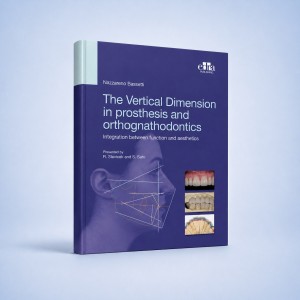
The Vertical Dimension in Prosthetis and Orthognathodontics is an Edra professional dentistry reference focused on clinical practice, education and treatment planning.
Edra Professional Books 22 August 2026
Bone, Biomaterials & Beyond: A Clinical Reference for Implant Planning and Treatment Decisions
Bone, Biomaterials & Beyond is an Edra professional dentistry reference focused on clinical practice, education and treatment planning.
Read more
Products 22 September 2026
News 22 September 2026
New FlexPayments features help Open Dental practices convert more diagnosed treatment into scheduled care and automatically recover credit card processing fees they’ve been absorbi
News 22 September 2026
The Accreditation Association for Ambulatory Health Care (AAAHC) has accredited Momenta Oral & Maxillofacial Surgery, a full-scope oral and maxillofacial surgery (OMS) practice wit
Editorials 22 September 2026
Tooth travelers: Students sharpen their skills on dental mission trips over the summer breaks
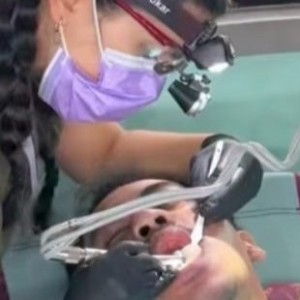
A busy dental student scheduled to graduate next May, few would fault Mackenzie “Kenzie” Bankes for heading to Jamaica for a few lazy days to enjoy sandy beaches and misty mountain
Oral pathology 22 September 2026
This peer-reviewed oral pathology article summarizes clinical evidence from Oral oncology (2026). It focuses on findings that may help dental professionals evaluate treatment decisions, patient...



Copyright © 2026 - All Rights Reserved
ISSN 2767-1178