


Dental business book trio covers marketing, insurance, thriving practice
Learn from the best
Mary Guiden
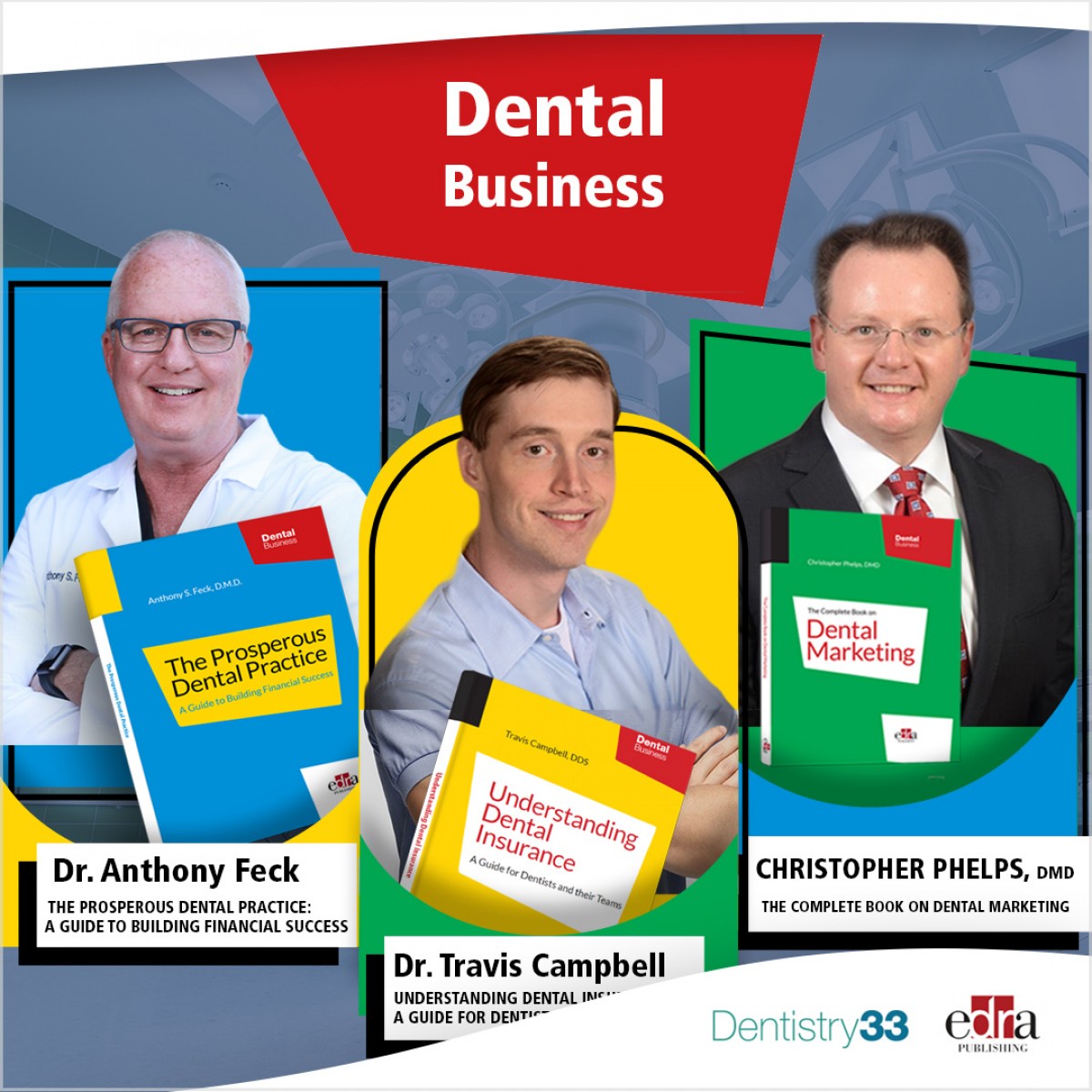
Over the last few months, Dentistry33 spoke with Drs. Travis Campbell, Tony Feck and Chris Phelps. In addition to their numerous titles — entrepreneur, instructor, podcast host, company founder, insurance expert — they are also authors under the Edra Publishing label. Below, we share some of their best advice and soundbites, and links for the interviews.
Here’s also a link to the Dental Business book bundle, which will be available for 50% off the list price plus tax Nov. 25, 2022.
Q: What are the most common myths around dental insurance policies?
Travis Campbell: One of the common myths surrounding dental insurance is that most problems which occur with claims don’t have solutions to them. Insurance is not the easiest thing in the world to understand and process. But a majority of the problems that we encounter with insurance do have solutions. The no. 1 complaint I hear is on the topic of denials, which result from missing, inadequate information or a lack of understanding of the policy specifics. In many cases, claims are rejected due to incomplete documentation from the clinical provider.
One question I hear all the time is: ‘Well, this same type of claim was paid 10 years ago without problems. Why am I having problems now?’ It’s simple: the process has changed over the last decade.
Most of today’s insurance documentation requirements are not that bad. Carriers want to make sure the service is necessary and within the policy’s limitations. On the dentist's side, it does mean that we must do a better job with our documentation than we did a decade ago.
Another big myth is that insurance companies can dictate all of your office fees, even when they’re not covering a specific procedure or treatment. In 43 states, this would be illegal. That doesn’t mean the insurance company’s software won’t send you a denial incorrectly or inadvertently. Their software was not designed to deal with current state laws. Updating the software can be a complicated process and many insurance companies are decades behind the curve, in some cases leading to incorrect EOBs.
The other major issue I see is dentists misunderstanding their contracts. I don’t blame them, reading legal contracts is not fun. But I’ve spent a great deal of time reading dental insurance contracts. These contracts have a fair amount of information about when and how you can charge patients more for certain procedures or treatments. That’s a positive. The contracts outline what you can and cannot do, which helps to dispel current misunderstandings and myths.
These are among the myths I help people understand, how they affect us day to day and what dentists and their teams can do to increase production and collections.
Read the first part of the interview with Dr. Campbell on Dentistry33.
Q: As we approach the end of 2022, what predictions do you have for the dental industry?
Tony Feck: It’s not difficult to predict what’s going to happen because it’s happened cyclically, almost on schedule over the years. The U.S. economy is extremely resilient. There will be downturns and there will be recoveries. If you live long enough, you’ll see a bunch of both. There are always inflationary cycles, which we’re going through now. This cycle impacts business costs and interest rates and reduces new business growth. But I look at economic downturns in a realistic way. Some people would say it’s a bit optimistic. It’s like pruning a tree – if the economy was a tree and it needs a good pruning for it to grow and have better blossoms. Cutting off some of the parts that aren’t as healthy is a good thing. That’s what happens in capitalistic economies. People still need dentists regardless of the economy. Take advantage of that situation and your costs will be less. There’s a greater supply of qualified talent, fewer businesses will pay for marketing. You’ll be motivated more so than ever because you must be. All these things will leave a minority of well-run businesses to do better in a downturned economy than in a strong economy.
Read the interview with Dr. Tony Feck, published Nov. 4 on Dentistry33.
Q: What is one aspect of marketing from a dentist’s perspective that might surprise people?
Chris Phelps: Parasite marketing is a fun tactic. It’s a benefit for someone and not necessarily a benefit for you. An example would be referrals to specialist. Most of the time, we send patients to a specialist, and nothing comes back. These doctors do not typically send us new patients. I was doing sedation dentistry in my practice, and I found a list of 25 practices in my area that were not doing offering general dentistry under sedation. So, I approached them and created my own referral pad and system. I go through the details in my book on how we did this. I got two $17,000 patients in the first week when I started getting referrals from my colleagues. I stopped counting and I thought: Sometimes being a parasite is not a terrible thing. One of the most popular social media platforms today is Nextdoor, a nationwide neighborhood community platform. It’s neighbors talking to each other about what’s going on: the good, the bad and the ugly, who are you using for this, and what’s working out? When I got on Nextdoor, I would scroll once a day looking for dental questions. People were asking each other questions and they needed an expert. I saw the answers and sometimes people were just guessing to answer a question. I decided to get on there and give people useful content, blog and answer their questions. I wasn’t trying to sell them, and I didn’t say anything about my practice. But of course, they can see my name – Dr. Chris Phelps — and if they have Google, they can find me. I found out when I was educating and not selling, suddenly everyone in the community started looking to me as their expert. I started getting tagged when people posted dental questions. If I would ask a new patient: how did you hear about us, they’d say: I saw your comments on Nextdoor. I was appreciative of your advice, and you know what you’re talking about, so that’s why I’m here. It's a simple thing you can do: Be the authority in your community. When you find opportunities to really give people educational information or content, don’t shy away from it, be the first to do it.
Read the interview with Dr. Phelps on Dentistry33.
 Related articles
Editorials 20 September 2026
Dentistry33 survey shows small practices balancing growth, costs and technology modernization
Reader survey finds solo and small practices remain prominent while staffing, rising costs and digital adoption shape business priorities
Reader survey finds solo and small practices remain prominent while staffing, rising costs and digital adoption shape business priorities
Cosmetic & Reconstructive Dentistry recently announced the creation of a new scholarship program supporting graduating seniors from Fairfield’s public high schools who plan to pursue studies in...
News 13 April 2026

With the typical dental practice sale, the dentists and their advisors are scrambling for methods to substantially reduce their federal and state income taxes.
News 01 April 2026
For dentists considering this move, careful preparation is essential before taking the leap into acquiring a second practice or more.
FlowRCM LLC has announced the launch of FlowRCM, an AI-powered revenue cycle management platform built exclusively for dental practices and DSOs.
Read more
Products 13 October 2026


New Resources Help Dental Exhibitors Evaluate Their Investment and Explore the Personify ShowFlow™ Trade Show Success System
News 13 October 2026
New patient apps extend The Aspen Group’s mission to remove barriers to care, giving patients greater visibility, convenience, and control from booking through treatment
Editorials 13 October 2026

The forerunner of what’s now Texas A&M College of Dentistry opened 120 years ago in Dallas with the mission of educating dentists to provide quality care to patients in North Texas
Oral pathology 13 October 2026
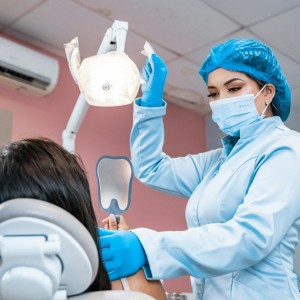
This peer-reviewed oral pathology article summarizes clinical evidence from Oral oncology (2026). It focuses on findings that may help dental professionals evaluate treatment decisions, patient...


Copyright © 2026 - All Rights Reserved
ISSN 2767-1178