


School of Dentistry faculty published 227 research papers, articles and reviews in leading journals in 2024
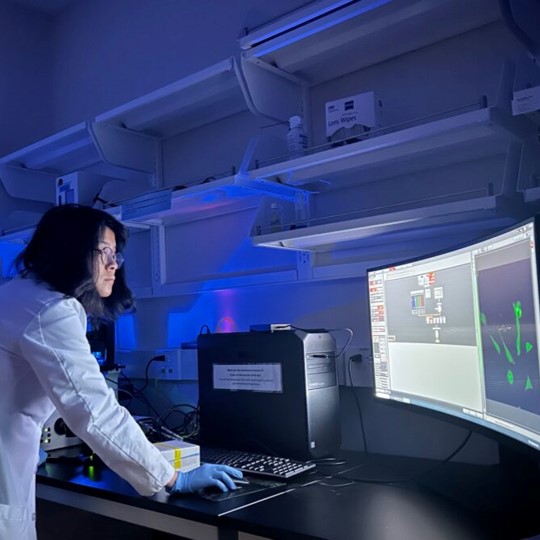
Faculty at the School of Dentistry in 2024 recorded another productive year of publishing their dental, oral and craniofacial research in numerous leading scientific journals.
A total of 227 papers, articles and reviews were authored or co-authored by faculty from across the school. The school’s annual research expenditures totaled $24.9 million and faculty received 27 grants.
Current faculty members and their teams of research assistants are investigating a wide range of important dental, oral and craniofacial science. Among the areas of research by faculty in 2024 were bone formation, biomarkers for disease progression, possible links between periodontal disease and pregnancy complications, dental bone inflammation, and ultrasonographic markers for peri-implantitis.
Research is centered among the school’s four research themes of Cancer Biology and Therapeutics; Clinical, Population and Educational Research; Craniofacial, Skeletal Biology and Disease; and Tissue Engineering and Regenerative Medicine. They are part of the school’s mission of “Advancing health through education, service, research and discovery.”
Vesa Kaartinen, associate dean for research, notes that the dental school has a long history of leading scientific and clinical research in dentistry and dental education. “From its earliest days 150 years ago, the school has included research as an integral part of the educational curriculum for all dental students and residents, which led to the development of our PhD and MS programs,” he said. “Our faculty lead that commitment today with an impressive variety of cutting-edge work that is recognized widely throughout the many scientific fields related to dental and craniofacial research.”
The school highlights its research during an annual Research Day, set this year for Thursday, Feb. 13. Students, postdoctoral trainees, staff and faculty members will display about 150 posters over morning and afternoon sessions at the Michigan League. This year’s keynote speaker, at 1 p.m. in Kellogg Auditorium at the School of Dentistry, is former U-M dental school faculty member Dr. Russell Taichman, who is now professor and chair of the Department of Basic & Clinical Translational Science at Tufts University School of Dental Medicine in Boston, Massachusetts. He is also Associate Dean for Research at the Tufts dental school, a title he also held while at U-M. More information on Research Day 2025 can be found on the event website.
Also during 2025, as part of the school’s Sesquicentennial Celebration, the Research Office will host a two-day Research Symposium on June 12-13, “Celebrating 150 Years of Innovation in Oral Health Sciences.” Details about speakers and the schedule will be released in coming weeks.
Following are a few examples of the top papers by faculty and research staff at the school in 2024, based on high impact journal ratings. The journal names are followed by links to the paper’s PubMed abstracts, short excerpts from the abstract, and U-M dental school faculty/staff highlighted in bold:
• Nature Neuroscience: “A vagal–brainstem interoceptive circuit for cough-like defensive behaviors in mice.” Coughing is a respiratory behavior that plays a crucial role in protecting the respiratory system. This study shows that the nucleus of the solitary tract (NTS) in mice contains heterogenous neuronal populations that differentially control breathing. Within these subtypes, activation of tachykinin 1 (Tac1)-expressing neurons triggers specific respiratory behaviors that are cough-like behaviors. The study proposes that these Tac1 neurons in the NTS are a key component of the airway-vagal-brain neural circuit that controls cough-like defensive behaviors in mice and that they coordinate the downstream modular circuits to elicit the sequential motor pattern of forceful expiratory responses. Authors: Noam Gannot, Xingyu Li, Chrystian Phillips, Ayse Bilge Ozel, Koecklin Uchima, Harum Karin, John Lloyd, Lusi Zhang, Katie Emery, Tomer Stern, Jun Z. Li, Peng Li.
• Journal of Clinical Investigation:“A BMP-controlled metabolic/epigenetic signaling cascade directs midfacial morphogenesis.” Craniofacial anomalies, especially midline facial defects, are among the most common birth defects in patients and are associated with increased mortality or require lifelong treatment. During mammalian embryogenesis, specific instructions arising at genetic, signaling, and metabolic levels are important for stem cell behaviors and fate determination, but how these functionally relevant mechanisms are coordinated to regulate craniofacial morphogenesis remain unknown. The study reports that bone morphogenetic protein (BMP) signaling in cranial neural crest cells (CNCCs) is critical for glycolytic lactate production and subsequent epigenetic histone lactylation, thereby dictating craniofacial morphogenesis. These findings define an axis wherein BMP signaling controls a metabolic/ epigenetic cascade to direct craniofacial morphogenesis, thus providing a conceptual framework for understanding the interaction between genetic and metabolic cues operative during embryonic development. These findings indicate potential preventive strategies of congenital craniofacial birth defects via modulating metabolic-driven histone lactylation. Authors: Jingwen Yang, Lingzin Zhu, Haichun Pan, Hiroki Ueharu, Masaka Toda, Qian Yang, Shawn Hallett, Lorin Olson, Yuji Mishina.
• Bone Research: “Induction of osteoblast apoptosis stimulates macrophage efferocytosis and paradoxical bone formation.” Apoptosis is crucial for tissue homeostasis and organ development. In bone, apoptosis is recognized to be a main fate of osteoblasts, yet the relevance of this process remains underexplored. Using a murine model with inducible Caspase 9, the enzyme that initiates intrinsic apoptosis, researchers triggered apoptosis in a proportion of mature osteocalcin (OCN+) osteoblasts and investigated the impact on postnatal bone development. The result demonstrated the significance of osteoblast turnover via apoptosis and efferocytosis in postnatal bone formation. It revealed the potential of targeting this mechanism to promote bone anabolism in the clinical setting. Authors: Lena Batoon, Amy Koh, Susan Millard, Jobanpreet Grewal, Fang Ming Choo, Rahasudha Kannan, Aysia Kinnaird, Megan Avey, Tatyana Teslya, Allison Pettit, Laurie McCauley, Hernan Roca.
• Bone Research: “Versatility of 14-3-3 proteins and their roles in bone and joint-related diseases.” Bone and joint-related diseases, including osteoarthritis, rheumatoid arthritis and bone tumors, pose significant health challenges due to their debilitating effects on the musculoskeletal system. 14-3-3 proteins, a family of conserved regulatory molecules, play a critical role in the pathology of these diseases. This review discusses the intricate structure and multifunctionality of 14-3-3 proteins, their regulation of signaling pathways, and their interactions with other proteins. The study examines 14-3-3 proteins as potential biomarkers for disease progression and as innovative therapeutic targets, offering new avenues for disease intervention and management. Authors: Renpeng Zhou, Weirong Hu, Peter Ma, Chuan-Ju Liu.
• Microbiome: “Placental TLR recognition of salivary and subjingival microbiota is associated with pregnancy complications.” Pre-term birth, the leading cause of neonatal mortality, has been associated with maternal periodontal disease and the presence of oral pathogens in the placenta. However, the mechanisms that underpin this link are not known. This investigation aimed to identify the origins of placental microbiota and to interrogate the association between parturition complications and immune recognition of placental microbial motifs. Within the limits of cross-sectional analysis, the study found evidence to suggest that oral bacteria might translocate to the placenta via serum and trigger immune signaling pathways capable of inducing placental vascular pathology. This might explain, in part, the higher incidence of obstetric syndromes in women with periodontal disease. Authors: Kazune Pax, Nurcan Buduneli, Murat Alan, Pinar Meric, Onder Gurlek, Shareef Dabdoub, Purnima Kumar.
• Proceedings of the National Academy of Sciences of the United States: “A comprehensive patient-specific prediction model for temporomandibular joint osteoarthritis progression.” Temporomandibular joint osteoarthritis (TMJ OA) is a prevalent degenerative disease characterized by chronic pain and impaired jaw function. The complexity of TMJ OA has hindered the development of prognostic tools, posing a significant challenge in timely, patient-specific management. This research employs a comprehensive, multidimensional approach to advance TMJ OA prognostication. We conducted a prospective study with 106 subjects, 74 of whom were followed up after 2 to 3 y of conservative treatment. Central to the methodology is the development of an innovative, open-source predictive modeling framework, the Ensemble via Hierarchical Predictions through Nested cross-validation tool (EHPN). The tool enhances clinicians’ decision-making, offering a transformative translational infrastructure. The EHPN model stands as a significant contribution to precision medicine, offering a paradigm shift in the management of temporomandibular disorders and potentially influencing broader applications in personalized healthcare. Authors: Najila Al Turkestani, Tengfei Li, Jonas Bianchi, Marcela Gurgel, Juan Prieto, Hina Shah, Erika Benavides, Fabiana Soki, Yuji Mishina, Margherita Fontana, Arvind Rao, Hongtu Zhu, Lucia Cevidanes.
• International Journal of Oral Science: “Synthetic high-density lipoprotein (sHDL): a bioinspired nanotherapeutics for managing periapical bone inflammation.” Apical periodontitis is a dental-driven condition caused by pathogens and their toxins infecting the inner portion of the tooth (i.e., dental pulp tissue), resulting in inflammation and apical bone resorption affecting 50% of the worldwide population, with more than 15 million root canals performed annually in the United States. Current treatment involves cleaning and decontaminating the infected tissue with chemo-mechanical approaches and materials introduced years ago, such as calcium hydroxide, zinc oxide–eugenol, or even formalin products. Researchers in this study presented, for the first time, a nanotherapeutics based on using synthetic high-density lipoprotein (sHDL) as an innovative and safe strategy to manage dental bone inflammation. Authors: Renan Dal-Fabbro, Minzhi Yu, Ling Mei, Hajime Sasaki, Anna Schwendeman, Marco Bottino.
Source: https://news.dent.umich.edu/
 Related articles
Editorials 28 April 2026
School of Dentistry Faculty Member Nisha D’Silva Leads National Research Organization
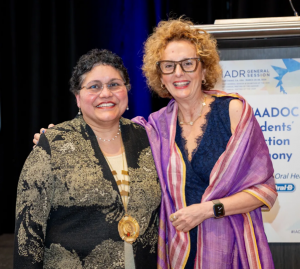
University of Michigan School of Dentistry faculty member Dr. Nisha D’Silva is the new president of the American Association for Dental, Oral and Craniofacial Research (AADOCR) for 2026-27.
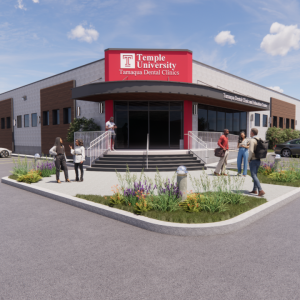
The new clinic and education center is planned to open this fall, and it will position Temple as a leader when it comes to addressing rural healthcare challenges.
In 2025, the UCSF School of Dentistry remained the top recipient of National Institutes of Health (NIH) grants among U.S. dental schools, with a total of $27,617,484 in funding for 55...

In a field evolving as rapidly as modern dentistry, research is essential. That spirit of discovery was on full display at the 42nd University of North Carolina at Chapel Hill Adams School of...
Editorials 25 March 2026
Giving kids a great smile – and maintaining it – is focus of annual clinic at School of Dentistry
For the last two decades, students and faculty at the University of Michigan School of Dentistry have hosted an annual free clinic for children in the Ann Arbor area.
Read more
Products 13 October 2026


New Resources Help Dental Exhibitors Evaluate Their Investment and Explore the Personify ShowFlow™ Trade Show Success System
News 13 October 2026

New patient apps extend The Aspen Group’s mission to remove barriers to care, giving patients greater visibility, convenience, and control from booking through treatment
Editorials 13 October 2026

The forerunner of what’s now Texas A&M College of Dentistry opened 120 years ago in Dallas with the mission of educating dentists to provide quality care to patients in North Texas
Oral pathology 13 October 2026
This peer-reviewed oral pathology article summarizes clinical evidence from Oral oncology (2026). It focuses on findings that may help dental professionals evaluate treatment decisions, patient...



Copyright © 2026 - All Rights Reserved
ISSN 2767-1178