


From Climate Change to Cavities, AI Is Changing Oral Health
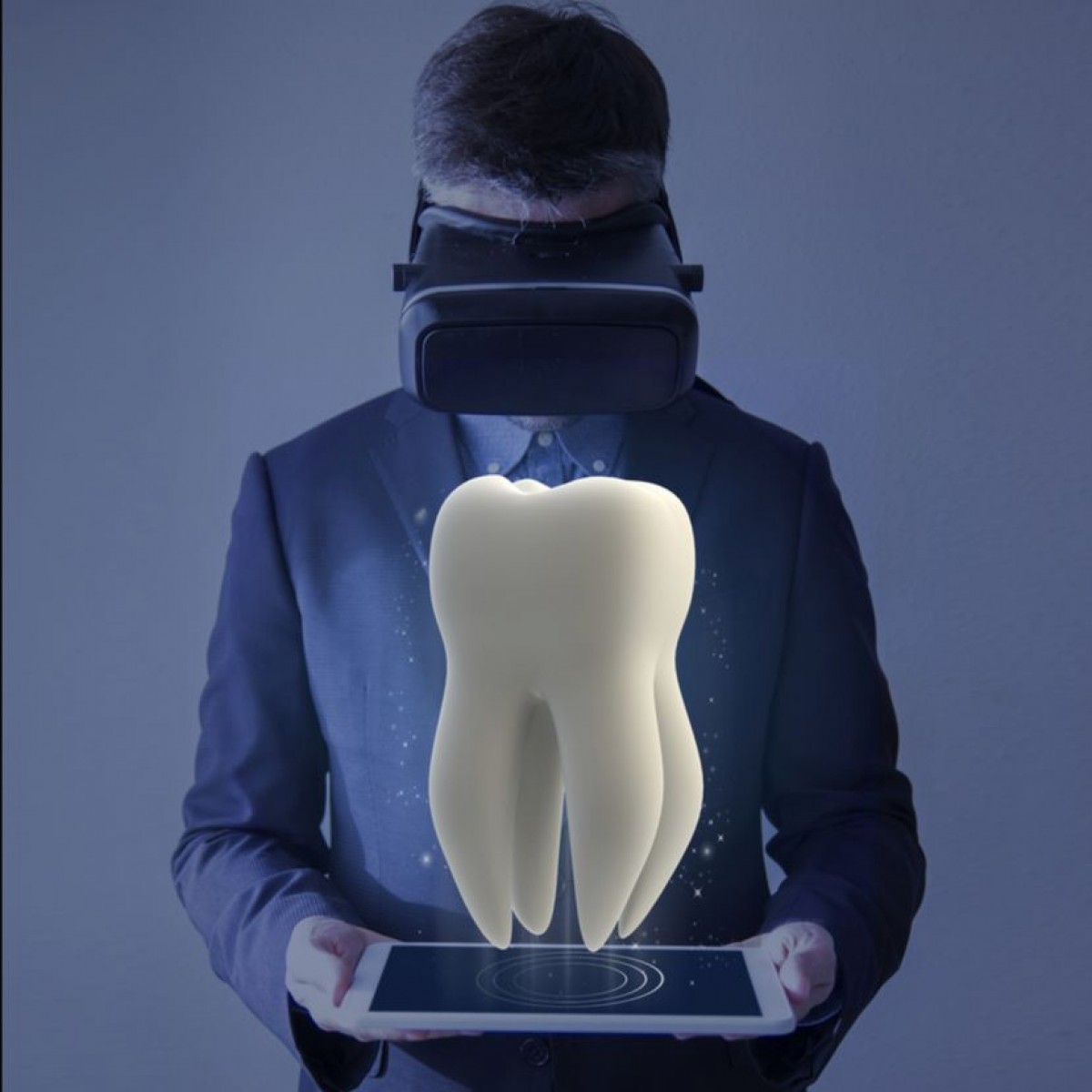
In dental research and practice, all eyes are on artificial intelligence's (AI) promise for patients.
AI has made its arrival in dental care around the world, largely thanks to a swell of early adopters who have embraced the newest assistive technologies that could lead to earlier diagnosis of oral diseases and put more informative tools in the hands of patients. Now, the majority of dental practices, dental schools, oral health researchers, and policymakers are rapidly positioning themselves to evolve in step with the dawning AI movement in oral healthcare.
“AI holds the promise of transforming the way we practice oral healthcare, pinpoint and treat diseases and conditions, and increase equitable access to care and treatment,” said William Giannobile, dean of Harvard School of Dental Medicine (HSDM), during his opening remarks at HSDM’s inaugural Global Symposium on AI and Dentistry, held November 3-4, 2023 in Boston.
The tangible energy around AI’s growing influence on dentistry is what prompted HSDM to gather more than 400 leading dental practitioners, researchers, students, AI scientists, ethicists, and policymakers from 30 countries around the globe — 300 attendees joined the symposium in person and another 120 tuned in virtually to the event’s workshops, keynotes, and thematic panel discussions.
More than 65 research projects were presented during the symposium’s poster session, featuring a range of device prototypes, patient-facing smartphone apps, and other technologies under development at the intersection of AI and dentistry. A panel of judges honored several poster presenters, including second-place prize winner Dahee Chung, an HSDM student who described her research to develop an AI-based module for tooth prognosis, clinical decisions, and treatment plans based on patient medical and social history, x-ray findings, and other parameters.
For more than 40 years, researchers have been experimenting with ways to apply AI to dentistry, said Florian Hillen, founder and CEO of VideaHealth, a dental imaging startup launched from AI research conducted at Harvard and MIT. Within the last decade, AI capabilities have finally reached critical mass. “AI-powered tools are now helping dentists identify dental decay in patients up to five years earlier…. the tech revolution is happening,” he said.
Beyond opportunities to improve outcomes for individual patients, researchers are quickly seizing AI to help solve population-level health challenges. But for AI to effectively tackle large-scale problems, academia and industry will have to dissolve the boundaries between different scientific discipines, said Dimitrias Bertsimas of Massachusetts Institute of Technology (MIT), one of the symposium’s keynote speakers.
“Real-world problems do not have [clear-cut] labels — global warming is not just physics, or engineering, or mathematics. Medicine is not just biology, chemistry, or computer science,” said Bertsimas, the Boeing Professor of Operations Research and associate dean of business analytics at MIT. “Multi-modal data will increasingly be used across science, engineering, and medicine, and [AI] will become the predominant methodology for predictions and decision-making across all fields.”
At Harvard, cross-disciplinary teams are leveraging machine learning to identify patients whose social determinants of health put them more directly in the path of climate-change-related impacts and a bevy of other risks to oral health.
“Are exposures to wildfires impacting oral health? If they become more frequent, who’s most vulnerable and how do we act on this information?” asked Francesca Dominici, director of the Harvard Data Science Initiative at the T.H. Chan School of Public Health.
Read the full article here: https://hsdm.harvard.edu/news/climate-change-cavities-ai-changing-oral-health
Author: Kat J. McAlpine
 Related articles
Editorials 12 August 2024
Combating climate change in the dental field: The UWSOD Climate Action Sustainability Team

While climate change and sustainability are topics that often dominate news headlines, the characters in their stories are typically corporations, politicians, environmentally active non-governmental...
Endodontics 20 November 2025
The complexity of restorative dentistry has increased greatly in recent years, with the myriad of products used in “adhesive dentistry.”

UCSF School of Dentistry has received a $4 million National Institutes of Health (NIH) grant to build clinical research capabilities within oral health. The grant will train School of Dentistry...

This clinical study investigated if active caries as assessed by the International Caries Detection and Assessment System were more likely to have positive LC Rinse response than sound surfaces and...
Products 07 March 2023

The growing wellness industry and increased incidence of dental decay caused by excessive sugar consumption have raised the interest in sugar-free chewing gum.
Read more
Europe 11 October 2026 - 30 November -0001
Scandinavian Dental Fair 2026: Event Preview and Professional Highlights

The Scandinavian Dental Fair 2026 will take place from November 11, 2026 to November 13, 2026 in TBD, Sweden/Denmark, offering dental professionals a focused environment for continuing education,...
Edra Professional Books 10 October 2026
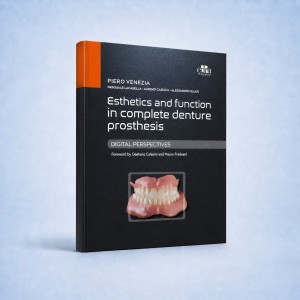
Esthetics and function in complete denture prosthesis is an Edra professional dentistry reference focused on clinical practice, education and treatment planning.
Products 09 October 2026

Oral-B and Crest, Official Oral Care Partners of the NFL, recently announced the launch of new special-edition products, giving fans even more ways to celebrate their love of the g
News 09 October 2026
Apex Dental Partners, a dental partnership organization supporting dentists and affiliated practices, has been named No.
News 09 October 2026

New education website and fully funded Swiss fellowship program debut at the 2026 Orthopaedic Trauma Association Annual Meeting in Nashville


Copyright © 2026 - All Rights Reserved
ISSN 2767-1178