


Bone manipulation procedures in dental implants
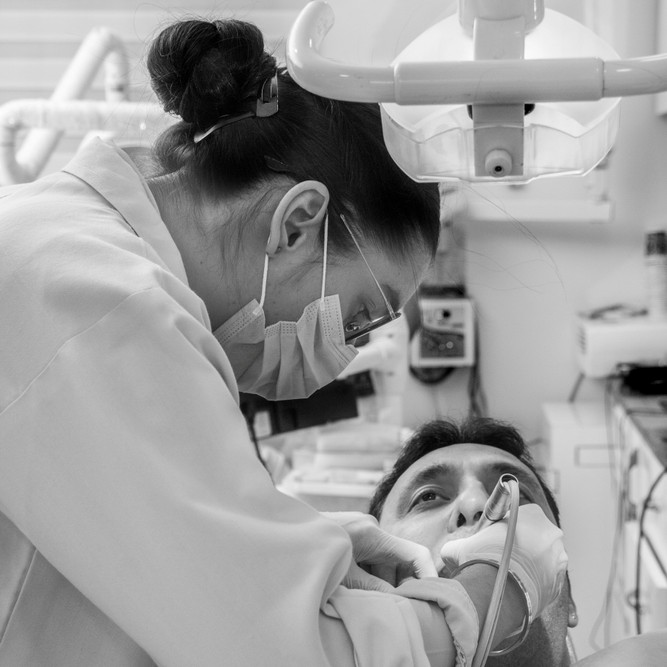
The use of dental implants for the rehabilitation of missing teeth has broadened the treatment options for patients and clinicians equally. As a result of advances in research in implant design, materials, and techniques, the use of dental implants has increased dramatically in the past two decades and is expected to expand further in the future. Success of dental implants depends largely on the quality and quantity of the available bone in the recipient site. This however may be compromised or unavailable due to tumor, trauma, periodontal disease, etc., which in turn necessitates the need for additional bone manipulation. This review outlines the various bone manipulation techniques that are used to achieve a predictable long-term success of dental implants.
The loss of tooth can be psychologically traumatizing. Attempts to replace teeth have been seen even in ancient civilizations. What makes implant dentistry unique is the ability to achieve this goal, regardless of the atrophy, disease, or injury of the stomatognathic system. To satisfy the ideal goals of the implant dentistry, the hard and soft tissues need to present ideal volumes and quality. If inadequate bone exists, several surgical techniques may be used to reconstruct the deficient ridge for implant placement.
The bone manipulation techniques are capable of manipulating the one's bones to alter their density to make them extremely durable and strong. These techniques mobilize vital bone with plastic bending, shaping, or condensation of tissue as a bone flap or bone-periosteal flap.[2] These result in contour or dimensional changes, while preserving bone integrity and viability. The concept is to manipulate the residual bone to create an intrabony cavity with a wider base or taller roof that heals like an extraction site, with access of mesenchymal stem cells and the normal wound healing mechanisms. The morphology of bony defect is an important consideration in the selection of a method for ridge manipulation. The fewer the number of remaining bony walls, the greater is the need for osteopromotive techniques.
Current bone manipulation techniques include inlay and onlay grafting, guided bone regeneration (GBR), bone expansion, bone splitting osteotomy, and different fixation devices such as bone screws, pins, titanium mesh, different augmentation materials, and different barrier membranes.
Authors: Yuvika Mittal, Govind Jindal, Sandeep Garg
Source: https://pmc.ncbi.nlm.nih.gov/
 Related articles
Market 01 March 2022
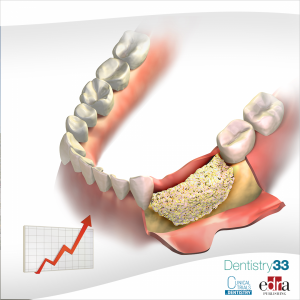
The global market for bone grafts and substitutes is expected to increase by a CAGR of 7.6% through 2026, according to a report by market analysis firm, ResarchAndMarkets.com. throughout the forecast...
Oral surgery 27 September 2023
Alveolar bone morphologic predictors for guided bone regeneration in anterior maxilla

This study aimed to explore the influence of alveolar bone morphologic variables on the outcome of guided bone regeneration in the anterior maxilla region.

External cervical resorption is a type of dental resorption that originates from the loss of the cementum's protective layer.
Implantology 24 March 2023

By André Zétola and Isabela Zago Zétola
The aim of this case report was to share results of a clinician installing metal-free implant associated with simultaneous GBR in anterior upper jaw. ...
Prosthodontics 25 June 2021
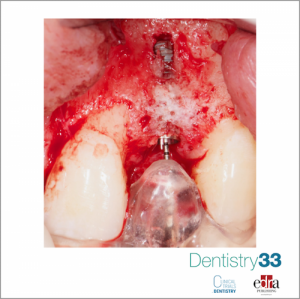
Authors: Silvio Mario Meloni, Marco Tallarico, Milena Pisano
Purpose. To evaluate the outcomes of a new computer-guided surgical approach for prosthetically - and aesthetically - driven implant insertion in horizontally atrophic ridges using a double template...
Read more
Europe 11 October 2026 - 30 November -0001
Scandinavian Dental Fair 2026: Event Preview and Professional Highlights

The Scandinavian Dental Fair 2026 will take place from November 11, 2026 to November 13, 2026 in TBD, Sweden/Denmark, offering dental professionals a focused environment for continuing education,...
Edra Professional Books 10 October 2026
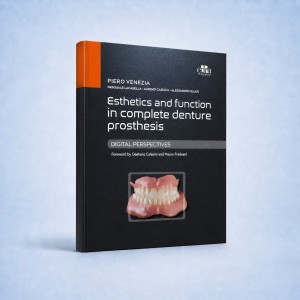
Esthetics and function in complete denture prosthesis is an Edra professional dentistry reference focused on clinical practice, education and treatment planning.
Products 09 October 2026

Oral-B and Crest, Official Oral Care Partners of the NFL, recently announced the launch of new special-edition products, giving fans even more ways to celebrate their love of the g
News 09 October 2026
Apex Dental Partners, a dental partnership organization supporting dentists and affiliated practices, has been named No.
News 09 October 2026

New education website and fully funded Swiss fellowship program debut at the 2026 Orthopaedic Trauma Association Annual Meeting in Nashville



Copyright © 2026 - All Rights Reserved
ISSN 2767-1178