


Minimally invasive dentistry: how much is it known and applied by dentists?
Lara Figini
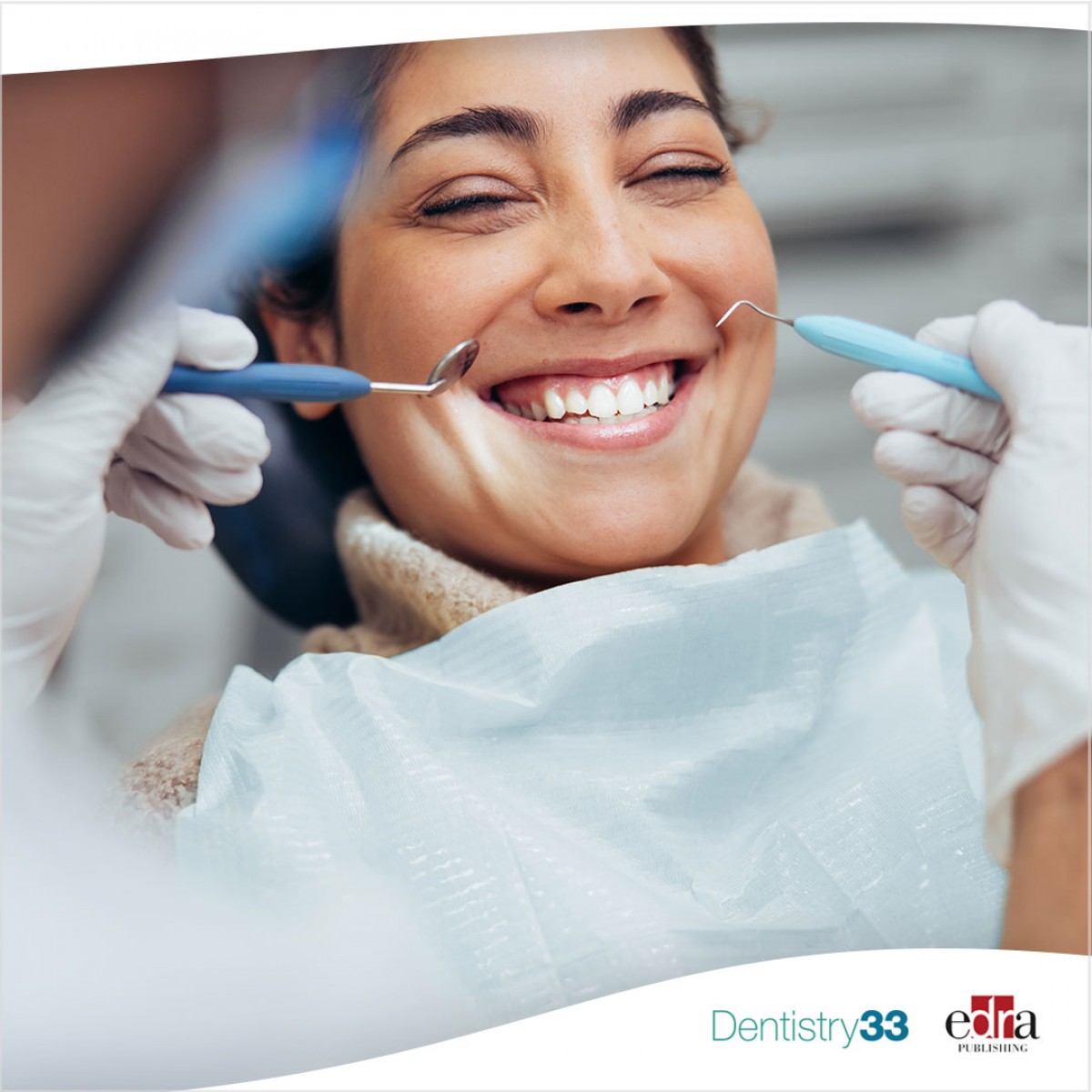
Minimally invasive dentistry (MID) is based on extremely conservative treatments that aim to keep teeth functional for life and free from caries.
The goals of MID are achieved by following important strategies including disease risk assessment and care planning, disease control and prevention, management and minimally invasive surgical repair rather than total replacement of restorations.
Research indicates that dentists who do not regularly provide Caries Risk Assessment (CRA) or dietary advice are more likely to adopt an invasive approach.
A recent systematic review with meta-analysis (Innes, 2017) indicated that a high percentage of dentists still intervene too invasively on carious lesions, therefore less invasive therapies and more conservative treatments should be recommended in clinical practice.
Materials and methods
In a systematic review published online in March 2023 in the Journal of Dentistry, the authors assessed dentists' knowledge, implementation and clinical practice (KAP) of minimally invasive dentistry. Cross-sectional studies analyzing the results of KAP on MID were included in this review.
Eight databases (Cochrane, DOSS, Embase, LILACS, PsycINFO, PubMed, Scopus and Web of Science) and gray literature were queried up to January 2022.
Two independent reviewers selected the included studies, initially based on titles and abstracts and ultimately on full texts. The methodological quality of the studies was assessed using the Joanna Briggs Institute Critical Assessment Checklist for Prevalence Studies.
A proportional meta-analysis was conducted using a random effects model for data analysis. Cochran's Q test and statistical I2 were used to assess heterogeneity.
Results
Of the 2,079 studies initially identified by researchers, 12 were included in the final review.
The meta-analysis was based on data from 10 studies (n = 1,728 participants). The knowledge of the MID was found to be 75.66% (95% CI: 69.33-81.48; p <0.01; I2: 97%; Tau2: 0.0456) and the application of the MID and the practical interventions in MID were found to be 47.95% (95% CI: 38.55-57.43; p < 0.01; I2: 98%; Tau2: 0.0743).
The highest prevalence rates were found in the field of "knowledge" and the lowest in implementation and clinical practice.
Conclusions
From the data of this study, it can be concluded that the knowledge of dentists about minimally invasive MID dentistry is acceptable. However, both its application and the related clinical procedures need improvement. The papers included in this review lack consistency in methods and there is a need for further studies to clarify the KAP of dentists worldwide.
For more information: "Knowledge, attitudes, and practice of dentists on minimal intervention dentistry: a systematic review and meta-analysis."
 Related articles
Restorative dentistry 17 April 2026
Patient Perceptions of New Robotic Technologies in Clinical Restorative Dentistry
Patient perception research has failed to focus on burgeoning technology within the dental field.

Restorative dentistry 02 March 2026
Esthetic-functional rehabilitation: orthodontics and restorative approach. A clinical case
Aim of this paper was to bring the attention to the feasibility of using unconventional and customized dental treatment helped by composite materials for direct restorations.
Restorative dentistry 13 February 2026
Integrating Laser Technology with CAD/CAM for Advanced Smile Design in Dentistry

This study aimed to evaluate the effectiveness of integrating laser treatment with CAD/CAM systems in restoring dental function and aesthetics in a 35-year-old male patient suffering from bruxism.
Read more
Continuous innovation across the DEXIS ecosystem helps clinicians work with greater clarity, confidence, and efficiency
News 23 October 2026
CrownPoint Partners announced the successful closing of a $9.2 million, five-property dental sale-leaseback portfolio located throughout Michigan.
News 23 October 2026
Dentsply Sirona, Midwest Dental Expand Technology Relationship
Beginning November 1, Dentsply Sirona will expand its long-standing relationship with Midwest Dental Equipment & Supply beyond consumables to include its complete technology portfo
Editorials 23 October 2026
Honoring Excellence: Graduation Awards for CU Anschutz Dental Students and Faculty

As the University of Colorado Anschutz School of Dental Medicine celebrates the graduating DDS Class of 2025, we are proud to recognize the students and faculty members whose excep
Implantology 23 October 2026
This peer-reviewed implantology article summarizes clinical evidence from Clinical oral implants research (2026). It focuses on findings that may help dental professionals evaluate treatment...



Copyright © 2026 - All Rights Reserved
ISSN 2767-1178