


Effect of two different digital construction techniques of mandibular implant-assisted overdentures on peri-implant bone loss and posterior ridge resorption: a 3-year prospective randomized clinical trial.
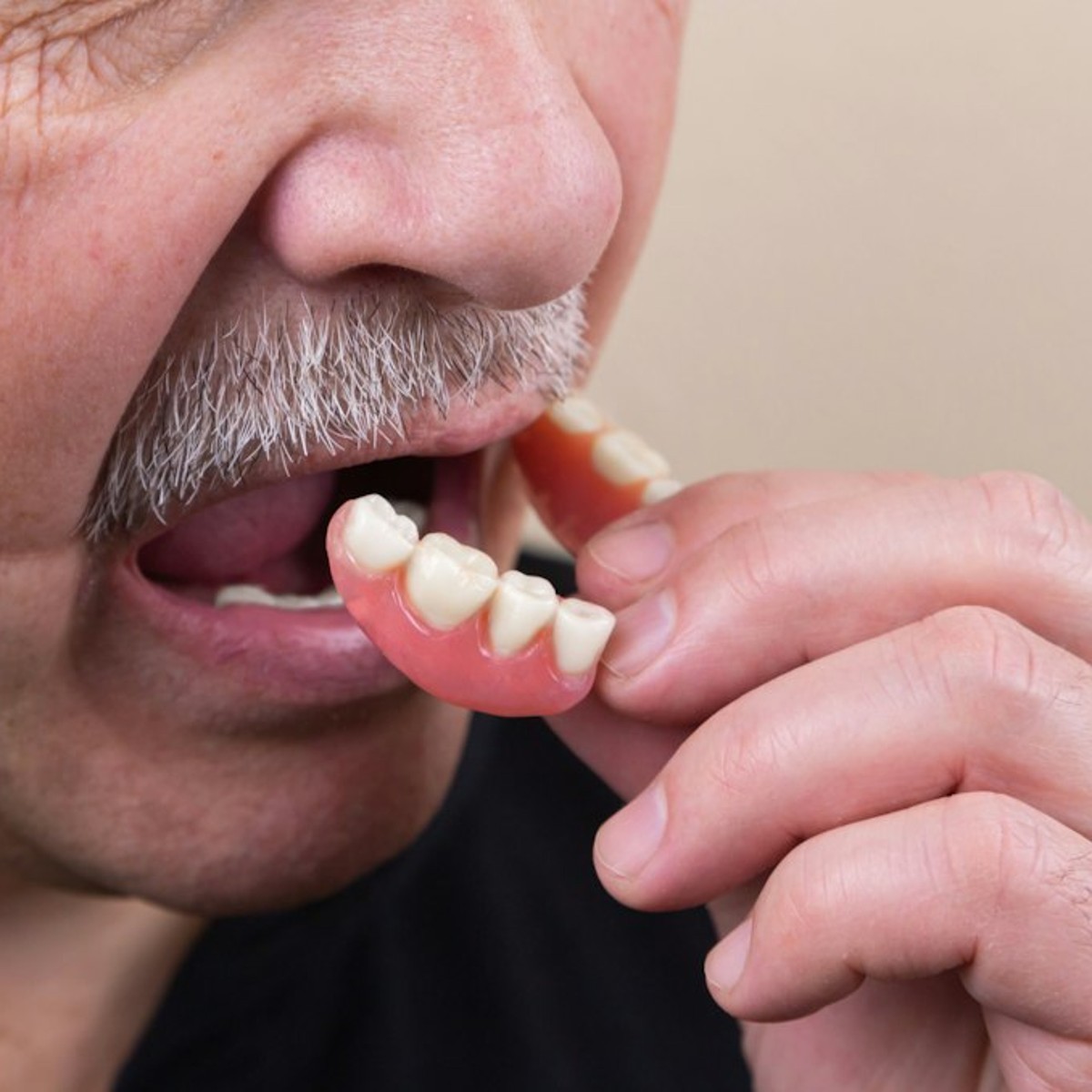
This peer-reviewed prosthodontics article summarizes clinical evidence from BMC oral health (2025). It focuses on findings that may help dental professionals evaluate treatment decisions, patient outcomes, or clinical protocols.
Abstract
OBJECTIVES: Traditional complete denture (CD) design and fabrication techniques need several clinical and laboratory steps. To improve the qualities of denture base material and get rid of all the problems that come with the conventional fabrication process, novel production methods were approved. In the field of denture manufacture, new materials and computer-aided technology have been explored as potential solutions. So, this study aimed to investigate the effect of two different digital construction techniques of implant-assisted overdentures on peri-implant and posterior mandibular bone resorptions by CBCT.
MATERIALS AND METHODS: Twenty patients who received mandibular overdenture constructed by different construction techniques were classified equally and randomly into two groups (n = 10 per group): Group M: received milled mandibular overdenture opposed by maxillary complete denture. Group P: received 3D-printed mandibular overdenture opposed by maxillary complete denture. Peri-implant bone loss and posterior ridge resorption were assessed at baseline (T0), at 1 year(T1), and 3 years(T3) by superimposition of pre and post-treatment CBCT.The Shapiro-Wilk test was used to access data that was not normally distributed. Two distinct groups were compared using the Mann-Whitney test. The Wilcoxon signed-rank test was used to compare paired groups.
RESULTS: Regarding vertical bone loss(VBL), Group P recorded higher VBL in comparison to Group M, where the mean was 0.57 ± 0.13, and 0.52 ± 0.12respectively, at T1 and 0.66 ± 0.11, 0.60 ± 0.12 at T3. There was a statistically significant difference at different times of evaluation within the groups where (P < 0.001). Regarding posterior ridge resorption(PRR), Group P recorded higher PRR in comparison to Group M, where the mean was 381 ± 18.5, 333 ± 17.2 respectively at T1and 533 ± 24.9, 478.5 ± 12.3 at T3. There was a statistically significant difference at different times of evaluation within the groups where (P = 0.005).
CONCLUSION: Regarding the preservation of peri-implant alveolar bone and posterior ridge bone, milled implant-assisted complete overdentures may have more favorable clinical outcomes compared to 3D printed implant overdentures in the digitally constructed mandibular overdenture bases retained by two implants.
CLINICAL RELEVANCE: Both milled and 3D printed implant overdenture impression techniques can be used for the construction of CAD/CAM-implant retained overdenture base. However, in regarding the peri-implant alveolar bone and posterior ridge bone resorption, milled implant-assisted complete overdentures may have more favorable clinical outcomes compared to 3D printed implant overdentures retained by two implants.
CLINICAL TRIAL REGISTRY NUMBER: (No.-NCT06720389) (03/12/2024).
Key takeaway
Key takeaway: Because the evidence comes from a clinical trial design, the findings may be especially useful when comparing treatment approaches in daily practice.
Introduction from full text
The advent of digital technologies has introduced novel methods for RPD fabrication, potentially enhancing the fit compared to the conventional approaches. This systematic review aimed to evaluate the methods to assess the accuracy of fit and precision of the RPD framework fabricated using conventional and digital (3D printed and milled) methods.
Peer-reviewed source
Nermeen El Sayed El Khamisy, Radwa M K Emera, Thuraya Maher Elmanci, Marwa Ahmed Aboelez
BMC oral health. 2025
DOI: 10.1186/s12903-024-05262-x
PMID: 40604700
PubMed: https://pubmed.ncbi.nlm.nih.gov/40604700/
Image: Diana Polekhina (Unsplash)
 Related articles
Prosthodontics 12 November 2026
This peer-reviewed prosthodontics article summarizes clinical evidence from BMC oral health (2026). It focuses on findings that may help dental professionals evaluate treatment decisions, patient...
Prosthodontics 01 May 2026
Recent Advances in Prosthodontics: Embracing Innovation for Precision and Patient-Centered Care
Prosthodontics, a core specialty in dentistry, continues to evolve dramatically in response to emerging technologies and changing patient expectations.
Prosthodontics 16 April 2026
The use of orthodontics before fixed prosthodontics in restorative dentistry
For a variety of reasons, orthodontic intervention is often overlooked as a viable modality to correct occlusal, axial, rotational, and space discrepancies before undertaking fixed prosthetic...
Prosthodontics 01 April 2026
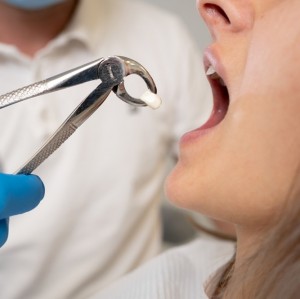
Evidence-based clinical practice is a process of combining research utilization, clinical expertise, and appreciation of the unique needs of patients to achieve better quality of care and improved...
Digital Dentistry 03 March 2026
Digital technology in complete denture prosthodontics: a review of literature

Computer-aided design and computer-aided manufacturing (CAD/CAM) technology has expanded to embrace implant, maxillofacial and removable prosthodontics including the fabrication of complete dentures.
Read more
Products 20 November 2026
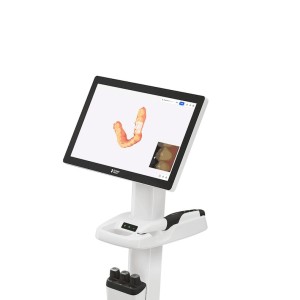
Key features include intuitive usability, highlighted by an integrated display that enhances patient understanding of scan results and supports informed treatment decisions.
News 20 November 2026
New Service Combines In-Office Photography, Custom Creative Content, and a Yearlong Posting Plan to Help Patients Get to Know the People Behind Their Care
News 20 November 2026
Dr. Cesar Tapia Awarded American College of Dentists Fellowship

Cesar Tapia, founder of ConfiDENT in Alpharetta and Cumming, Georgia, was awarded Fellowship in the American College of Dentists on October 24, 2026, during the College’s Annual Me
Editorials 20 November 2026
When the Food and Drug Administration issued a safety warning in 2022 about severe tooth decay associated with a commonly prescribed orally dissolving opioid use disorder medicatio
Products 19 November 2026
FDA Grants Breakthrough Designation to OraLiva Oral Cancer Test

Investigational cytology test is designed to help clinicians assess suspicious oral lesions with a quantitative index.


Copyright © 2026 - All Rights Reserved
ISSN 2767-1178