


Management of Riga-Fede disease associated to natal and neonatal teeth.
Authors: Alessandro Venditti, Paolo Maturo, Alessia Vincenza Brescia, Raffaella Docimo

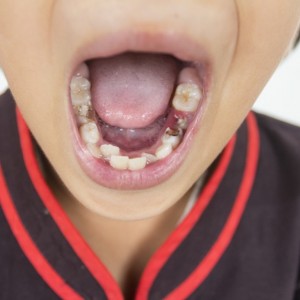
Riga-Fede disease (MRF) is a benign pathological condition of the child characterized by ulcerative lesions of the tongue, buccal mucosa, gum or floor of the tongue, most frequently caused by the traumatic action of natal/neonatal teeth. Painful symptoms can be absent or acute, until the child is prevented from feeding. The purpose of the work is a literature review of the proposed treatment possibilities for MRF and the description of two clinical cases with a different therapeutic approach.
A systematic review of the literature was conducted regarding the treatment of Riga-Fede disease associated with natal and neonatal teeth. A search was performed on the Pubmed, Scopus, and Google Scholar databases as of April 1, 2020. The PRISMA (Preferred Reporting Items for Systematic Reviews and Meta-analysis) protocol was used to compile the systematic review. All clinical cases described in the identified literature, have been catalogued by age, gender, presence of natal or neonatal elements, location of the injury, clinical complications, treatment and healing times.
In the revised studies, 44 clinical cases were observed and treated. The treatments described were: dental extraction (40.9%), ameloplasty (13.6%), additive restoration (6.8%), excisional biopsy (6.8%), use of bite (2.3%), topical application of corticosteroids (9.1%), lidocaine gel 2% (4.6%), acantaceous plants (2.3%), oxygenated water (2.3%) low-level laser therapy (2.3%).
Dental avulsion and ameloplasty are the two elective treatments for Riga-Fede disease. Extraction is indicated in the case where the child is unable to feed due to painful symptoms or when there is a high risk of ingestion/inhalation of the elements present due to high mobility. Ameloplasty is indicated in cases where the mobility of the teeth does not cause risk of ingestion or inhalation. The additive restoration of the incisive margins and the application of a bite are two treatments proposed in the literature but difficult to implement because of the neonatal age. In combination with these treatments, topical applications of corticosteroids-based solutions and the use of diode lasers have been proposed in order to reduce the algic and inflammatory component.
This study directs the clinician towards the most suitable therapeutic choice, in light of the optimization of the final result.
 Related articles
Pediatric dentistry 09 October 2026
This peer-reviewed pediatric dentistry article summarizes clinical evidence from BMC oral health (2026). It focuses on findings that may help dental professionals evaluate treatment decisions,...
Pediatric dentistry 29 April 2026
Exploration and innovative application of digital technology in pediatric dentistry
Pediatric dentistry treats patients aged 0-18 years, encompassing the characteristics of general dentistry.
Pediatric dentistry 14 April 2026
Comparison between dexmedetomidine and esketamine in pediatric dentistry surgery
Dexmedetomidine (D) and esketamine (K) are used for the sedation of pediatric dental surgery. This study was designed to compare the effect of intranasal D and K in producing moderate sedation for...
Existing studies on adverse events (AEs) in pediatric dentistry have been limited in scope.
Read more
Products 22 October 2026
News 22 October 2026

Royal Philips (NYSE: PHG, AEX: PHIA), a global leader in oral healthcare, today announced the formation of the Philips Sonicare Global Clinical Advisory Board, a group of external
News 22 October 2026
Opalescence Launches Limited-Edition Teeth Whitening Flavors
Opalescence whitening , the #1-selling professional teeth whitening brand, is introducing two limited-edition flavors, available only while supplies last: Pumpkin Spice and Birthda
Editorials 22 October 2026
2025 in Review: Highlights from the CU Anschutz School of Dental Medicine
From collaborative research to exceptional patient care and education , 2025 was a year of innovation and impact at the University of Colorado Anschutz School of Dental Medicine.
Implantology 22 October 2026
This peer-reviewed implantology article summarizes clinical evidence from Clinical oral implants research (2026). It focuses on findings that may help dental professionals evaluate treatment...



Copyright © 2026 - All Rights Reserved
ISSN 2767-1178