


Otitis media and rapid maxillary expansion
Davide Elsido

Otitis media and rapid maxillary expansion
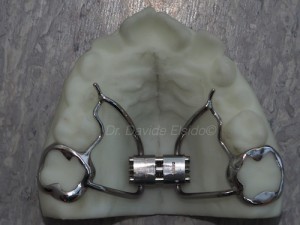
Otitis media with effusion (OME) is defined as the presence of fluid in the middle ear without signs or symptoms of acute ear infection. OME is responsible for thousands of medical office visits each year and it is one of the most frequent conditions encountered in ear, nose, and throat clinics. About 80% of preschool children have experienced OME. The exact etiology of OME is uncertain, but it may result from several factors. The most likely explanations regarding the pathophysiology of OME seem to include Eustachian tube dysfunction as playing a major role for development of OME. ‘‘Watchful waiting’’ has been recommended as the first line of treatment of OME. The second treatment option is prescription of medicine including antihistamines, decongestants, steroids, or antibiotics. The last treatment option may be surgery for insertion of a ventilation tube. RME is a well-established technique for the correction of transverse discrepancies of the maxillary arch and it has been accepted as an effective treatment method in patients exhibiting transverse maxillary deficiency, posterior crossbites, and rhinologic and/or respiratory problems. The rationale for use of an RME appliance is approximately the same as for insertion of a ventilation tube for treatment of Eustachian tube dysfunction. Rapid maxillary expansion (RME) can stretch the tubal dilator muscles: tensor and levator veli palatini muscles. The stretched tubal dilator muscles open the pharyngeal orifice of the Eustachian tube and can recover Eustachian tube function. However, no previous study has evaluated the possible effects of RME on Eustachian tube function and tympanometric output in children with resistant OME in whom ventilation tube placement was indicated.
The findings suggest that ears having poorly functioning Eustachian tubes are restored and recovered after RME in most of children with maxillary constriction and resistant OME. Thus, RME should be preferred as a first therapy alternative for children with maxillary constriction and serous otitis media.
It has been well documented that RME widens the nasal airway dimensions. This widening will result in not only an improvement of nasal air flow and natural physiological function, but also a decrease in upper respiratory infections, nasal allergy, respiratory morbidity, otitis media, and the pathogenic aerobic and facultative anaerobic microflora in the oropharynx.
Conclusions have a great clinical value, but this study had some limitations. First, sample size was limited with respect to the generalization of the findings. Therefore, due to this small sample size, this investigation should be considered a pilot study and findings should be confirmed in a larger group of children.
 Related articles
Orthodontics 27 August 2021
.png)
Rapid maxillary expansion (RME) appliances are often used to treat transverse deficiencies in the maxilla since their introduction in the 1860s with both skeletal and dentoalvoelar effects.Rapid...
In the latest issue (May 2020) of The Angle Orthodontist a systematic review was published about the effects of Rapid Maxillary Expansion (RME) on ...
Orthodontics 21 August 2026

This peer-reviewed orthodontics article summarizes clinical evidence from Dental press journal of orthodontics (2026). It focuses on findings that may help dental professionals evaluate treatment...
Products 07 August 2026

Partnership with Eversmile makes o scillating s ystem available through HSO in the United States.
Orthodontics 07 August 2026

This peer-reviewed orthodontics article summarizes clinical evidence from Dental press journal of orthodontics (2026). It focuses on findings that may help dental professionals evaluate treatment...
Read more
Europe 27 September 2026 - 30 November -0001
Digital Dentistry Society Global Congress 2026: Event Preview and Professional Highlights

The Digital Dentistry Society Global Congress 2026 will take place from October 22, 2026 to October 24, 2026 in TBD, Rotating Europe, offering dental professionals a focused environment for...
Editorials 27 September 2026
Dentistry33 survey highlights replacement care, deep caries and evolving restorative workflows

Reader survey finds direct composites remain dominant, secondary caries is the leading reason for restoration replacement, and clinicians want more training in pulp preservation
Reader survey finds direct composites remain dominant, secondary caries is the leading reason for restoration replacement, and clinicians want more training in pulp preservation
Edra Professional Books 26 September 2026
Manual of oral surgery: A Practical Reference for Dental Professionals
Manual of oral surgery is an Edra professional dentistry reference focused on clinical practice, education and treatment planning.
Products 25 September 2026

Shofu Dental’s line of dental restorative materials now includes FX-LC, a next-generation, light-cure, resin-reinforced glass ionomer formulated to deliver high strength, efficient 4
News 25 September 2026

The scholarships are part of an ongoing workforce solutions strategy to help address the need for skilled dental hygienists



Copyright © 2026 - All Rights Reserved
ISSN 2767-1178