


Antifibrinolytic therapy for preventing oral bleeding in patients with haemophilia or Von Willebrand disease undergoing minor oral surgery or dental extractions
Background
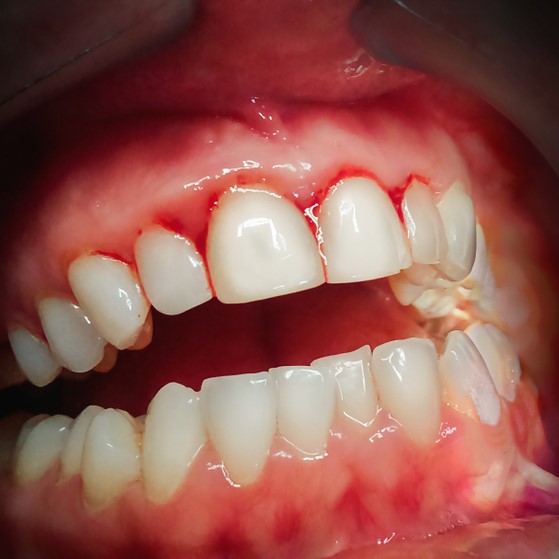
Minor oral surgery or dental extractions (oral or dental procedures) are widely performed and can be complicated by hazardous oral bleeding, especially in people with an inherited bleeding disorder such as haemophilia or Von Willebrand disease (VWD). The amount and severity of singular bleedings depend on disease‐related factors, such as the severity of the haemophilia, both local and systemic patient factors (such as periodontal inflammation, vasculopathy or platelet dysfunction) and intervention‐related factors (such as the type and number of teeth extracted or the dimension of the wound surface). Similar to local haemostatic measures and suturing, antifibrinolytic therapy is a cheap, safe and potentially effective treatment to prevent bleeding complications in individuals with bleeding disorders undergoing oral or dental procedures. However, a systematic review of trials reporting outcomes after oral surgery or a dental procedure in people with an inherited bleeding disorder, with or without, the use of antifibrinolytic agents has not been performed to date. This is an update of a previously published Cochrane Review.
Objectives
Primarily, we aim to assess the efficacy of antifibrinolytic agents to prevent bleeding complications in people with haemophilia or VWD undergoing oral or dental procedures.
Secondary objectives are to assess if antifibrinolytic agents can replace or reduce the need for clotting factor concentrate therapy in people with haemophilia or VWD and to establish the effects of these agents on bleeding in oral or dental procedures for each of these patient populations.
Search methods
We searched the Cochrane Cystic Fibrosis and Genetic Disorders Group's Coagulopathies Trials Register, compiled from electronic database searches of the Cochrane Central Register of Controlled Trials (CENTRAL), of MEDLINE and from handsearching of journals and conference abstract books. We additionally searched the reference lists of relevant articles and reviews. We searched PubMed, Embase, Cinahl and the Cochrane Library. Additional searches were performed in ClinicalTrials.gov, WHO International Clinical Trials Registry Platform (ICTRP).
Date of last search of the Cystic Fibrosis and Genetic Disorders Group's Coagulopathies Trials Register: 01 March 2019.
Selection criteria
Randomised and quasi‐randomised controlled trials in people with haemophilia or VWD undergoing oral or dental procedures using antifibrinolytic agents (tranexamic acid or epsilon aminocaproic acid (EACA)) to prevent perioperative bleeding compared to no intervention or usual care with or without placebo.
Data collection and analysis
Two authors independently screened the titles and abstracts of all identified articles. Full texts were obtained for potentially relevant abstracts and two authors independently assessed these for inclusion based on the selection criteria. A third author verified trial eligibility. Two authors independently performed data extraction and risk of bias assessments using standardised forms.
Main results
While there were no eligible trials in people with VWD identified, two randomised, double‐blind, placebo‐controlled trials (total of 59 participants) in people with haemophilia undergoing dental extraction were included. One trial of tranexamic acid published in 1972 included 28 participants with mild, moderate or severe haemophilia A and B and one of EACA published in 1971 included 31 people with haemophilia with factor VIII or factor IX levels less than 15%. Overall, the two included trials showed a beneficial effect of tranexamic acid and EACA, administered systemically, in reducing the number of bleedings, the amount of blood loss and the need for therapeutic clotting factor concentrates. Regarding postoperative bleeding, the tranexamic acid trial showed a risk difference (RD) of ‐0.64 (95% confidence interval (CI) ‐0.93 to ‐ 0.36) and the EACA trial a RD of ‐0.50 (95% CI 0.77 to ‐0.22). The combined RD of both trials was ‐0.57 (95% CI ‐0.76 to ‐0.37), with the quality of the evidence (GRADE) for this outcome is rated as moderate. Side effects occurred once and required stopping EACA (combined RD of ‐0.03 (95% CI ‐0.08 to 0.13). There was heterogeneity between the two trials regarding the proportion of people with severe haemophilia included, the concomitant standard therapy and fibrinolytic agent treatment regimens used. We cannot exclude that a selection bias has occurred in the EACA trial, but overall the risk of bias appeared to be low for both trials.
Authors' conclusions
Despite the discovery of a beneficial effect of systemically administered tranexamic acid and EACA in preventing postoperative bleeding in people with haemophilia undergoing dental extraction, the limited number of randomised controlled trials identified, in combination with the small sample sizes and heterogeneity regarding standard therapy and treatment regimens between the two trials, do not allow us to conclude definite efficacy of antifibrinolytic therapy in oral or dental procedures in people with haemophilia. No trials were identified in people with VWD.
Authors: Karin PM van Galen, Eveline T Engelen, Evelien P Mauser‐Bunschoten, Robert JJ van Es, Roger EG Schutgens
Source: https://www.cochranelibrary.com/
 Tag
Tag
Related articles
Products 29 January 2026
The SDS Ceramic Implant System: The Best Choice for Preventing Peri-Implantitis

Swiss Dental Solutions (SDS), a leading manufacturer of ceramic implants for over a decade, offers implant systems that combine material biocompatibility with established clinical performance.
Oral Hygiene & Prevention 20 December 2024
Oral hygiene evaluation for effective oral care in preventing pneumonia in dentate elderly

The purpose of this study was to establish criteria for the visual evaluation of oral hygiene by analyzing the relationship between status of oral hygiene and number of oral bacteria in saliva for...
Dental technology 15 November 2023
New Drug Shows Promise in Preventing Cartilage Loss from Osteoarthritis
People suffering with osteoarthritis currently have only two treatment options: pain management and joint surgery. Both options can have complications and neither targets the disease’s root causes.
Products 28 September 2026
(“Sonendo” or the “Company”), a leading dental technology company and developer of the GentleWave® System, today announced that more than two million patients have now been treated
News 07 August 2026
National trauma data show Medicaid coverage rose from 16% to 24% after ACA implementation, while self-pay cases declined, suggesting broader insurance access for patients needing u
Read more
Products 09 October 2026

Oral-B and Crest, Official Oral Care Partners of the NFL, recently announced the launch of new special-edition products, giving fans even more ways to celebrate their love of the g
News 09 October 2026
Apex Dental Partners, a dental partnership organization supporting dentists and affiliated practices, has been named No.
News 09 October 2026

New education website and fully funded Swiss fellowship program debut at the 2026 Orthopaedic Trauma Association Annual Meeting in Nashville
Editorials 09 October 2026
From California to Canada: CU Anschutz School of Dental Medicine at ADEA, GRC and IADR 2026
The CU Anschutz School of Dental Medicine will showcase a wide breadth of educational innovation, faculty development, clinical training and research at three major gatherings this
Pediatric dentistry 09 October 2026
This peer-reviewed pediatric dentistry article summarizes clinical evidence from BMC oral health (2026). It focuses on findings that may help dental professionals evaluate treatment decisions,...



Copyright © 2026 - All Rights Reserved
ISSN 2767-1178