


Coronavirus contamination in dental clinics. New systems and operating devices
Maria Giovanna Gandolfi, Andrea Spinelli, Fausto Zamparini, Vittorio Sambri, Carlo Prati
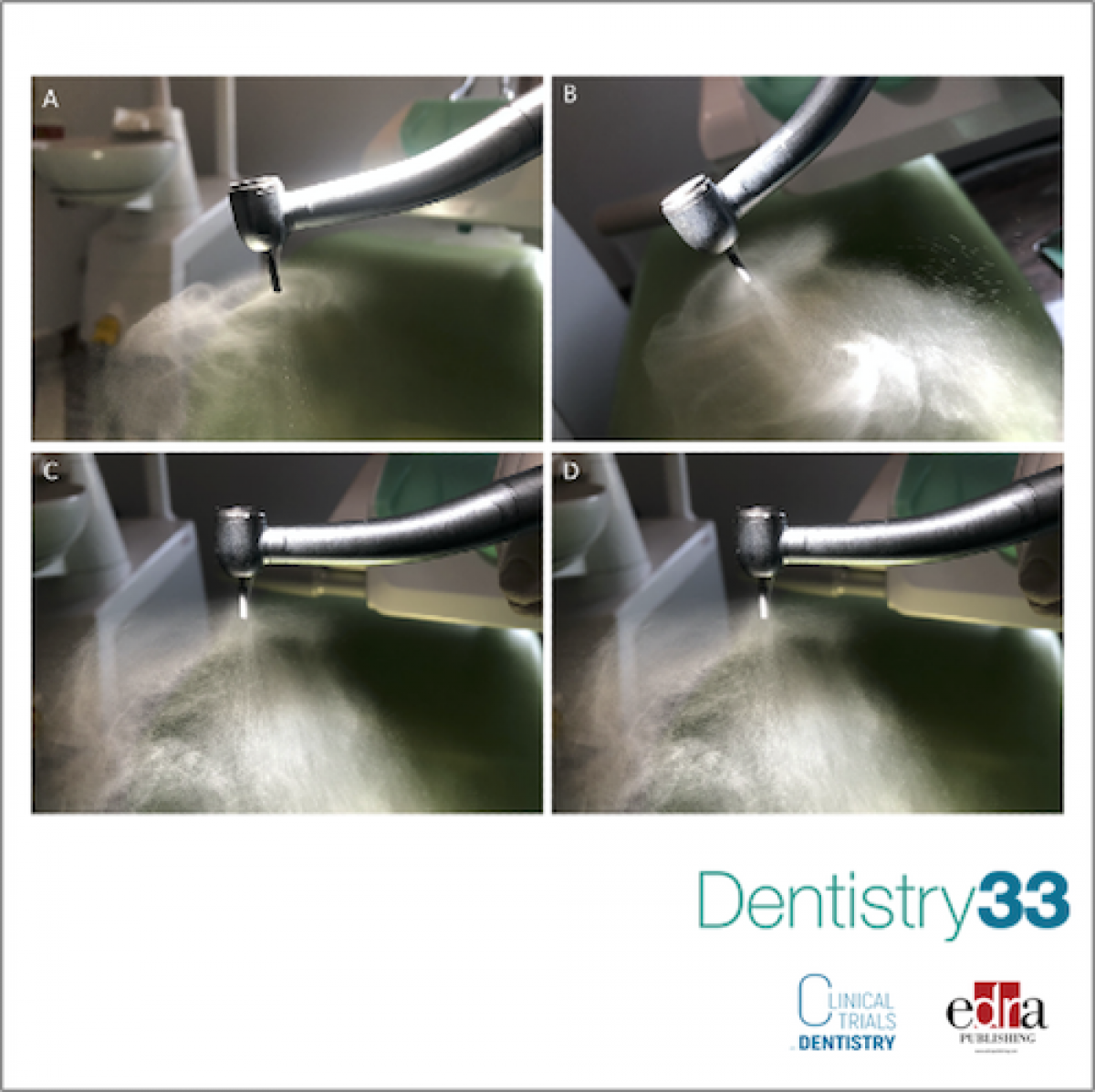
Sanitary emergency of SARS-CoV-2 is radically changing all the procedures in dental clinics. A great number of health-care workers resulted affected by Coronavirus. Dentists work closely face-to-face with the patients and this condition greatly increases the risk for Coronavirus infection. Normal dental procedures create a tremendous hazard and play a number of risks for contaminations with patient's saliva and exhaled particles.
All patients may be asymptomatic but Coronavirus-positive and may represent a great risk for virus diffusion in the dental room and among the personnel and/or other patients.
The principal problem in dental office is constituted by the presence of aerosols and spray droplets created by high-speed water-cooled handpiece, ultrasonic instrument, ultrasonic scalers and dental air-water spray guns. The second important problem is connected with the long face-to-face of the operators (dentist and assistants) with patients.
The airborne fluctuating particles - composed by saliva, mucus, blood, dentin-enamel debris, smear layer, fragments of restorations - can remain floating for a long time in the aerosol tide and are diffused by air vortexes created by high-speed hand-piece.
MATERIAL AND METODS
The study identified different type of droplets and airborne produced by dental-unit chair (DUC) instruments. These droplets and airborne particles are produced by DUC instruments and may be immediately infected by patient mucus and saliva (and in theory plaque and blood) and diffused around as fluctuating particles. These particles present a diameter from 200 to 2 microns and may remain in air for long time (minutes and hours) and settle in all the surface around DUC. They usually present a ballistic trajectory and may be deviated by turbulences and operator movements. Operator masks, glasses, gown etc. are all exposed surfaces that may be fast contaminated. Also boxes, floor and devices in the dental room may be covered by a layer of droplets.
Several new devices and new operative techniques were recently developed to try to reduce the spray diffusion and to limit the risk for operator contamination. A new designed device is constituted by a double rubber-dam arch with a sliding suction pipe able to uptake spray produced in the mouth and by the nose. The device and other types of lip oral cannulas consistently reduce the spray diffusion. Other additional innovative procedures for operators are represented by the use of specific waterproof sprayhood to prevent any droplets contact with masks (FFP2/FFP3) and eyes and by Tynek suites to cover all operator’s body. Finally, all DUC and room disinfection procedures must be evaluated to prevent (and to remove) droplets and particles deposits from the surfaces. Additional tailored procedures must be standardized, such as the use of FFP2/3, mounthrinses, disinfection of DUC circuits etc.
CONCLUSIONS
There is the need for all dental offices and dental Clinics to rapidly modify all the clinical procedures in attempt to reduce airborne and spray droplets. The close contact of the operators with patient’s nose and mouth and the potential presence of virus into mucus and saliva create a tremendous hazard due to the production of DUC spray. Again, there is a need for Universities, Dental Clinics and Hospitals to protect students, workers and patients with new tailored operative procedures.
CLINICAL SIGNIFICANCE
In this position paper, it is support the concept that we need major and rapid reorganization of dental office procedures. The main concept is to restrict the generation of dental spray and use adequate procedures to prevent diffusion in dental offices. New tailored operative procedures are proposed after the evaluation of high risks for airborne and dental spray droplets production and contamination dynamic routes.
The use of powerful novel suction cannula designed for fast spray/saliva droplets aspiration and the use of innovative sprayhoods and body suites for dental-care worker protections are important procedures to prevent virus transmission in dental office. Additional procedures may be standardized to remove droplets from all room surface.
 Related articles
Oral Hygiene & Prevention 30 September 2026
Propolis-containing formulations in caries prevention - a systematic review and meta-analysis.
This peer-reviewed oral hygiene & prevention article summarizes clinical evidence from Clinical oral investigations (2026). It focuses on findings that may help dental professionals evaluate...
Oral Hygiene & Prevention 23 September 2026
Propolis-containing formulations in caries prevention - a systematic review and meta-analysis.
This peer-reviewed oral hygiene & prevention article summarizes clinical evidence from Clinical oral investigations (2026). It focuses on findings that may help dental professionals evaluate...
Oral Hygiene & Prevention 09 September 2026
Propolis-containing formulations in caries prevention - a systematic review and meta-analysis.
This peer-reviewed oral hygiene & prevention article summarizes clinical evidence from Clinical oral investigations (2026). It focuses on findings that may help dental professionals evaluate...
Oral Hygiene & Prevention 26 August 2026
Propolis-containing formulations in caries prevention - a systematic review and meta-analysis.
This peer-reviewed oral hygiene & prevention article summarizes clinical evidence from Clinical oral investigations (2026). It focuses on findings that may help dental professionals evaluate...
Oral Hygiene & Prevention 22 July 2026
This peer-reviewed oral hygiene & prevention article summarizes clinical evidence from Journal of dentistry (2026). It focuses on findings that may help dental professionals evaluate treatment...
Read more
Products 13 October 2026
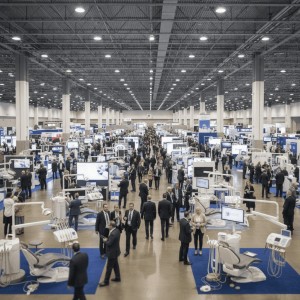

New Resources Help Dental Exhibitors Evaluate Their Investment and Explore the Personify ShowFlow™ Trade Show Success System
News 13 October 2026

New patient apps extend The Aspen Group’s mission to remove barriers to care, giving patients greater visibility, convenience, and control from booking through treatment
Editorials 13 October 2026
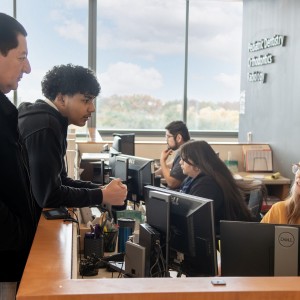
The forerunner of what’s now Texas A&M College of Dentistry opened 120 years ago in Dallas with the mission of educating dentists to provide quality care to patients in North Texas
Oral pathology 13 October 2026
This peer-reviewed oral pathology article summarizes clinical evidence from Oral oncology (2026). It focuses on findings that may help dental professionals evaluate treatment decisions, patient...


Copyright © 2026 - All Rights Reserved
ISSN 2767-1178