


Dental Sleep Medicine: How dentists can help people with sleep apnea. The increasingly important role dentists play in sleep medicine
Paola Omini
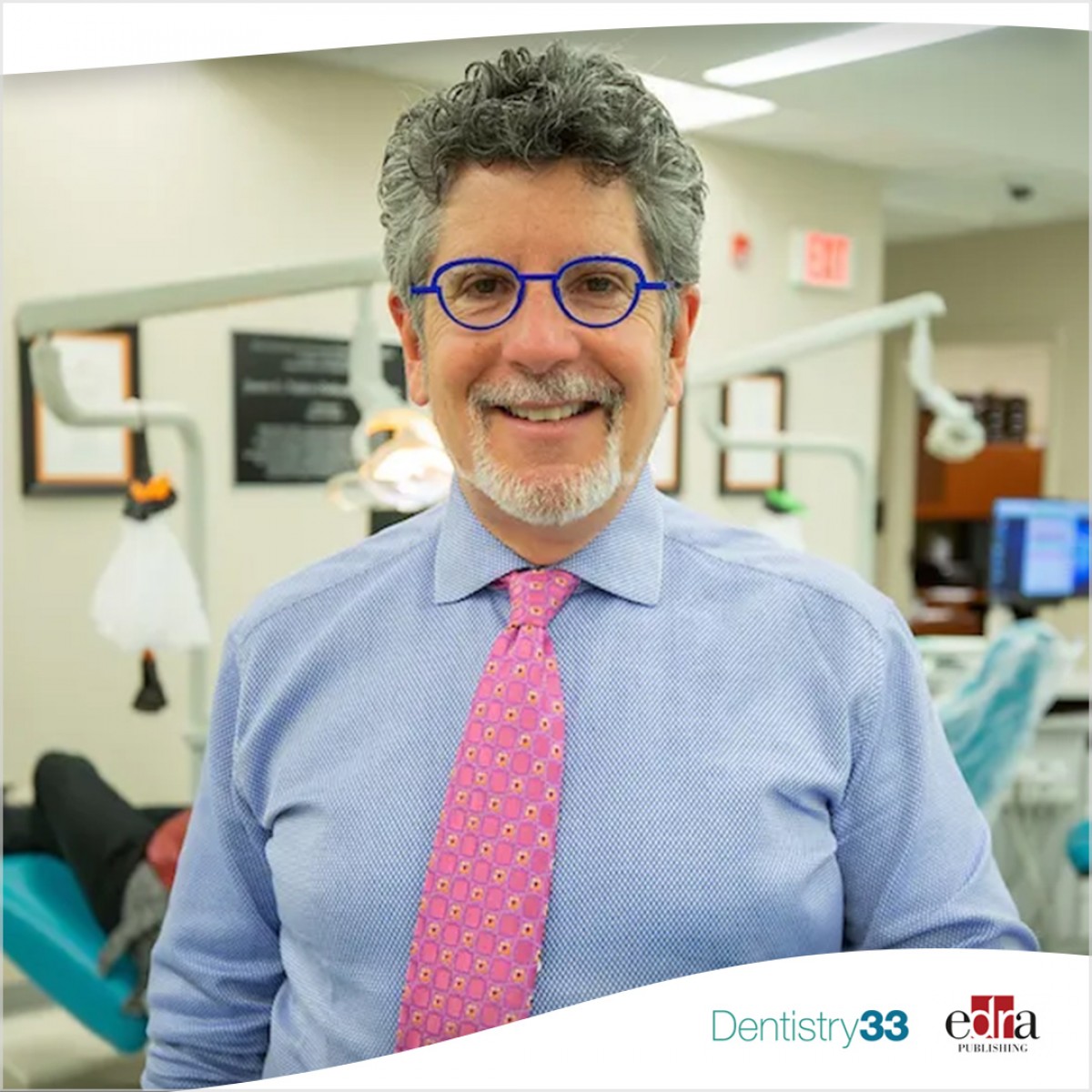
Obstructive sleep apnea (OSA) is a common condition and the most prevalent form of sleep apnea. It is a growing threat to individuals and presents such dangerous health risks. Sleep physicians and qualified dentists have essential roles in addressing the problem and giving treatment. When doctors and dentists work together, patients have the best opportunity to treat their OSA effectively. Dentistry33's Paola Omini recently explored these topics in an interview with Dr. Mitchell Levine, DMD and president of the American Academy of Dental Sleep Medicine (AADSM).
Sleep Disordered Breathing, particularly obstructive sleep apnea, is a critical medical condition. It is a complex disease that is underdiagnosed and undertreated. Can you give us some numbers?
Of course, numbers depend on so many factors, but estimates are that 25% of North Americans have a form of sleep disordered breathing, ranging from snoring to severe OSA. Males across all ages tend to be at increased risk, though the risk for females increases, particularly with increasing age. Interestingly, OSA is not always accompanied by daytime sleepiness. People may snore and have other comorbidities with sleep apnea but being tired is not one of them. They may dismiss tiredness as lack of sleep time or stress and so may not express sleepiness as a concern to health care providers. The current estimates are that upwards of one billion worldwide may have some degree of sleep apnea.
According to your experience, are the medical community and general populace aware of this pathology and the very high health risks if left untreated?
Well, sleep is undoubtedly becoming a hot topic, with many considering the implications of sleep and over wellness. There are indicators that sleep duration itself, how much sleep we get, is crucial, with too little and too much sleep more problematic. One challenge that remains is the screening of patients for sleep disorders. Physicians are increasingly screening patients, and the American Dental Association encourages dentists to screen both children and adults. The challenge remains what to do with patients who have a positive screening presentation. There are simply too few physicians, especially those with board certification, to manage the burden. Primary care physicians play a significant role in helping to identify patients suspected of OSA, but screening processes vary amongst practices.
What healthcare professionals offer diagnosis and treatment of obstructive sleep apnea?
Presently, only physicians may provide a diagnosis of obstructive sleep apnea. For most physicians, sleep disorders are outside their wheelhouse, and so frequently, the burden shifts to those who have completed sleep medicine fellowships or are board-certified in sleep medicine. Accordingly, too few physicians are trained in sleep medicine to manage the burden of sleep disorders. The treatment for OSA is provided by medical personnel and dentists who may have a particular interest in managing sleep apnea. Dentists can fabricate oral devices worn during sleep to keep the airway open.
Few people know that the dental practitioner (adequately trained) is one of the professionals able to identify a patient at risk for sleep apnea and treat it depending on the severity of the symptoms. Why do you think people are unaware of the dental practitioner's role?
Your point about the trained dentist is essential. While the 2017 ADA position on the role of dentistry in the treatment of sleep disordered breathing is important, it is remiss in not conveying the educational necessities to provide such treatment. There are no graduate fellowships in dental sleep medicine, apart from Tufts University, and dental schools generally struggle to find time or faculty to teach sleep education in the dental school curriculum. In turn, dentists must seek sleep education from other sources, such as the AADSM. Beyond this limitation, too many physicians are not overly eager to embrace oral appliances as a first-line therapy despite position papers suggesting that. The AHI (apnea-hypopnea index) benchmark and its implications may minimize the physician's perception of the overall value of what oral appliances bring to the discussion.
Why would a dentist get involved in sleep medicine, and how does one become a sleep specialist? What are the steps and the challenges a dentist runs into?
One might wonder why a dentist gets involved. At a second glance, there are a handful of oral risk factors which the dentist might identify well before a physician will have ever seen a prospective patient. In concert with the ability to use an oral device to manage OSA, it becomes no wonder why a dentist might get involved. Also, treating sleep breathing problems allows the dentist to become involved in the medical community in a manner previously unavailable to them. Lastly, for the qualified dentist, this treatment becomes one more way in which health and wellness can become increasingly meaningful with just a visit to the dentist.
What training and continuing education programs does AADSM offer?
The AADSM offers a unique array of educational opportunities that can address the educational needs of both the novice and the expert. More, the AADSM is also creating educational resources for use in North American dental schools. For the dentist just getting involved in sleep, the initial part of the Mastery series introduces an evidence-based approach to the dentist's role in the screening, diagnosing, and managing sleep disordered breathing. Board-certified physicians and dentists provide the didactic framework, while current and classic evidence-based literature support the teaching. Mastery II completes the curriculum by providing a segue to board certification for dentists seeking a deeper dive into sleep. The AADSM offers ongoing, continuing education outside the Mastery program in dental sleep medicine for both the dentist and staff in both virtual and live formats through webinars and other venues. The AADSM also hosts an annual event that attracts more than one thousand attendees and provides various tracts of learning predicated on attendee experience and interest. The AADSM is an international organization and works in concert with other national and international sleep academies to further sleep science to reduce the burden of sleep disordered breathing. Of current interest, board member Dr. Paul Jacobs will be leading a July 22 webinar on oral appliance therapy.
Are there guidelines for the diagnosis and treatment of obstructive sleep apnea? In general, and specifically in dentistry?
Yes, guidelines and position statements regarding OSA exist in both medicine and dentistry. Many of these guidelines were joint efforts between the AASM and the AADSM. The ADA (2017) offered some guidance to the dentist more recently. In particular, the AADSM has recently completed consensus statements on Compliance with Oral Appliance Therapy, Identifying the Appropriate Therapeutic Position of an Oral Appliance, Position on the Scope of Practice for Dentists Ordering or Administering HSAT's to name a few. Lastly, the AADSM has completed an update to the (2018) Dental Sleep Medicine Standards for Screening, Treating, and Managing Adults with Sleep-Related Breathing Disorders, which should be in publication summer of 2022.
Collaboration with physicians is key to the success of dental sleep medicine. How do you build a multidisciplinary team in practice?
Building a multidisciplinary team is never simple and requires patient enthusiasm on the dentist's part. In truth, for the dentist beginning a dental sleep practice, the initial task is finding several like-minded physicians who believe that oral appliances have a place in OSA management. A starting place with these physicians might be to consider those patients who have abandoned or never tolerated PAP and/or patients with mild to moderate OSA as initial candidates for oral appliances. One crucial consideration amongst physicians and medical providers is often an assurance that the dentist has appropriate education to be involved in the care of OSA patients. The AADSM provides an education that establishes the baseline for qualified dentist status. Of course, dentists can further their education, which will enable them to sit for examination by the ABDSM, which provides board certification in dental sleep medicine.
What do you see in the future of sleep medicine? What's missing to diagnose and treat the millions of people in the world affected by this condition?
The future is exciting if for no other reason than more physician groups, organizations, and the public, in general, have come to see the importance of sleep. As part of general wellness, sleep is essential, and it is now on almost everyone's radar. As we think about sleep, we are hardly just looking at OSA. Still, instead of the whole gamut - it is a large enterprise that includes essential items such as hygiene and encompasses the assessment, diagnosis, and treatment of numerous disorders along with the management of co-morbid conditions associated with those disorders. An important takeaway is that the burden of sleep disorders, particularly sleep disordered breathing, cannot be met alone by the too few sleep-trained physicians. Appropriately educated dentists can play a crucial role in mitigating the effects of OSA and helping the physician to understand better this has become one of our tasks at hand. Accordingly, this may be an access to care issue, chiefly within rural locations. It is increasingly likely that a qualified dentist in dental sleep medicine may practice in rural areas where there may be no physicians boarded in sleep medicine. As more dentists advance their education in dental sleep medicine, there is a promise for better management of snoring and sleep apnea disorders.
A personal question, what does sleep medicine represent to you in your workday? As you say in other interviews, is it the "full circle" that every physician should seek out?
I have a full-time academic position at Saint Louis University (SLU) in the Center for Advanced Dental Education. As an orthodontist boarded in both orthodontics and dental sleep medicine, my experience is a bit unique. As an educator, I regularly consult with our residents on sleep breathing problems. We screen each of our patients for these problems, and I lead our first-year orthodontic residents in an entire semester seminar in sleep medicine, which includes delivering a sleep device to one another. Our second-year residents participate in sleep screening clinics as well and treat patients best suited for oral appliances. Our residents utilize orthodontic modalities as well, treating both pediatric and adult OSA with evidenced-based therapies during their 30-month post-graduate residency. I also participate in the one-year sleep fellowship training programs at SLU and Washington University Medical Schools. Health care providers should foster a collaborative effort to minimize the onus of pediatric and adult sleep breathing concerns.
About Dr. Mitchell Levine DMD, D. ABDSM
Dr. Mitchell Levine is board certified in orthodontics and dental sleep medicine. He is currently the President of the AADSM and an associate professor for the Center for Advanced Dental Education at St. Louis University.
About AADSM
Established in 1991, the American Academy of Dental Sleep Medicine (AADSM) is the only non-profit national professional society dedicated exclusively to the practice of dental sleep medicine. The AADSM is the leading national organization representing dentists treating sleep-disordered breathing, including obstructive sleep apnea (OSA) and snoring, with oral appliance therapy (OAT). Its vision is to lead and promote dentistry’s role in collaboration with physician colleagues in reducing the burden of snoring and sleep apnea.
 Related articles
Products 28 August 2024
Dr. Kevin F. Postol Appointed President of the American Academy of Dental Sleep Medicine

Dr. Kevin F. Postol, a leading expert in sleep apnea and TMJ treatment, has been appointed President of the American Academy of Dental Sleep Medicine (AADSM). This prestigious appointment recognizes...
USA 24 August 2023

This webinar will explore providing dental sleep medicine care for patients without teeth, missing multiple teeth, broken teeth or those with dental work that is not fully completed. Clinicians will...
News 03 August 2023
Star Sleep & Wellness offers comprehensive sleep therapy with 5 locations in Dallas Fort Worth
Instead of sending patients from specialist to specialist, Star Sleep & Wellness brings all the experts to the patient to provide the appropriate treatments.
USA 28 July 2023 - 29 July 2023

By Nicole Lubaczewska
The course will focus on screening, marketing and referral strategies used by top dental sleep medicine practices. Attendees will also learn powerful communication techniques to help educate patients...
CBCT can be an important diagnostic tool for the identification of upper respiratory tract pathology as well as alterations in morphology that may be relevant to the complete diagnosis of the...
Read more
Products 13 October 2026

New Resources Help Dental Exhibitors Evaluate Their Investment and Explore the Personify ShowFlow™ Trade Show Success System
News 13 October 2026

New patient apps extend The Aspen Group’s mission to remove barriers to care, giving patients greater visibility, convenience, and control from booking through treatment
Editorials 13 October 2026

The forerunner of what’s now Texas A&M College of Dentistry opened 120 years ago in Dallas with the mission of educating dentists to provide quality care to patients in North Texas
Oral pathology 13 October 2026
This peer-reviewed oral pathology article summarizes clinical evidence from Oral oncology (2026). It focuses on findings that may help dental professionals evaluate treatment decisions, patient...


Copyright © 2026 - All Rights Reserved
ISSN 2767-1178