


Guided surgery on lower immediate loading. Upper immediate loading on 9 full digital implants.
Authors: Francesco Zingari, Francesco Gallo, Simone Ghezzi, Eleonora Carozzi
Forty-five year-old, nonsmoker male patient, not affected by systemic conditions worthy of note. Reports the loss of several elements, both in the upper and the lower jaws (fig. 1).
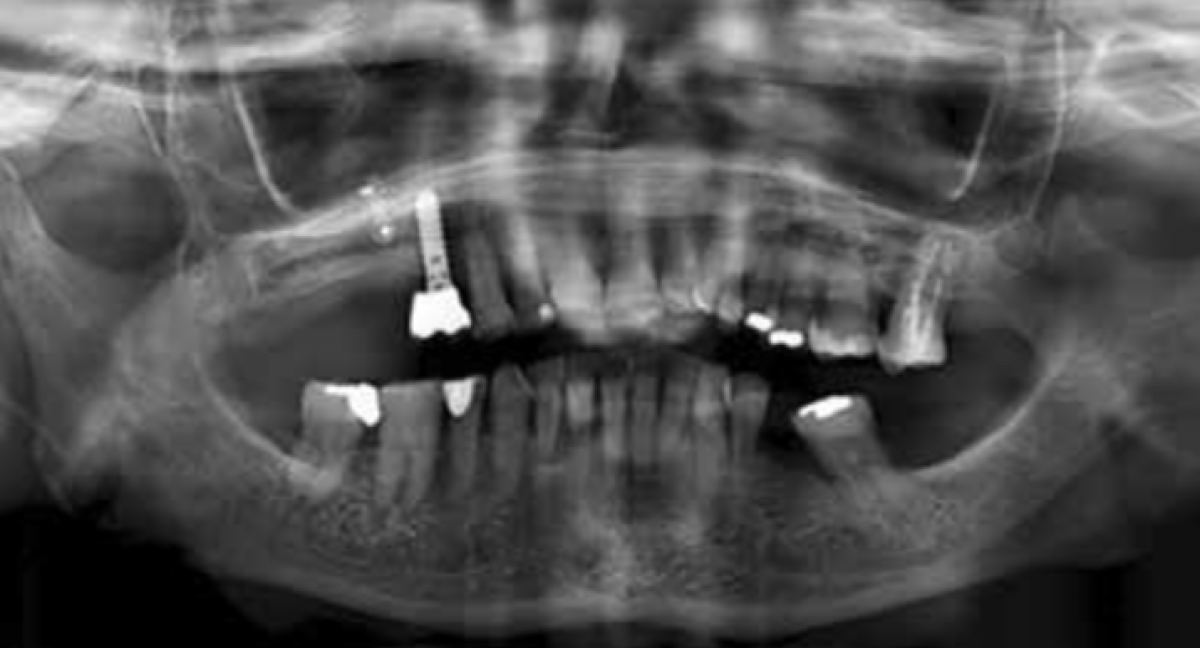
Fig 1
As shown in the CBCT, the remaining elements of the upper jaw are compromised and intended for extraction (fig. 2).
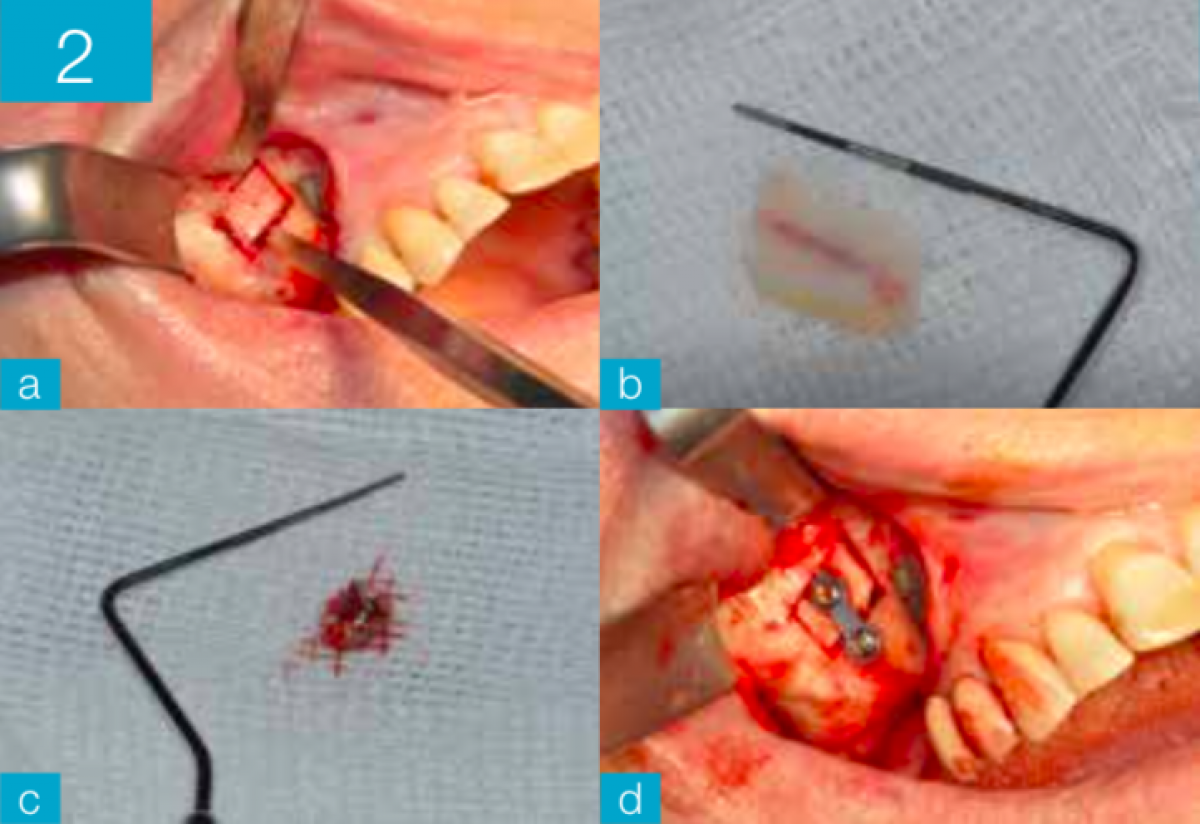
Fig 2
Due to the natural loss of the posterior teeth, the patient shows a collapse of the vertical dimension with a subsequent shift of the upper anterior elements, which are then splinted with cyanoacrylate adhesive to avoid the loss.
TREATMENT PLAN
Our implantoprosthetic project involves a full digital flux: a driven surgery is projected in the lower jaw, meanwhile in the upper part we opt for a deferred loading to 24 hours, distributed on 8/9 implants.
The treatment plan consists of three phases.
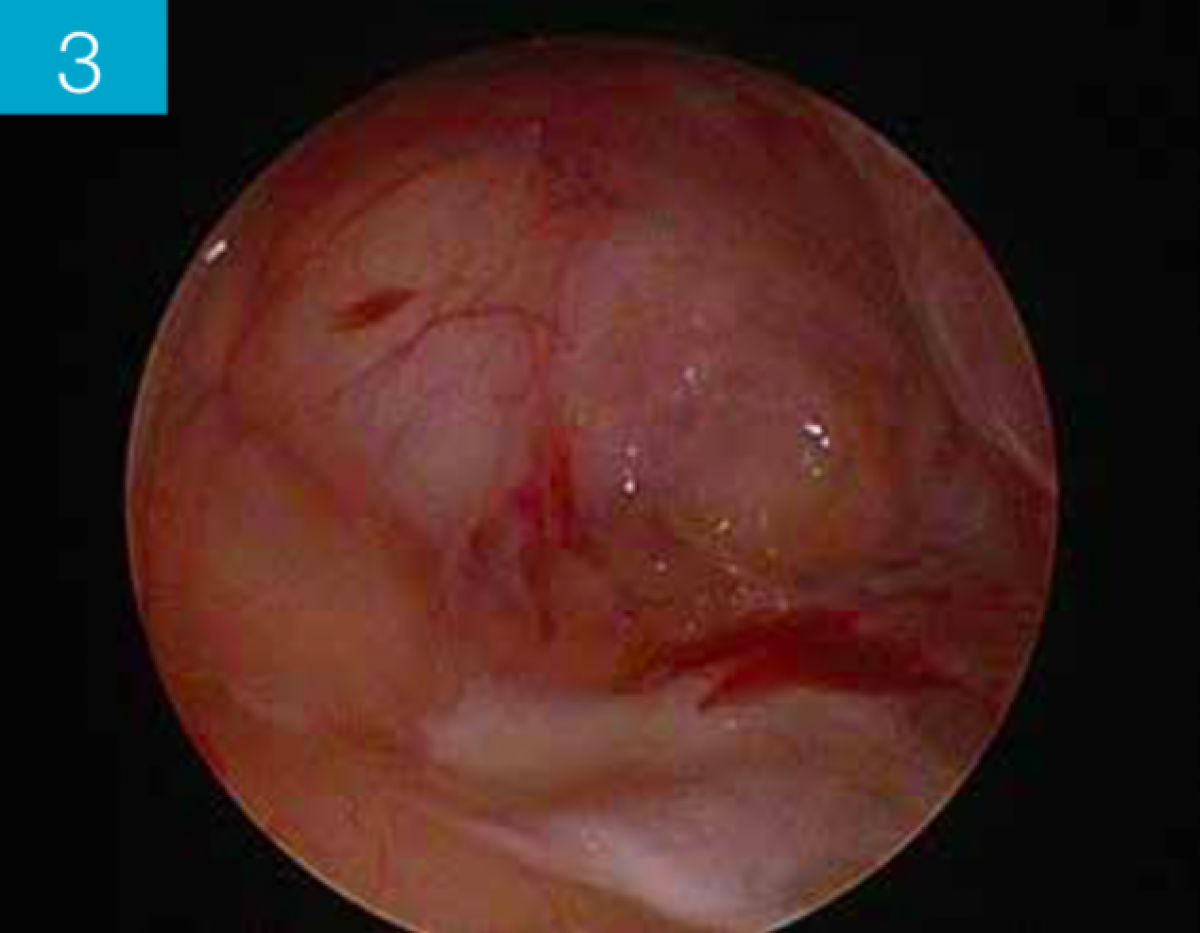
The first part begins by doing an intra-oral upper and lower scan and bite Block with Trios 3Shape (fig. 3) to produce a provisional in polymethylmethacrylate (PMMA).
Digital scanning ensures precision of the dental impression but above all, avoid the loss of the remaining teeth that could occur when dislocating the impression tray with traditional impression materials.
The scans are then sent via email to the laboratory that produces a digital flow PMMA provisional without master impressions.
We then begin to extract 1.2, 1.1, 2.1, 2.2, 2.5, 2.6, 2.7, 3.6, 3.8 and in the same session we prepare the elements 1.3, 2.3, 2.4 to then fix the provisional elements. (fig.4)
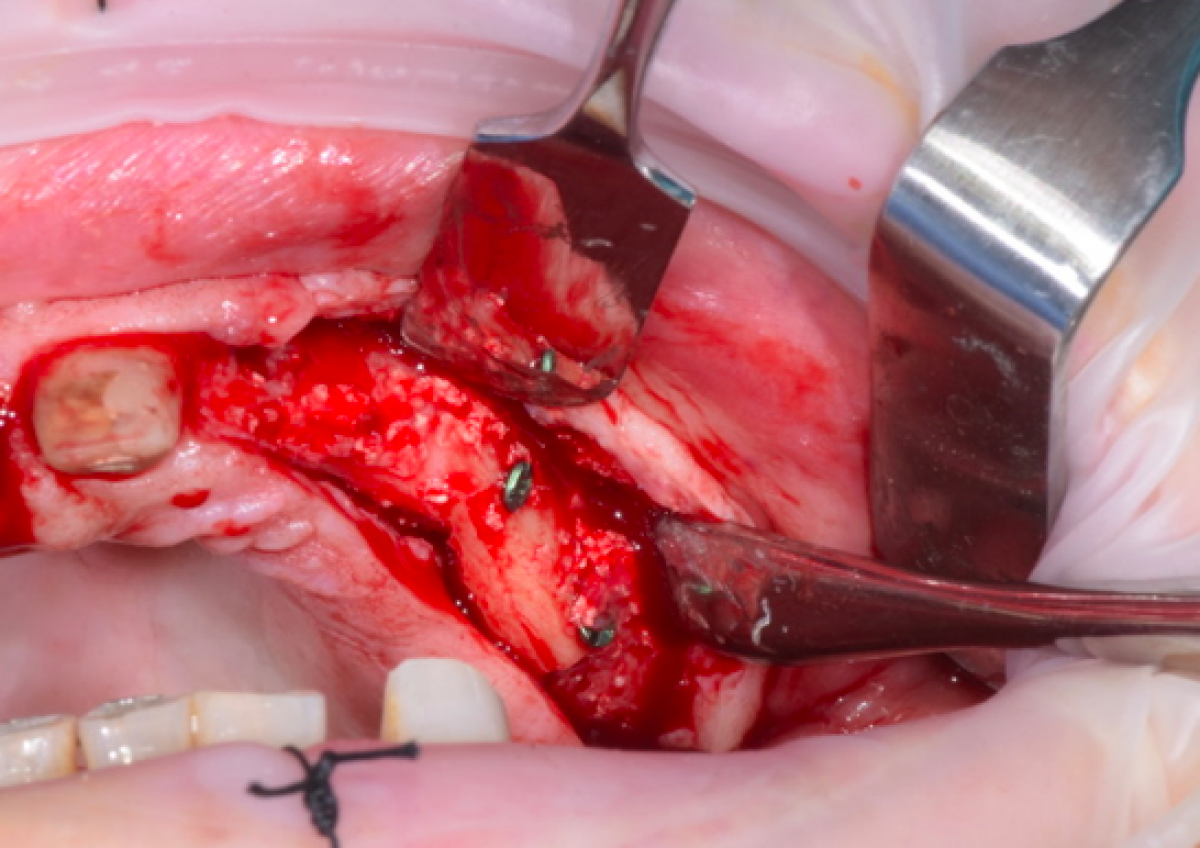
At this stage of the treatment we aim to create a proper vertical dimension but and to obtain a better aesthetic.
The second step is based on a restorative phase.
A bilateral maxillary sinus lift is performed in order to gain enough bone to insert implants in the zones 2.6, 2.7 and 1.6, 1.7. Once those areas are completely healed, the patient is ready for immediate loading on 9 implants.
The third stage of the therapy focuses on the upper and lower jaw simultaneously with two different immediate loading techniques.
The lower jaw is managed in guided surgery with immediate loading, projected starting from a digital impression with Concodiagnostix software.
The treatment intends to replace 3.2, 3.1, 4.1, 4.2 with two BTL implants in post extractive areas 3.2, 4.2, for an immediate loading from 3.2 to 4.2.
In the diatoric areas of the lower arch the project involves the addition of BTL implants in the areas 3.5, 3.7, 4.6, 4.7, for an immediate load of three elements in the third quadrant and two in the fourth.
In the final part of the project Codiagnostix creates a surgical guide template with a 3D printer starting from a STL file containing all the information to place the implants in the cartesian axes (fig. 5).
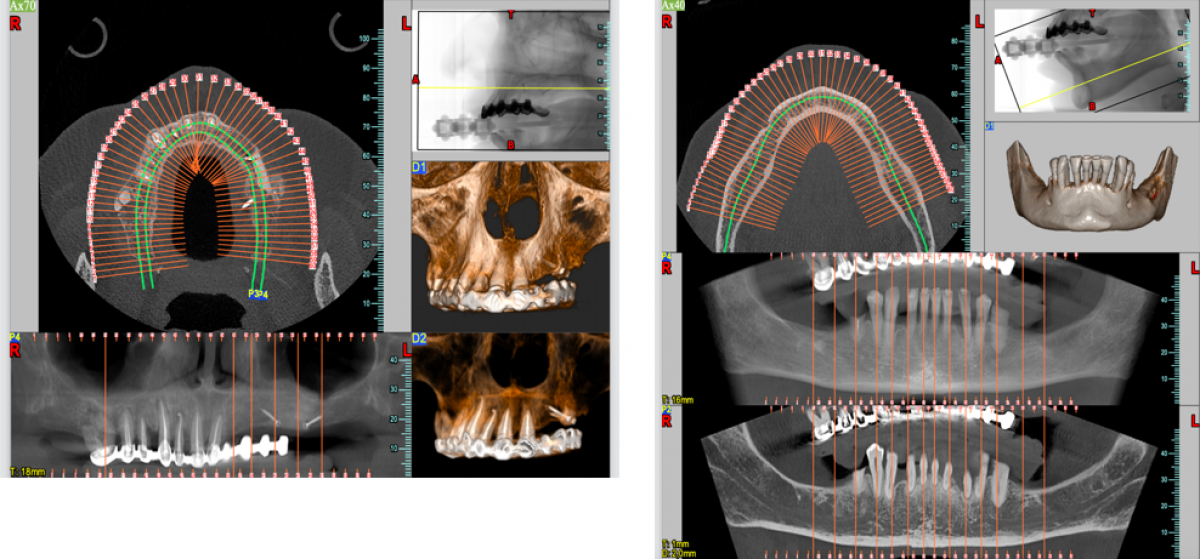
Once the extractions are done, the surgical template is placed in the oral cavity of the patient to check stability and fitting with the mucous, to ensure a progressive transfer of the drills and a correct positioning of the implants.
Once the drills are ready, it’s time to move on with the implants. once reached a minimum 35 Ncm toque, the abutments are screwed in and the pre-made provisional bonded to it.

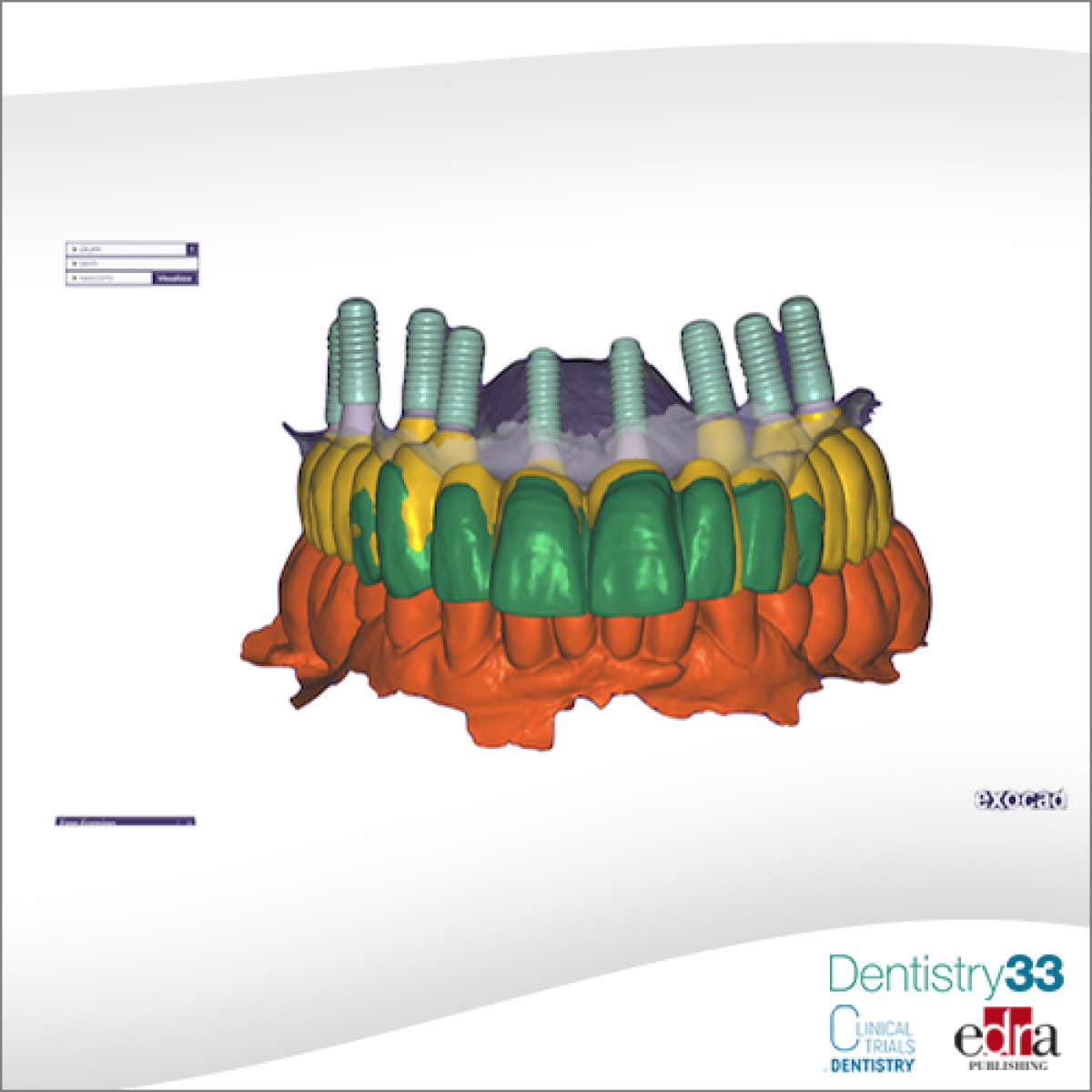
For the upper jaw the intervention consists of 9 implants for a deferred loading to twenty-four hours, of fourteen provisional elements tightened with a full digital work flow without master dental models, using palatal rugae to align the files.
The first step is an intra-oral scan with the provisional still cemented in position, making sure to broaden the scan to the edentulous areas and palatal rugae.
We then proceed to scan the lower area with the provisional elements in immediate loading just cemented after the guided surgery.
Once done with the scans, remove the provisionals and proceed to extract the abutments, leaving the patient toothless in the upper jaw.
The difficulty in the immediate loading in edentulous patient lies in the restoration of the vertical dimension. In fact, the prosthetic information collected at the beginning, if accurate, should be maintained after surgery as well.
The protocol we suggest goes past this issue thanks to the overlapping of pre and post-surgical files, realigning them on the palatal rugae.
Implants are embedded observing the prosthetic project placing BTL fixture in correspondence of 2.1, 2.3, 2.4, 2.6, 2.7 and 1.1, 1.3 1.5, 1.7. Once the 35 Ncm are reached and the scan bodies screwed in, we scan once again all the scan bodies, surrounding mucous and palatal rugae.
All the files are sent via email to the laboratory that export them in CAD and then rematch the files through the “record mesh”, a setting to pair surgical files of the cemented provisional and post surgical files with scan bodies screwed in the implants. (fig. 7)
This phase allow us to retain the information on the functional vertical dimension obtained with the provisional.
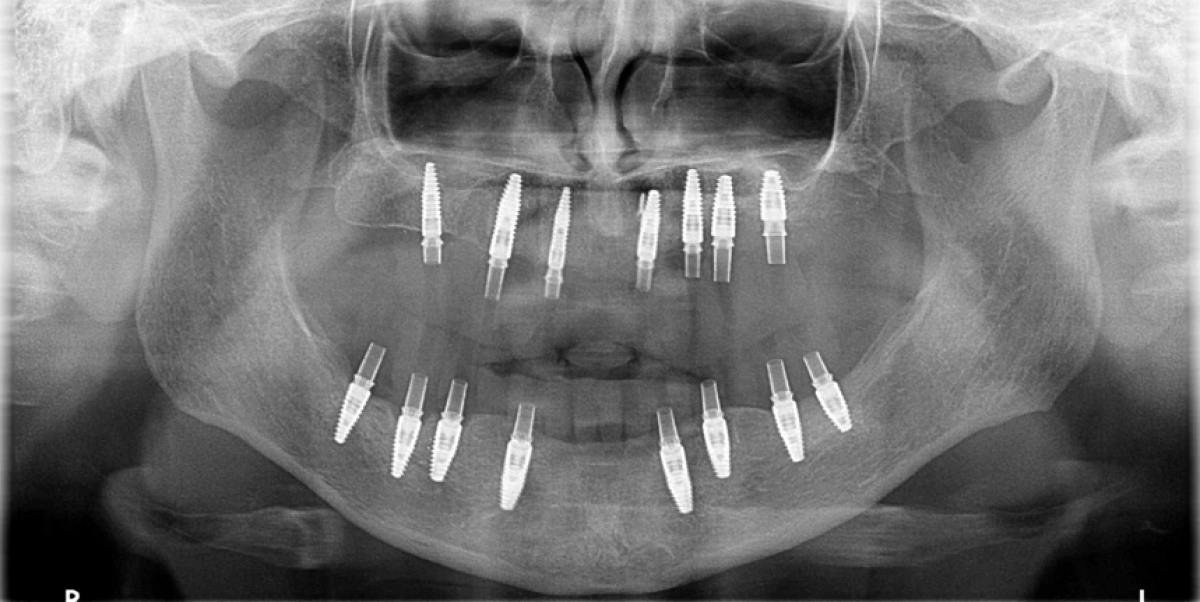
After this, the PMMA provisional is produced, polished and tooth linked, which is the last operation of the laboratory before it sends the provisional back to the studio, to torque tighten the implants and making sure there is fitting between abutment and implants with RXs (fig. 8).

The CAD shaping process has to keep into account for both arches provisionals the guided conditioning of the soft tissues, in order to obtain a proper gingival festooning and, therefore, a satisfying aesthetic, both in general and compared to the initial situation.

 Related articles

The aim of the present study was to conduct a critical literature review about the technique of computer-guided surgery in implantology to highlight the indications, purposes, immediate loading of...
News 22 September 2023

The new software aims to streamline the guided surgery workflow and provide dentists with a comprehensive guided surgery solution.
USA 09 June 2023 - 11 June 2023
Freehand vs. guided: from start to finish - 2023 AAID Central District Meeting

The program will cover the many challenges with free-hand and guided surgery in patients with inadequate bone.
Prosthodontics 23 March 2023
Video: Dr. Nick Fahey, author of “Guided Surgery: Making Implant Placement Simpler”

Dentistry is a hard and rewarding career, Fahey added. “With technology and the things available to us, it’s an incredibly interesting career option,” he said.
Implantology 23 March 2023
Dr. Yaste's new book, “Pragmatic AOX,” highlights the use of a stackable surgical guide systems to perform full-arch implantology and rehabilitation.
Read more
Products 14 October 2026

Royal Philips (NYSE: PHG, AEX: PHIA) announced that the Philips Sonicare Next-Generation DiamondClean 9900 Prestige, its most advanced and intelligent toothbrush to date, is now av

Key transaction by Heartland Dental and its supported practices expands opportunities for supported doctors, teams, and practices while strengthening Heartland Dental’s supported f
News 14 October 2026
Henry Schein Cares Celebrates 25 Years of Corporate Citizenship
Henry Schein Cares, Henry Schein, Inc.’s global corporate citizenship program, is celebrating a quarter century of bringing together Team Schein Members, customers, supplier partne
Editorials 14 October 2026
Scholarship at the CU Anschutz School of Dental Medicine reflects the collective contributions of our faculty, staff, residents and students.
Oral Hygiene & Prevention 14 October 2026
Propolis-containing formulations in caries prevention - a systematic review and meta-analysis.
This peer-reviewed oral hygiene & prevention article summarizes clinical evidence from Clinical oral investigations (2026). It focuses on findings that may help dental professionals evaluate...



Copyright © 2026 - All Rights Reserved
ISSN 2767-1178