


Laser-assisted surgical regenerative therapy for peri-implantitis
Lara Figini
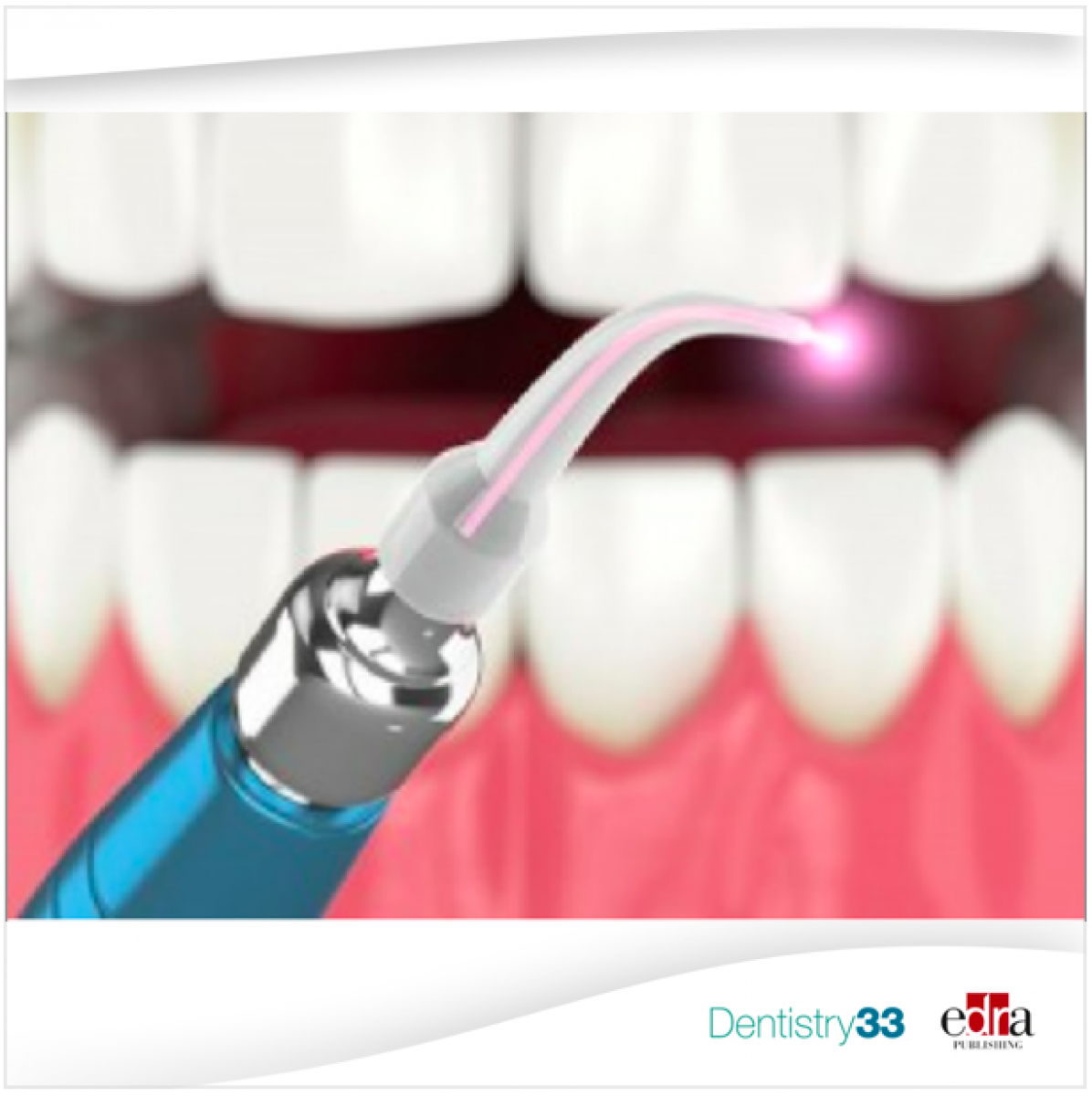
Peri-implantitis has been defined as a “pathological condition” that occurs in the tissues around dental implants, characterized by inflammation of the peri-implant connective tissue and by progressive loss of the supporting bone beyond the initial physiological remodeling. The treatment of peri-implantitis is still considered unpredictable and currently there is no standardized protocol available to manage this problem. Guided bone regeneration (GBR) of intrabony defects for peri-implantitis has been documented as one of the most promising treatment modalities. One of the main challenges during the surgical approach in regeneration therapy is to achieve the best and most effective disinfection of the contaminated implant surface. There is currently no gold standard to adequately decontaminate the implant surface. The application of the laser, in particular the erbium laser, for example, has been studied for the treatment of peri-implantitis in vitro and in vivo with promising results.
Materials and methods
In a pilot clinical study, published on Journal of Periodontology, March 2021, the authors evaluated the additional benefits of Er: YAG laser irradiation in the regenerative surgical therapy of bone defects associated with peri-implantitis. Twenty-four patients with radiographic diagnosis of peri-implantitis and with an intraosseous defect were randomly assigned to one of two groups, test group and control group. Both the test group and the control group received the following treatment:
- mechanical cleaning with open flap,
- supracrestal implantoplasty,
- bone grafting using a mixture of human allograft with demineralized bovine matrix, then
- covering with acellular dermal matrix membrane.
The only difference between the two groups was that the Er: YAG laser was also used in the test group to modulate and remove inflammatory tissue and to decontaminate the implant surface. Pocket depth (PD), clinical attachment level (CAL), and gingival index (GI) were clinically assessed by blinded examiners up to 6 months after surgery. Standardized radiographs were also taken to assess gain and filling of the bone defect. Student's t-tests were used to analyze clinical parameters.
Results
Significant reductions in PD, GI, and CAL gain occurred over time in both groups. The test group demonstrated significantly higher PD reductions at the implant site than the control group (2.65 ± 2.14 versus 1.85 ± 1.71 mm; test versus control, P = 0.014). There were no statistical differences in CAL gain, GI reduction, radiographic linear bone gain, or proportional reduction in defect size. There was a positive trend for patients in the test group in narrow intrabony defects to PD reduction and CAL gain. Membrane exposure negatively compromised the overall treatment, the result of the CAL gain and the reduction of PD in the test group.
Conclusions
From the data of this pilot study, which must be confirmed in other similar studies, it can be concluded that the use of laser irradiation during the regenerative therapy of peri-implantitis can help in the reduction of PD periodontal pockets.
For additional information: Laser-assisted regenerative surgical therapy for peri-implantitis: A randomized controlled clinical trial
 Related articles
News 19 October 2026

Milestone achieved approximately two years after full commercial launch reflects growing surgeon adoption and expanding use of EnFix across orthopedic sports medicine applications.
Implantology 16 October 2026
This peer-reviewed implantology article summarizes clinical evidence from Clinical oral implants research (2026). It focuses on findings that may help dental professionals evaluate treatment...
Implantology 04 September 2026
This peer-reviewed implantology article summarizes clinical evidence from Clinical oral implants research (2026). It focuses on findings that may help dental professionals evaluate treatment...
Implantology 20 August 2026
This peer-reviewed implantology article summarizes clinical evidence from Clinical oral implants research (2026). It focuses on findings that may help dental professionals evaluate treatment...
Implantology 06 August 2026
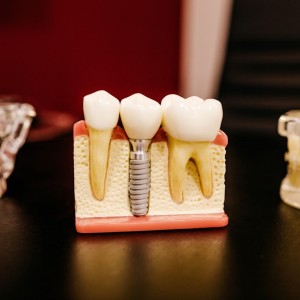
This peer-reviewed implantology article summarizes clinical evidence from Clinical oral implants research (2026). It focuses on findings that may help dental professionals evaluate treatment...
Read more
Products 20 October 2026

News 20 October 2026

In recognition of National Dental Hygiene Month, Delta Dental highlights key findings from its 2026 State of America’s Oral Health and Wellness Report , a nationwide analysis of co
News 20 October 2026
Abra Health Group has launched The Dental Bank, a new community impact initiative designed to make essential oral health resources more accessible to individuals and families throu
Editorials 20 October 2026
Woman’s skull likely proof of ancient nose amputation, says College of Dentistry professor

Qian Wang, professor in biomedical sciences at Texas A&M College of Dentistry in Dallas, identified what he and other researchers believe is likely one of the first examples of an
Endodontics 20 October 2026
This peer-reviewed endodontics article summarizes clinical evidence from Clinical oral investigations (2026). It focuses on findings that may help dental professionals evaluate treatment decisions,...


Copyright © 2026 - All Rights Reserved
ISSN 2767-1178