


Outcomes of One-Piece and Two-Piece Dental Implants After 15-17 Years: Follow-Up of a Randomized Clinical Trial.
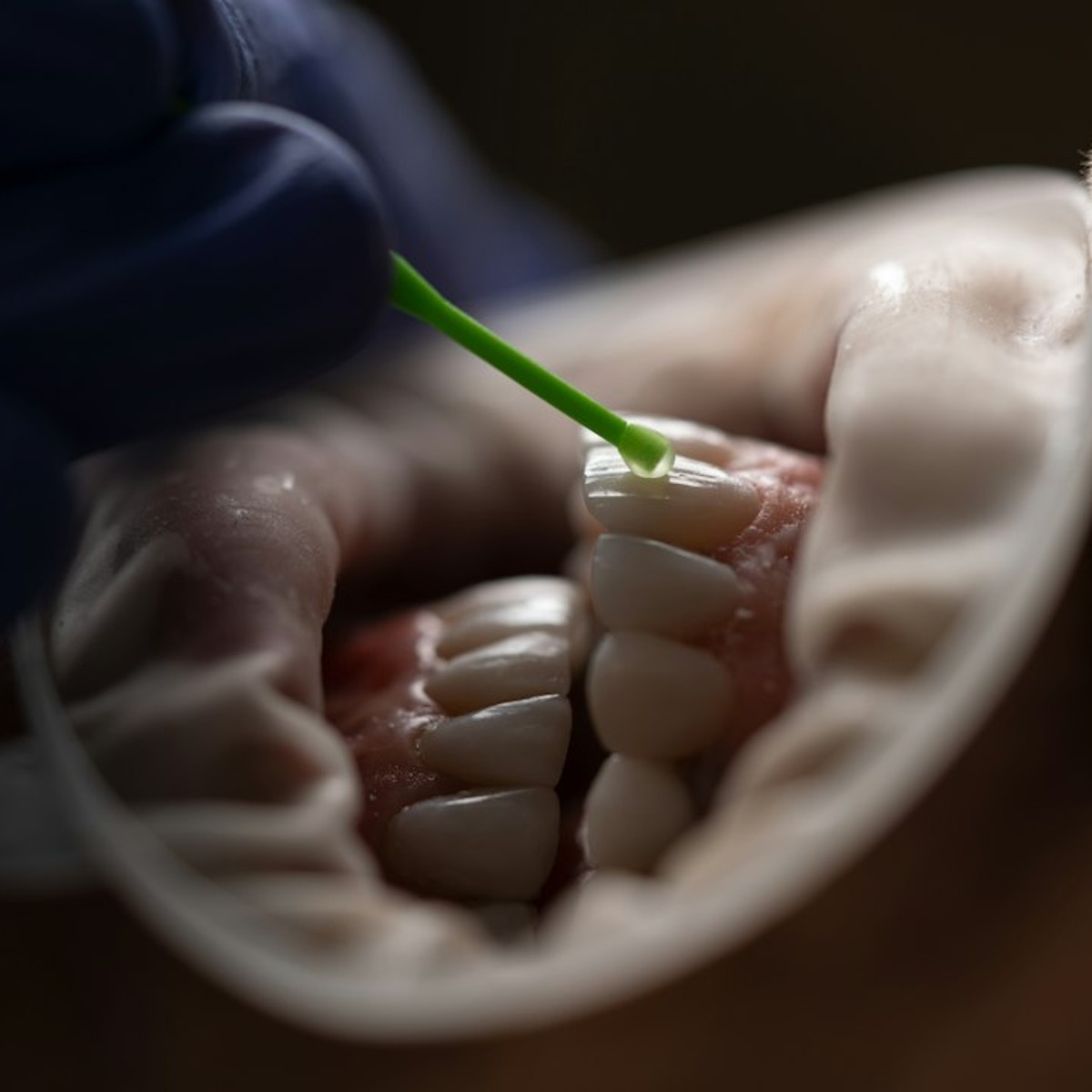
This peer-reviewed implantology article summarizes clinical evidence from Clinical implant dentistry and related research (2026). It focuses on findings that may help dental professionals evaluate treatment decisions, patient outcomes, or clinical protocols.
Abstract
OBJECTIVES: To compare the biological, technical, and esthetic outcomes of one-piece and two-piece dental implant systems after 15-17 years in the follow-up of a previously conducted randomized clinical trial.
MATERIAL AND METHODS: This study represents the 15-17-year follow-up of a previously conducted randomized clinical trial included 60 patients requiring dental implant therapy. They were randomly assigned to receive either a one-piece (STM) or two-piece (BRA) implant system. Final restoration delivery served as baseline, after which all patients entered a structured maintenance program. Clinical re-evaluations were performed at 1, 5, 10, 12, 15, and 17 years. Biological, technical, radiographic, and esthetic parameters were assessed at each follow-up visit using standardized clinical and radiographic protocols.
RESULTS: Thirty-nine patients with 95 implants, all of whom had completed a 15- or 17-year follow-up visit, were included in the final analysis (STM: 22 patients/45 implants; BRA: 17 patients/50 implants), with a mean follow-up of 16.4 ± 1.1 years. The cumulative implant survival rate was 95.0% (STM: 91.8%; BRA: 98.0%). Marginal bone levels at 15-17 years were 0.08 ± 1.15 mm (STM) and 1.53 ± 0.81 mm (BRA). Clinical parameters remained stable in both groups, although BOP was higher in the STM group. Peri-implant mucositis was observed in 49.7% of all implants and peri-implantitis in 13.3%, with higher rates in the STM group. Technical complications occurred in 28 implants (STM: 23; BRA: 5), with the STM group showing a higher complication rate (implant level: 35.4% vs. 5.8%). Esthetic observations included visible crown margins in 62 implants and mucosal shimmering in 54 implants, with no implant fractures reported.
CONCLUSIONS: Both implant systems demonstrated favorable long-term outcomes with high survival rates. While the one-piece system showed superior marginal bone preservation, it was associated with a higher rate of technical complications.
TRIAL REGISTRATION: ClinicalTrials.gov identifier: KEK-ZH-Nr 2014-0201.
Key takeaway
Key takeaway: Because the evidence comes from a clinical trial design, the findings may be especially useful when comparing treatment approaches in daily practice.
Introduction from full text
Missing teeth can either be replaced by fixed or by removable implant‐supported prostheses. The clinical decision between the two differing types of restorations is based on anatomic, esthetic, and economic factors, and most importantly the wishes of the patient. High survival rates and low complication rates of the prostheses are an important prerequisite for the general success of treatment, as failures of the prosthesis may result in failures of the entire implant rehabilitation. One of the most important strategies to reduce the risk of failure is a comprehensive pretreatment diagnostic work‐up followed by the decision to fabricate either a fixed or a removable implant prosthesis. According to the prosthetic plan the number of implants should be defined, as well as their ideal three‐dimensional prosthetic positions in the mesio‐distal, bucco‐oral, and vertical dimensions.
In the case of single tooth gaps or partially edentulous areas framed by healthy neighboring teeth, fixed implant prostheses are usually indicated, 1 and the decision‐making process is straightforward. In edentulous situations, however, the choice of fixed or removable implant prostheses is more complex. A major driver of the decision is facial esthetics (ie, the need for facial tissue support). If both fixed and removable prostheses may be considered, the next factor influencing the selection is the complexity of the surgical interventions required. With pronounced horizontal and/or vertical bone loss, large amounts of hard and soft tissue regeneration may be needed for fixed implant prostheses. Hence, in cases where there is a need for facial tissue support or large bone and/or soft tissue augmentations, removable implant‐retained prostheses such as implant‐retained overdentures are less invasive treatment options. 2 , 3
Numerous systematic reviews have been performed in recent years to evaluate the survival and complication rates of fixed and removable implant‐retained prostheses. 4 , 5 , 6 , 7 , 8 , 9 High 5‐year survival rates ranging from 97.1% 10 for fixed to 95%‐100% for removable prostheses 4 have been reported. In daily practice, however, high survival rates are not the only criterion defining the success of the implant treatment, as they only represent those prostheses remaining in use for a defined follow‐up time. 10 They do not show whether or not these prostheses were affected by complications influencing the general success of the implant treatment. 10 It is well known that patients experiencing complications with their fixed or removable implant prostheses are significantly less satisfied with the implant treatment than patients who do not experience problems. 11
In a systematic review conducted by Salvi and Brägger 12 as part of the proceedings of the 4th International Team for Implantology Consensus Conference, prosthetic risk factors were defined as either technical or mechanical risks. Therefore, based on this statement, the prosthetic complications can be considered as technical or mechanical complications. The technical complications represent those relevant to laboratory‐fabricated parts such as fracture and chipping of the veneering materials, whereas mechanical complications represent complications relevant to the prefabricated parts, such as implant fracture or abutment failures. 12
As the reviews both fixed and removable implant prostheses exhibit different technical and/or mechanical problems over time. 4 , 8 , 10 , 12 , 13
In the following, the most frequent prosthetic complications will be discussed for both fixed and removable implant prostheses, including risk factors for the complications, associations with early and late implant survival, and the prevention and management of complications. For simplification, the term “technical complications” will be used for both technical and mechanical problems.
Peer-reviewed source
Miha Pirc, Kevser Pala, Fabiene Rusch, Ronald E Jung, Daniel S Thoma, Marc Balmer
Clinical implant dentistry and related research. 2026
DOI: 10.1111/cid.70157
PMID: 42126189
PubMed: https://pubmed.ncbi.nlm.nih.gov/42126189/
Image: Kamal Hoseinianzade (Unsplash)
 Tag
Related articles
Digital Dentistry 26 October 2026
To report a fully digital and guided immediate-load All-on-4 protocol conducted in Brazil on a 59-year-old male patient with an edentulous maxilla and a history of oropharyngeal cancer surgery,...
Implantology 23 October 2026
This peer-reviewed implantology article summarizes clinical evidence from Clinical oral implants research (2026). It focuses on findings that may help dental professionals evaluate treatment...
Implantology 22 October 2026
This peer-reviewed implantology article summarizes clinical evidence from Clinical oral implants research (2026). It focuses on findings that may help dental professionals evaluate treatment...
Implantology 16 October 2026
This peer-reviewed implantology article summarizes clinical evidence from Clinical oral implants research (2026). It focuses on findings that may help dental professionals evaluate treatment...
Implantology 04 September 2026
This peer-reviewed implantology article summarizes clinical evidence from Clinical oral implants research (2026). It focuses on findings that may help dental professionals evaluate treatment...
Read more
Products 27 October 2026

The partnership pairs DentKits’ at-home custom dentures with clinical oversight from Dentistry.One’s network of licensed dentists, making dentures convenient and accessible for mor
News 27 October 2026

New market report recaps Q3 and year-to-date trends and explains what each shift means for dentists weighing a transition.
Editorials 27 October 2026
Expanded coverage: Texas A&M’s Plemons named 2026 Texas Dentist of the Year

Sometimes a small act of generosity can make a tremendous impression, especially on a 7-year-old.
Products 26 October 2026
New Technology Offers Practices an Alterative Way to Approach Biological Monitoring
FDA-cleared InstaTru biological indicator for steam sterilization is designed to provide results in 20 seconds without traditional incubation.



Copyright © 2026 - All Rights Reserved
ISSN 2767-1178