


Adjunctive Electrolytic Implant Surface Decontamination in the Reconstructive Surgical Treatment of Peri-Implantitis-A Randomized Clinical Trial.
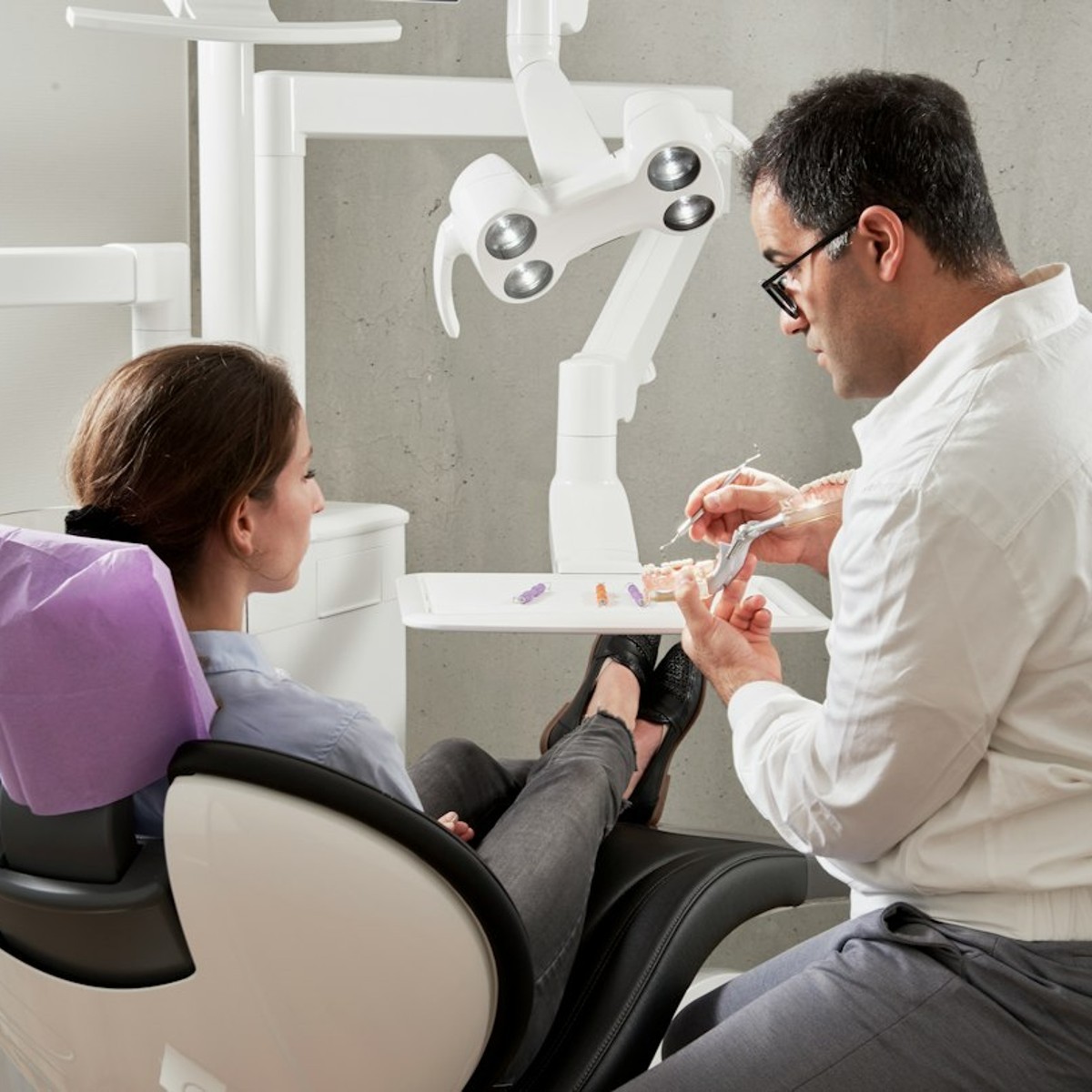
This peer-reviewed implantology article summarizes clinical evidence from Clinical oral implants research (2026). It focuses on findings that may help dental professionals evaluate treatment decisions, patient outcomes, or clinical protocols.
Abstract
OBJECTIVES: The aim of this study was to evaluate the adjunctive effect of electrolytic cleaning in the surgical treatment of peri-implantitis.
MATERIALS AND METHODS: A total of 40 patients (44 implants) with peri-implantitis-associated intra-bony defects were included in this single-center randomized controlled trial. Surgical decontamination of implant surfaces was initiated by use of a rotating titanium brush. Following random allocation, adjunctive electrolytic cleaning was performed in the test group. Xenogeneic bone substitute and a resorbable collagen membrane were then used in both groups. Clinical parameters including probing pocket depth (PPD), bleeding/suppuration on probing, buccal mucosal recession (REC), and keratinized mucosa were assessed at 6 and 12 months. Radiographic marginal bone levels (MBL) and patient-reported outcomes (PROs) were evaluated at 12 months. The primary outcome was a composite measure including implant survival, complete absence of BoP/SoP, PPD ≤ 5 mm and REC ≤ 1 mm at 12 months.
RESULTS: At 12 months, no implants were lost. The composite outcome was complete at 27.3% of control and 40.0% of test implants (p = 0.41). Mean PPD reductions were 4.5 ± 2.6 mm (control) and 3.8 ± 2.3 mm (test), while MBL gains were 1.9 ± 2.4 mm and 2.1 ± 2.0 mm, respectively. No significant intergroup differences were observed for any clinical, radiographic or PROs. Post-surgical complications occurred in the test group.
CONCLUSIONS: Clinical, radiographic and patient-reported outcomes of surgical therapy of peri-implantitis were favorable at 12 months. The adjunctive use of electrolytic cleaning provided no added benefit over the use of a rotating titanium brush alone.
TRIAL REGISTRATION: ISRCTN17197337 (ISRCTN).
Key takeaway
Key takeaway: Because the evidence comes from a clinical trial design, the findings may be especially useful when comparing treatment approaches in daily practice.
Introduction from full text
Growing numbers of inserted dental implants correlate to an increasing number of infected implants [ 1 ]. Periimplantitis (PI) is defined as an inflammatory process affecting both periimplant soft and hard tissue. Craterlike bone defects, ongoing bone loss, pus, and bleeding on probing (BoP) are clinical parameters that have to be present to justify the diagnosis of PI [ 2 , 3 ]. PI correlates to bacterial biofilms growing on implants or abutments [ 4 ]. In view of the various definitions of PI and the lack of agreement in the dental community about an acceptable threshold of bone loss, there is no consensus on when pathology starts and how PI can be diagnosed precisely. Hence, there is no consensus about prevalence data [ 5 , 6 , 7 ]. A proper treatment modality is lacking [ 8 ]. Whether the bacterial biofilm is the single causal factor or only correlates to PI [ 9 ] is still a matter of discussion. This debate about etiology is not merely an academic question, but may influence the success rate of therapy, because of possible differences in specimen susceptibility and uncorrectable surgical or mechanical obstacles. In any event, biofilm needs to be removed to prevent progression of disease, or to treat PI successfully. As implant surfaces exposed to the oral cavity are immediately colonized by bacteria, the surfaces need to be re-osseointegrated for good long-term results [ 10 ].
Infection of plates or other orthopedic devices, or endoprostheses caused by polymicrobial biofilms, is a major challenge. The average infection rate of implants in the shoulder, knee, and hip is less than 2% in most treatment centers [ 11 , 12 ]. A recent meta-analysis demonstrates an overall cumulative incidence of endoprosthetic joint infection across all studies of 0.78% [ 13 ]. It has been reported that, in the United States, more than 1 million implants placed in shoulders, knees, and hips need to be replaced every year due to infections [ 14 ]. A systematic review showed a reinfection rate of 7.6% (95% CI 3.4–13.1) of hip and knee replacements [ 15 ]. Polymicrobial biofilm on orthopedic implants shows high resistance to immune defense, and will result in local inhibition of granulocyte activity around the implant. This effect is referred to as frustrated phagocytosis, which leads to degranulation, reduced ingestion ability, and production of oxygen radicals in the granulocytes [ 16 ]. The standard treatment protocol for infected orthopedic implants is replacement in a one- or two-stage procedure, with a success rate of 80−90% [ 17 , 18 ]. Even early infections within the first 30 days after implantation that are treated by aggressive debridement and long-time antibiotics yield success rates of only 71% [ 19 , 20 ].
In most cases, all treatment modalities fail to cure infected implants, requiring replacement of the implant or causing at least an inadequate failure rate and immense costs. Therefore, it is necessary to search for another approach to decontaminate infected implants.
Several ablative methods to remove biofilms, such as mechanical debridement with curettes, brushes, lasers, cotton pellets, cold plasma, or air-powder sprays, combined or not combined with disinfecting or antibiotic agents, have been discussed. Re-osseointegration of formerly infected dental implant surfaces was reported in animal studies for between 39% and 46% of the surface [ 21 ]. There is no evidence of whether and to what percentage re-osseointegration occurs clinically. A recent review of the literature demonstrated the equality of all published methods, and no method seemed able to achieve stable results over time [ 22 ]. Follow-up revealed recurrence of the disease in up to 100% for some methods after one year [ 8 ]. A powder-spray system (PSS) is commonly used to clean implant surfaces. Erythritol (size 14 µm) or glycine (size 25 µm) particles are accelerated by air pressure (2 bar). When the particles impact at an angle of 30–60° at an ideal working distance of 3−5 mm, the kinetic energy of the powder removes biofilm, according to the manufacturer’s manual. Several animal studies investigating re-osseointegration after cleaning with a PSS proved incomplete re-osseointegration [ 21 ]. Improvement of periimplant parameters, such as BoP, probing depth, and pus was clinically proven after the PSS, but re-osseointegration was not proven. Furthermore, the PSS failed to demonstrate superiority over any other treatment modality [ 23 , 24 , 25 ]. Possible reasons for this incomplete cleaning efficacy might be craterlike bone defects, with limited access and thus an improper working angle and distance of the device, the macro- and micro-design of implant surface, and oversized particles for much smaller bacteria hidden in the microstructure of textured implants. In an in vitro test, implants contaminated with E. coli were treated with a continuous current of 0−10 mA. Two implants were loaded as either cathode or anode, resulting in reduced numbers of bacteria on both implants. On anodic implants, a current of more than 75 mA caused complete killing of the bacteria [ 26 ]. Zipprich et al. loaded the implant as a cathode, and a platinum-coated titanium acted as the anode [ 27 ]. In this in vitro trial, the implants were exposed to a sodium-iodine solution buffered by lactic acid to avoid alkalization of the salt solution [ 27 ]. Hydrolytic splitting of water produces hydrogen cations as long as the implants are loaded. These hydrogen cations penetrate the biofilm, and after an electron has been taken from the implant surface, hydrogen forms between the implant surface and the biofilm. The hydrogen bubbles remove the biofilm. While all the other discussed methods for removing a biofilm are ablative, the electrolytic approach presented here works under the biofilm, directly on the implant surface, regardless of surface characteristics or alloy. Our results support the finding that the potassium iodine solution allows a higher current than the previously published sodium chloride solution [ 27 ]. This results in higher hydrogen production and a possible direct bactericidal effect. A cooperating working group examined the exact working mode of this method and proved its effectiveness in killing bacteria [ 28 ]. The current gold standard in dentistry is to remove biofilm with a PSS. These positive preliminary results for an electrolytic approach (EC) encouraged the authors to compare the cleaning effect of air-powder-water spray as an accepted method of cleaning contaminated implant surfaces with the new electrolytic approach in vitro.
Peer-reviewed source
Erik Regidor, Alberto Ortiz-Vigón, Jessica Berglundh-Gottlieb, Jan Derks, Kostas Bougas
Clinical oral implants research. 2026
DOI: 10.1111/clr.14245
PMID: 42365519
PubMed: https://pubmed.ncbi.nlm.nih.gov/42365519/
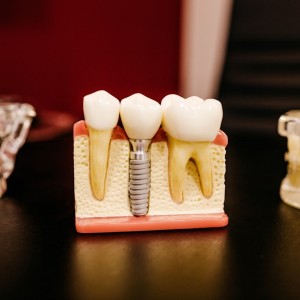
Image: Caroline LM (Unsplash)
 Related articles
Implantology 22 October 2026
This peer-reviewed implantology article summarizes clinical evidence from Clinical oral implants research (2026). It focuses on findings that may help dental professionals evaluate treatment...
Implantology 16 October 2026
This peer-reviewed implantology article summarizes clinical evidence from Clinical oral implants research (2026). It focuses on findings that may help dental professionals evaluate treatment...
Implantology 04 September 2026
This peer-reviewed implantology article summarizes clinical evidence from Clinical oral implants research (2026). It focuses on findings that may help dental professionals evaluate treatment...
Implantology 20 August 2026
This peer-reviewed implantology article summarizes clinical evidence from Clinical oral implants research (2026). It focuses on findings that may help dental professionals evaluate treatment...
Implantology 06 August 2026
This peer-reviewed implantology article summarizes clinical evidence from Clinical oral implants research (2026). It focuses on findings that may help dental professionals evaluate treatment...
Read more
Continuous innovation across the DEXIS ecosystem helps clinicians work with greater clarity, confidence, and efficiency
News 23 October 2026
CrownPoint Partners announced the successful closing of a $9.2 million, five-property dental sale-leaseback portfolio located throughout Michigan.
News 23 October 2026
Dentsply Sirona, Midwest Dental Expand Technology Relationship
Beginning November 1, Dentsply Sirona will expand its long-standing relationship with Midwest Dental Equipment & Supply beyond consumables to include its complete technology portfo
Editorials 23 October 2026
Honoring Excellence: Graduation Awards for CU Anschutz Dental Students and Faculty

As the University of Colorado Anschutz School of Dental Medicine celebrates the graduating DDS Class of 2025, we are proud to recognize the students and faculty members whose excep
Products 22 October 2026


Copyright © 2026 - All Rights Reserved
ISSN 2767-1178