


How much does gingival thickness affect post-implant bone remodeling?
Lara Figini
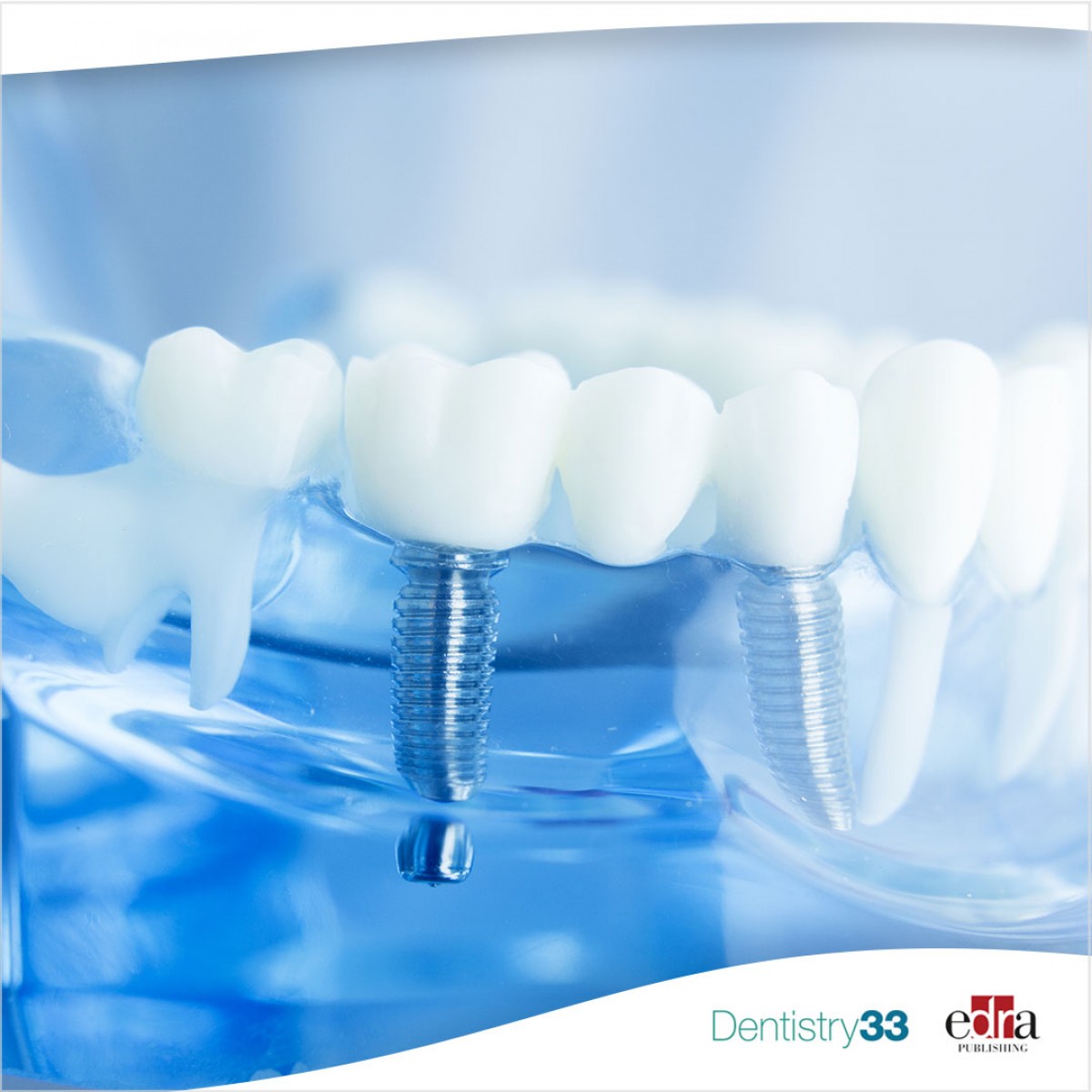
The stability of the marginal bone and soft tissue around dental implants has been established as the main feature to ensure the health of the implant.
The healthy condition of the soft tissue supports peri-implant bone stability and allows for a greater success of the implant and related prosthetic components. The peri-implant soft tissue structure establishes a biological barrier against bacteria and acts as a protective factor against peri-implant diseases.
One of the criteria to define the potential presence of peri-implant pathology is the evidence of progressive bone loss. However, late marginal bone loss (MBL) must be distinguished from early bone remodeling.
Early remodeling is initial bone remodeling with a variable non-infectious process occurring within the first year after implant placement. It has a multifactorial etiology and could be influenced by many local factors, such as those related to surgery and post-surgery. However, it should be emphasized that an infection process can occur even at an early stage.
Late bone loss, on the other hand, can be related to an infectious process called peri-implantitis which requires a diagnosis by evaluating the clinical and radiological parameters.
Several literature studies have now suggested that gingival thickness can interfere with the bone remodeling in cases of implantology, especially in the early post-surgical period.
Materials and methods
In a systematic review published in Clinical Oral Implants Research in February 2023, the authors evaluated the influence of soft tissue thickness on initial bone remodeling after implant placement. About this work Prof. Massimo Gagliani in his Monday Agora.
The literature search was conducted by two independent reviewers via electronic databases up to May 2022. Human clinical trials (CCTs), randomized controlled trials (RCTs), and controlled trials were included. The risk of bias was assessed using the Cochrane Collaboration tool.
Meta-analysis and trial sequential analysis (TSA) of selected articles were performed. The primary outcome was a marginal bone loss.
Results
After the initial screening, 6 studies were included in the final analysis, with a total of 354 implants and a follow-up of 10 to 14 months. 194 implants were placed with a soft tissue thickness ≥2 mm and 160 with a soft tissue thickness <2 mm before implant placement.
The included studies showed a high level of heterogeneity (I2 >50%). The meta-analysis showed a statistically significant difference between the two groups (0.54; p = 0.027), and the TSA analysis confirmed the results, despite the limited number of dental implants considered.
The results of this review showed that bone remodeling is more significant when the initial thickness of the keratinized soft tissues is less than two millimeters.
Further analysis showed that age and follow-up were not statistically significant factors influencing bone loss (p = 0.22 and p = 0.16, respectively).
Conclusions
From the data of this review, which need to be confirmed in other similar studies and reviews, it can be concluded that initial soft tissue thickness appears to influence marginal bone loss after a short follow-up period.
 Related articles
Implantology 24 March 2025
Marginal bone loss as success criterion in implant dentistry: beyond 2 mm

The aim of this study was to analyze marginal bone loss (MBL) rates around implants to establish the difference between physiological bone loss and bone loss due to peri-implantitis.

A study in the Angle Orthodontist evaluated the validity and reliability of marginal bone level measurements made on CBCT images produced using two reconstruction techniques, two viewing modes, and...
Conventional rotary drilling is the most common approach for preparing the implant bed, but there are other predictable ways to achieve this preparation, including the piezoelectric osteotomy (PO),...
News 23 March 2026
New Gingividual® Concept Basic supports standardised digital workflows for soft tissue management

Camlog announces the international launch of Gingividual® Concept Basic, a standardised, digital-first solution designed to streamline implant prosthetic workflows and support predictable soft...
Implantology 24 December 2025
Soft tissue management in aesthetic implantology: clinical case with 15-year follow-up

Implant therapy is widely recognized as an effective and predictable solution for replacing missing teeth, supported by extensive scientific evidence.
Read more

Continuous innovation across the DEXIS ecosystem helps clinicians work with greater clarity, confidence, and efficiency
News 23 October 2026
CrownPoint Partners announced the successful closing of a $9.2 million, five-property dental sale-leaseback portfolio located throughout Michigan.
News 23 October 2026
Dentsply Sirona, Midwest Dental Expand Technology Relationship
Beginning November 1, Dentsply Sirona will expand its long-standing relationship with Midwest Dental Equipment & Supply beyond consumables to include its complete technology portfo
Editorials 23 October 2026
Honoring Excellence: Graduation Awards for CU Anschutz Dental Students and Faculty

As the University of Colorado Anschutz School of Dental Medicine celebrates the graduating DDS Class of 2025, we are proud to recognize the students and faculty members whose excep
Implantology 23 October 2026
This peer-reviewed implantology article summarizes clinical evidence from Clinical oral implants research (2026). It focuses on findings that may help dental professionals evaluate treatment...



Copyright © 2026 - All Rights Reserved
ISSN 2767-1178