


The State of Open Data 2022
Global attitudes towards open data

Now in its seventh year, the 2022 State of Open Data report examines the attitudes and experiences of researchers working with open data.
With more than 5,400 respondents, this year’s survey is the largest since the COVID-19 pandemic began and continues to provide a detailed and sustained insight into the motivations, challenges, perceptions and behaviors of researchers towards open data.
Key findings include:
- Some of the top motivators for data sharing are related to article publication. Researchers are more inclined to share their research data where it can have an impact on citations and the visibility of their research, rather than being motivated by public benefit or journal or publisher mandate.
- Four out of every five respondents are in favor of research data being made openly available as common practice.
- Over 70% of respondents are being required to follow a policy on data sharing for their most recent piece of research.
- Credit and recognition were once again a key theme for researchers in sharing their data. 75% of authors indicate they receive too little credit for data sharing.
- 72% of respondents said they would rely on an internal resource for help with managing or making their data openly available.
This year’s report includes guest articles from open data experts at the National Institutes of Health, the White House Office of Science and Technology Policy, the Computer Network Information Center, Chinese Academy of Sciences, publishers and universities.
Science, Digital, Gregory Goodey, Mark Hahnel, Yuanchun Zhou, Lulu Jiang, Ishwar Chandramouliswaran, Amy Hafez, et al. 2022. “The State of Open Data 2022.” Digital Science. doi:10.6084/m9.figshare.21276984.v5.
 Related articles
The 2022 State of Open Data report shows a growing consensus that data produced by researchers should be made openly available. But clear challenges remain.
Dental materials 27 January 2023

This study evaluated the association between caries risk in adults and SDH such as ZIP Codes, systemic diseases, payment methods, and race or ethnicity.
Periodontology 24 October 2022
Dental schools can implement targeted strategies to improve oral health outcomes

A learning health system for dentistry is now feasible, as an increased number of oral health care encounters are captured in electronic health records.
Implantology 16 October 2026

This peer-reviewed implantology article summarizes clinical evidence from Clinical oral implants research (2026). It focuses on findings that may help dental professionals evaluate treatment...
Implantology 04 September 2026

This peer-reviewed implantology article summarizes clinical evidence from Clinical oral implants research (2026). It focuses on findings that may help dental professionals evaluate treatment...
Read more
Products 22 October 2026

News 22 October 2026

Royal Philips (NYSE: PHG, AEX: PHIA), a global leader in oral healthcare, today announced the formation of the Philips Sonicare Global Clinical Advisory Board, a group of external
News 22 October 2026
Opalescence Launches Limited-Edition Teeth Whitening Flavors
Opalescence whitening , the #1-selling professional teeth whitening brand, is introducing two limited-edition flavors, available only while supplies last: Pumpkin Spice and Birthda
Editorials 22 October 2026
2025 in Review: Highlights from the CU Anschutz School of Dental Medicine
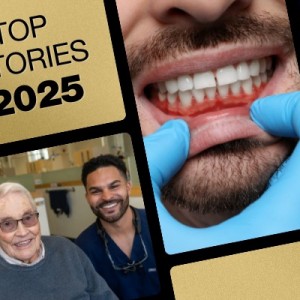
From collaborative research to exceptional patient care and education , 2025 was a year of innovation and impact at the University of Colorado Anschutz School of Dental Medicine.
Implantology 22 October 2026

This peer-reviewed implantology article summarizes clinical evidence from Clinical oral implants research (2026). It focuses on findings that may help dental professionals evaluate treatment...



Copyright © 2026 - All Rights Reserved
ISSN 2767-1178