


Scientists who don’t speak fluent English get little help from journals, study finds
By Mariana Lenharo, Nature News

Most journals offer minimal support for scientists whose first language is not English, according to an analysis of hundreds of titles in the biological sciences.
The study found, for example, that almost none of the journals analyzed state that they will not reject manuscripts solely on the basis of the quality of English-language writing. Such a lack of support can have serious repercussions for scientists’ careers. The vast majority of papers are published in English, meaning that scientists who learn it as a second language have to make an extra effort to secure publications in international journals. Such publications are a key driver of career advancement and peer recognition.
“The role of journals is huge because they can be a source of language barriers, but they also have the potential to solve many of them,” said Tatsuya Amano, a biodiversity researcher at the University of Queensland in Brisbane, Australia, and a co-author of the study, which was published on the preprint server EcoEvoRxiv. It has not yet been peer reviewed.
Some journals have started to offer tools to assist scientists whose first language is not English — but such examples are still rare.
English only, please
To assess what journals are doing to accommodate authors with varying levels of English proficiency, researchers analyzed author guidelines from 736 journals in the biological sciences and survey responses from the editors-in-chief of 262 of these publications.
Only 8% of the journals made their complete guidelines to authors available in at least one language other than English; less than 7% allowed authors to publish articles in languages other than English; and a mere 10% explicitly approved the use of references published in a language other than English.
Amano said that most journals lack clear policies to distinguish the quality of science from the quality of English writing. Among the 736 journals surveyed, only two — Nature and Nature Plants — stated in their guidelines that manuscripts would not be rejected solely on the grounds of perceived English quality. (Note: Nature’s news team is editorially independent of its journal team).
Of the 262 journals whose editors-in-chief were surveyed, only 6% instructed reviewers not to base their assessments solely on language proficiency.
Such instructions for reviewers could have prevented a negative experience for Lina Pérez-Angel, a paleoclimatologist at Brown University in Providence, Rhode Island, who was deeply affected by a reviewer who wrote that her “sloppy language” challenged the credibility of her work.
“This was a review that destroyed my confidence in the science I do, and I just think there are more inclusive and accessible ways to give this kind of feedback,” she said.
The consequences of journals’ linguistic bias are made clear in another study co-authored by Amano. This found that non-native English speakers reported having their papers rejected because of writing issues at least 2.5 times more often than did native speakers.
What journals can do
Journals’ guidelines commonly suggest that scientists whose first language is not English consider using a professional editing service before submission. But that’s not affordable for many scientists, particularly those in low- and middle-income countries.
A few journals do offer more-accessible solutions to reduce the language gap. The Society for the Study of Evolution launched an English-language mentoring program to support authors submitting work to the journal Evolution. Authors get to work with an editor assigned to make light-touch edits and discuss ways to improve the clarity of the text.
The Association of Field Ornithologists also offers authors hoping to publish in the Journal of Field Ornithology a free service that connects them with volunteers who can help to refine their writing. And the American Society of Mammalogists, which publishes the Journal of Mammalogy, offers a ‘buddy system’ to assist non-native English speakers.
Apart from language-inclusive programs, editors and reviewers can help when working with authors for whom English is a second language by simply being mindful of the language gap. Germana Barata, a researcher who specializes in science communication at the State University of Campinas in Brazil, said she had a good experience when publishing in the journal Cultures of Science.
Editors were “very sensitive” in their revisions, she said. “Their corrections and editions did not change in any way my ideas, the essence of what I was writing or the style. This doesn’t happen in many other publications.”
Amano says that artificial-intelligence tools such as ChatGPT might help with proofreading. At least one publication, the Journal of Ecology, is offering a trial of an AI proofreading service, called Writefull, free of charge for submitting authors.
Journals could also work to make their research available in languages other than English, said Paula Iturralde-Pólit, an ecologist at the University of Costa Rica in San José. She proposes the publication of extended abstracts in the original language of the main author. “They would be a kind of explanation of the whole paper in simple words. So, if you’re not a native English speaker and you read this abstract, you will understand the whole paper.”
Read the original article on Nature News.
doi: https://doi.org/10.1038/d41586-023-02529-1
 Related articles
Oral surgery 07 October 2026
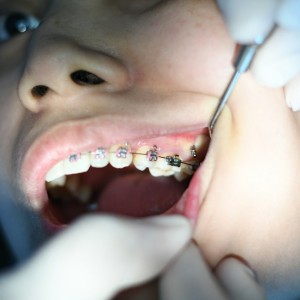
This peer-reviewed oral surgery article summarizes clinical evidence from International journal of oral and maxillofacial surgery (2026). It focuses on findings that may help dental professionals...
Endodontics 05 October 2026
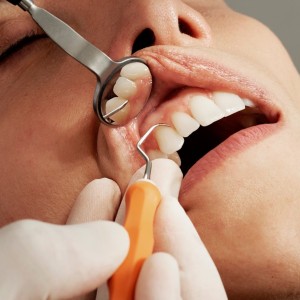
This peer-reviewed endodontics article summarizes clinical evidence from Journal of dentistry (2026). It focuses on findings that may help dental professionals evaluate treatment decisions, patient...
Endodontics 01 October 2026
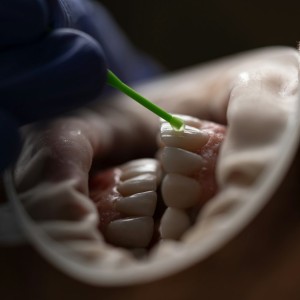
This peer-reviewed endodontics article summarizes clinical evidence from International endodontic journal (2026). It focuses on findings that may help dental professionals evaluate treatment...
Endodontics 28 September 2026
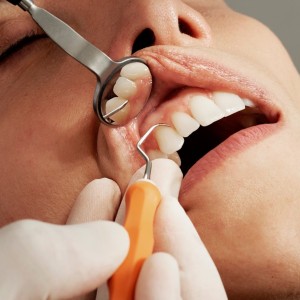
This peer-reviewed endodontics article summarizes clinical evidence from Journal of dentistry (2026). It focuses on findings that may help dental professionals evaluate treatment decisions, patient...
Oral surgery 25 September 2026
This peer-reviewed oral surgery article summarizes clinical evidence from International journal of oral and maxillofacial surgery (2026). It focuses on findings that may help dental professionals...
Read more
Europe 11 October 2026 - 30 November -0001
Scandinavian Dental Fair 2026: Event Preview and Professional Highlights
The Scandinavian Dental Fair 2026 will take place from November 11, 2026 to November 13, 2026 in TBD, Sweden/Denmark, offering dental professionals a focused environment for continuing education,...
Edra Professional Books 10 October 2026
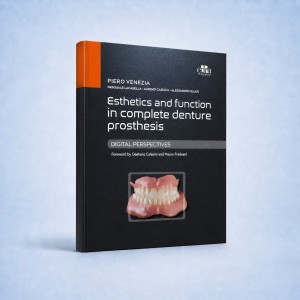
Esthetics and function in complete denture prosthesis is an Edra professional dentistry reference focused on clinical practice, education and treatment planning.
Products 09 October 2026

Oral-B and Crest, Official Oral Care Partners of the NFL, recently announced the launch of new special-edition products, giving fans even more ways to celebrate their love of the g
News 09 October 2026
Apex Dental Partners, a dental partnership organization supporting dentists and affiliated practices, has been named No.
News 09 October 2026
New education website and fully funded Swiss fellowship program debut at the 2026 Orthopaedic Trauma Association Annual Meeting in Nashville


Copyright © 2026 - All Rights Reserved
ISSN 2767-1178