


HSDM researchers join national effort to improve care for temporomandibular disorders
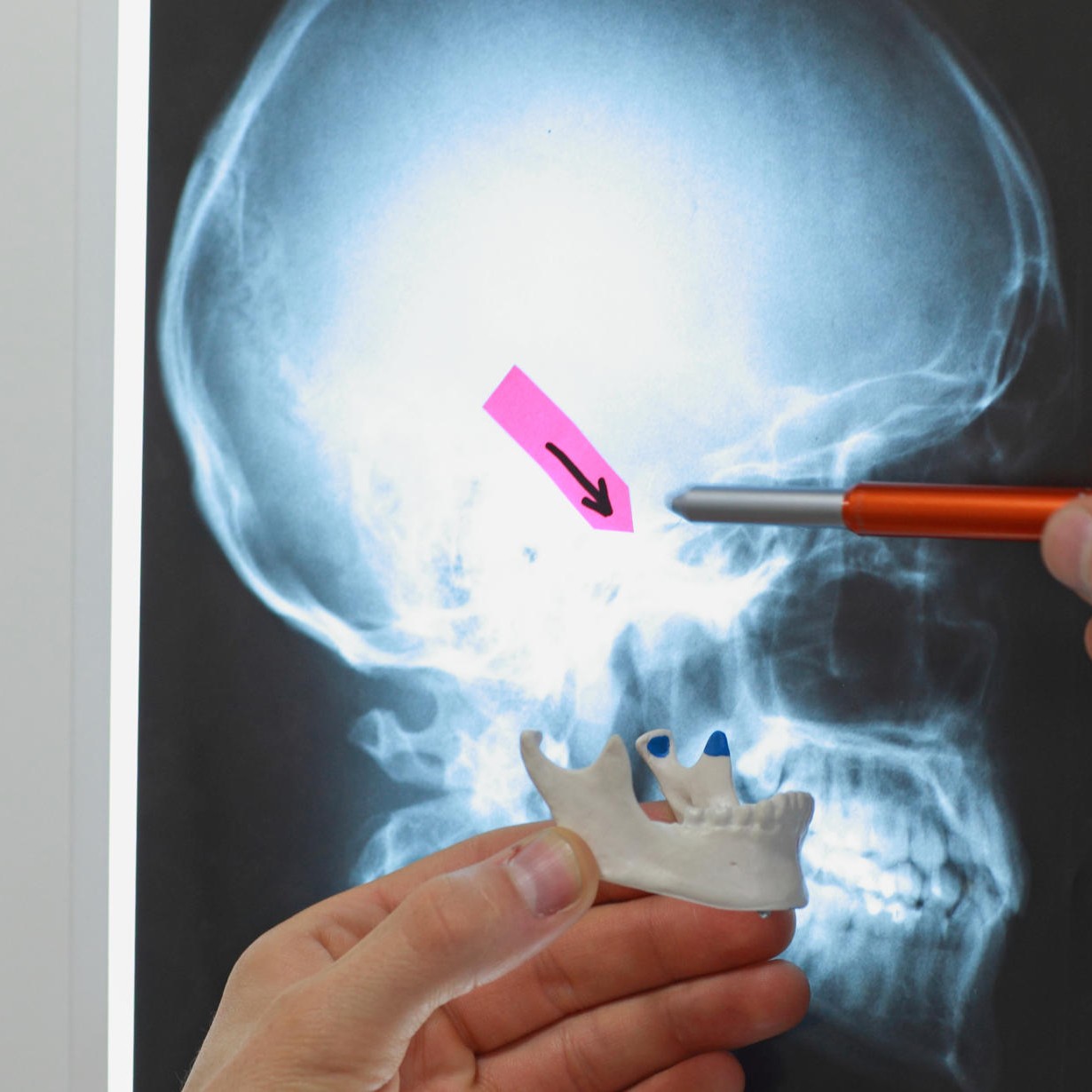
Temporomandibular disorders (TMD), a group of conditions affecting the jaw joints, chewing muscles, and related structures, represent a significant and often underrecognized public health challenge. Affecting up to 10% of the population with chronic pain and compromised joint function, these disorders are the second most prevalent musculoskeletal condition after chronic low back pain.
A new multidisciplinary grant funded by the National Institute of Dental and Craniofacial Research (NIDCR) aims to advance the understanding, diagnosis, and treatment of TMD by bridging research and clinical care. The initiative, known as the 360° Collaborative Hub for AI in TMD Research (360° CHAT-TMD), brings together experts from the Harvard School of Dental Medicine (HSDM), Massachusetts General Brigham, and the University of Michigan to improve outcomes for patients living with these complex conditions.
“Patients often struggle because TMD is not a single disease, but a collection of conditions with different causes and levels of complexity. Some cases are driven mainly by local muscle or joint factors, while others involve central nervous system pain amplification, psychological distress, or overlapping chronic pain conditions,” said Fernando Guastaldi, assistant professor of Oral and Maxillofacial Surgery at HSDM and Massachusetts General Hospital (MGH).
Guastaldi, along with his colleague, Shruti Handa, assistant professor of Oral and Maxillofacial Surgery at HSDM and MGH, will serve as co-principal investigators on the grant. Both are nationally recognized clinicians and researchers in the field of TMD disorders.
360° CHAT-TMD is designed to address longstanding gaps in TMD care, where patients may be underdiagnosed, overtreated, or receive fragmented care across multiple specialties.
“Historically, care has been overly focused on structural findings or guided by outdated models,” said Handa. “That approach has led to inconsistent diagnoses and treatments that don’t always reflect what individual patients actually need. Our goal is to move away from a one-size-fits-all model toward risk-stratified, evidence-based care.”
A key component of the initiative is the use of artificial intelligence (AI) to analyze large, complex datasets generated through patient evaluations and longitudinal follow-up. Rather than replacing clinical judgment, AI tools will be used to support clinicians by identifying patterns that may not be readily apparent through traditional analysis.
“AI can help us recognize meaningful relationships across clinical, imaging, and patient-reported data that are difficult for humans to see on their own,” said Guastaldi. “The goal is not automation, but better-informed, more personalized care that supports shared decision-making between patients and clinicians.”
These insights are expected to inform clinical guidelines, improve diagnostic accuracy, and help tailor treatment plans to individual patients based on their specific risk profiles and symptom patterns.
Patients will also play an active role throughout the study, sharing lived experiences and informing outcome measures that matter most to them.
Through this collaborative effort, the multidisciplinary team hopes to establish more consistent, evidence-based standards for TMD care across dental and medical disciplines. By aligning research findings with clinical implementation, 360° CHAT-TMD aims to reduce care variation and improve patient outcomes nationwide.
“TMD care improves when we listen to data, to clinicians, and especially to patients. By integrating evidence, technology, and lived experience, this initiative represents a step toward more humane, effective, and sustainable care for people with TMD,” said Handa.
Source: https://www.hsdm.harvard.edu/
 Related articles
Graduating students presented research spanning artificial intelligence, clinical care, and global health
Editorials 04 February 2026
Dr. Lisa Simon to lead HSDM’s Initiative to Integrate Oral Health and Medicine

Harvard alumna and physician-dentist discusses her new role and the importance of integrated care
Editorials 23 January 2025
Mapping dental deserts in the U.S.: New HSDM research reveals widespread lack of access to care

Imagine having to travel for hours to receive routine oral health care, such as a dental cleaning, or waiting in agony for days to get treatment for a painful toothache.
News 12 December 2023
In early 2022, Dean Giannobile launched an effort to recruit exemplary early career scientists with expertise in a broad range of biomedical and health science specialties. From this search effort,...
Editorials 04 November 2025
NIH grant helps ASOD researchers study TMD pain in adolescents

Adams School of Dentistry’s Caroline Sawicki, DDS, PhD, recently received an NIH-NIDCR R03 grant to study personalized treatment for temporomandibular disorder (TMD) pain in adolescents.
Read more
Continuous innovation across the DEXIS ecosystem helps clinicians work with greater clarity, confidence, and efficiency
News 23 October 2026

CrownPoint Partners announced the successful closing of a $9.2 million, five-property dental sale-leaseback portfolio located throughout Michigan.
News 23 October 2026
Dentsply Sirona, Midwest Dental Expand Technology Relationship

Beginning November 1, Dentsply Sirona will expand its long-standing relationship with Midwest Dental Equipment & Supply beyond consumables to include its complete technology portfo
Editorials 23 October 2026
Honoring Excellence: Graduation Awards for CU Anschutz Dental Students and Faculty

As the University of Colorado Anschutz School of Dental Medicine celebrates the graduating DDS Class of 2025, we are proud to recognize the students and faculty members whose excep
Implantology 23 October 2026
This peer-reviewed implantology article summarizes clinical evidence from Clinical oral implants research (2026). It focuses on findings that may help dental professionals evaluate treatment...


Copyright © 2026 - All Rights Reserved
ISSN 2767-1178