


Herbal Mouthwash Targets Gum Germs While Letting Helpful Bacteria Flourish

Mouthwashes have long bragged about killing 99.9% of germs in your mouth, but Rutgers Health researchers suggest this scorched-earth approach may harm oral health by eliminating beneficial bacteria along with the bad.
A study in Frontiers in Oral Health from the Rutgers School of Dental Medicine found that a naturopathic mouthwash containing herbal ingredients could selectively target disease-causing bacteria while preserving the protective microbes that help maintain healthy gums and teeth.
"It's a paradigm shift," said Georgios Kotsakis, the dental school’s assistant dean for clinical research and senior author of the study. "We're moving from eradicating all bacteria to focusing on selectivity. We want to keep the good bacteria alive while targeting the bad."
The researchers tested a natural mouthwash called StellaLife VEGA Oral Care rinse against two conventional products: the prescription mouthwash chlorhexidine and Listerine Cool Mint.
They exposed various oral bacteria to each rinse and monitored their growth over several days.
The natural rinse significantly reduced populations of harmful bacteria such as Fusobacterium nucleatum and Porphyromonas gingivalis, while allowing beneficial species such as Streptococcus oralis and Veillonella parvula to survive.
Chlorhexidine and Listerine showed no such selectivity, eliminating beneficial and harmful bacteria alike. Chlorhexidine was particularly aggressive, reducing some beneficial bacteria populations by a million-fold.
"These good bacteria have important functions," Kotsakis said. "They synergize with your tissues. They actually kill some of the bad bacteria themselves."
Petri-dish results don’t necessarily translate to mouths full of teeth, saliva and dietary sugars, Kotsakis said. The study, funded by StellaLife, didn’t measure cavity formation or bleeding gums in people.
“Randomized clinical trials are the next step,” Kotsakis said.
The work fits an expanding effort to manage oral microbes rather than carpet-bomb them. Heavy use of strong antiseptic rinses has been linked to shifts that may raise blood pressure or blunt nitric oxide signaling. Scientists are also exploring oral probiotics—beneficial strains that could be swabbed on after a dental cleaning – to crowd out pathogens.
"If you're brushing and flossing like a dentist – regularly and perfectly – you may not need a mouthwash, but in reality, even the best of us can miss some surfaces during cleaning at home," Kotsakis said.
For those who use mouthwash, the goal should be reinforcing the mouth's natural defenses, not destroying them, he said, adding that antiseptic mouthwash might be valuable for short-term use against specific oral disease but should not be used long-term.
Author: Andrew Smith
Source: https://www.rutgers.edu/
 Related articles
News 21 August 2026

Dentist-developed oral-care company seeks $3 million to expand distribution, scale marketing, and advance a growing pipeline of innovative smile-care products
Products 28 January 2026

Crest, the #1 toothpaste brand in America, today announced the launch of Crest Clean Breath, a new daily-use toothpaste formulated to neutralize bad breath at the source.

To help increase success in treating patients with oral cancer, Adams School of Dentistry’s Aimin Peng, PhD, is working on a project to target a possible vulnerability in this cancer type.

As part of its sustainability strategy, “BEYOND: Taking Action for a Brighter World,” Dentsply Sirona is placing a special focus on sustainable packaging, striving to bring about advances both...

Read more
Products 21 October 2026

Foundation and ScanOS bring scanning into the SprintRay workflow; Nano Series introduces compact chairside printing, washing, and curing; GC partnership expands validated restorati
News 21 October 2026

(Nasdaq: HSIC) announced today that Emmanuel Caprais, former Senior Vice President and Chief Financial Officer of ITT, Inc.
News 21 October 2026
Editorials 21 October 2026
From California to Canada: CU Anschutz School of Dental Medicine at ADEA, GRC and IADR 2026
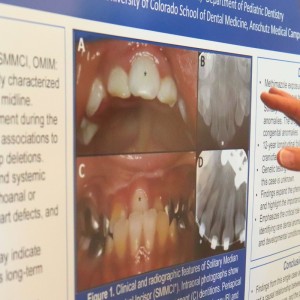
The CU Anschutz School of Dental Medicine will showcase a wide breadth of educational innovation, faculty development, clinical training and research at three major gatherings this
Endodontics 21 October 2026

This peer-reviewed endodontics article summarizes clinical evidence from BMC oral health (2026). It focuses on findings that may help dental professionals evaluate treatment decisions, patient...



Copyright © 2026 - All Rights Reserved
ISSN 2767-1178