


Osteonecrosis Patient Finds Relief at Rutgers School of Dental Medicine

While undergoing treatment for osteoporosis—a condition that weakens bones and makes them prone to fractures—Sally Wolberg had a tooth extraction that led to the onset of constant pain. For three long years, she sought relief from numerous dentists, visited eight oral and maxillofacial surgeons, and even ended up in the emergency room a couple of times. Her hope began to dwindle.
“Nobody would help me,” said Wolberg. “I was dismissed for exaggerating. I felt horrible that nobody would hear me.”
On the verge of losing hope, Wolberg heard about Rutgers School of Dental Medicine and wanted to give it a try. She went to the school’s New Brunswick faculty practice and became a patient of Associate Professor of Oral and Maxillofacial Surgery, and Director of the Oral and Maxillofacial Surgery Residency Training Program Rabie Shanti.
“Certain medications used in the treatment of osteoporosis place patients at risk for the development of osteonecrosis, which is osteo (bone) and necrosis (death of cells),” explained Shanti. This condition, referred to as Medication Related Osteonecrosis of the Jaw, can sometimes require surgery and the operation is highly effective in alleviating symptoms and improving quality of life. That was the case for Wolberg.
“I finally got out of pain,” said Wolberg. Recently, she underwent another extraction, and thanks to Dr. Shanti’s treatment, she experienced no issues this time. “Dr. Shanti is phenomenal. He just really went to bat for me.”
Wolberg continues her treatment with Assistant Professor of Restorative Dentistry Uchenna Akosa, who leads the New Brunswick Practice and has been providing routine care, including root canal treatment to alleviate pain and preserve her teeth.
“Patients with osteoporosis and who are taking medications for it need special treatment plans geared towards avoiding any invasive procedures that can cause osteonecrosis (bone death),” Akosa explained. They also need more frequent follow-ups. Akosa has been keeping a close eye on Wolberg’s treatment.
“It wasn't until I went to Rutgers Dental,” Wolberg said, “that I got the help I needed.”
Author: Kardelen Koldas
Source: https://sdm.rutgers.edu/
 Related articles
Implantology 23 March 2026
Bisphosphonate related osteonecrosis of the jaws associated with denture and dentoalveolar surgery

The aim of this article was to present and discuss the diagnosis, management, and follow-up of a patient treated with zoledronic acid because of a metastatic prostate adenocarcinoma, that developed...

Bisphosphonates are widely used for the treatment of abnormal bone metabolism for example in osteoporosis. Their continuative use leads to a strong inhibition...
Products 15 October 2026
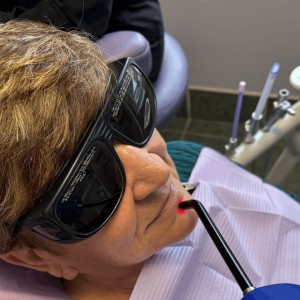
The belief in the healing power of light goes all the way back to ancient Egypt and the worship of Rah, the sun god.
News 13 October 2026

New patient apps extend The Aspen Group’s mission to remove barriers to care, giving patients greater visibility, convenience, and control from booking through treatment
News 02 October 2026
New York Implant Institute Plans Live Patient Surgery Courses
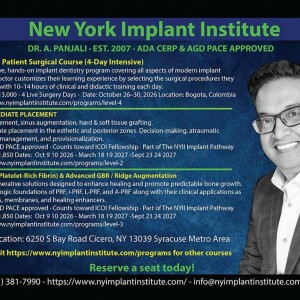
Institute offers a variety of hands-on implant training through its dental implant CE courses and live surgery courses.
Read more

Continuous innovation across the DEXIS ecosystem helps clinicians work with greater clarity, confidence, and efficiency
News 23 October 2026
CrownPoint Partners announced the successful closing of a $9.2 million, five-property dental sale-leaseback portfolio located throughout Michigan.
News 23 October 2026
Dentsply Sirona, Midwest Dental Expand Technology Relationship
Beginning November 1, Dentsply Sirona will expand its long-standing relationship with Midwest Dental Equipment & Supply beyond consumables to include its complete technology portfo
Editorials 23 October 2026
Honoring Excellence: Graduation Awards for CU Anschutz Dental Students and Faculty

As the University of Colorado Anschutz School of Dental Medicine celebrates the graduating DDS Class of 2025, we are proud to recognize the students and faculty members whose excep
Implantology 23 October 2026
This peer-reviewed implantology article summarizes clinical evidence from Clinical oral implants research (2026). It focuses on findings that may help dental professionals evaluate treatment...



Copyright © 2026 - All Rights Reserved
ISSN 2767-1178