


5 tips on how to manage loss aversion
Luigi Campopiano
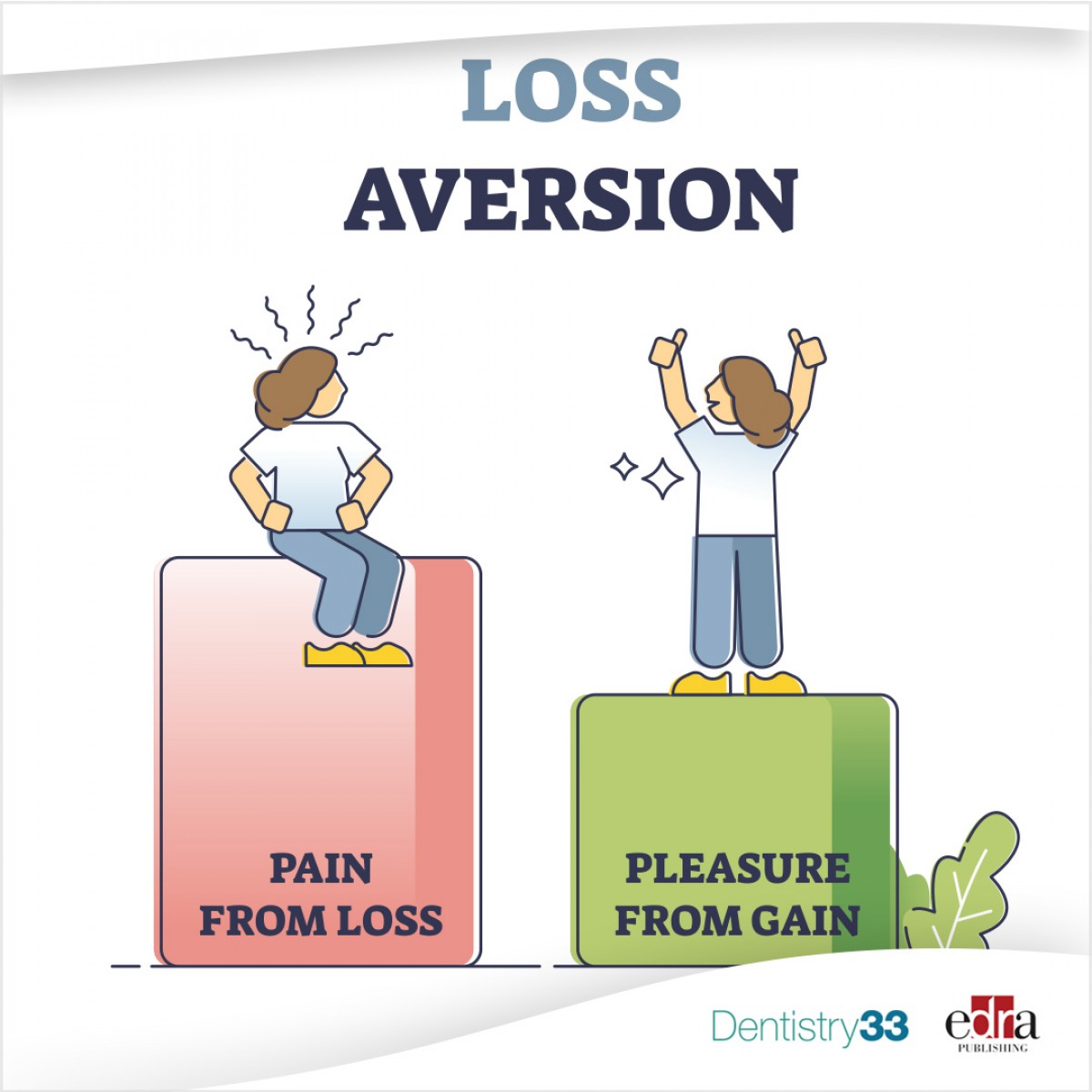
Nobody likes to lose money, but an investor must also know how to lose because the markets follow the flows. Sometimes the flows swing upwards and sometimes downwards: When things go well, it's easy for everyone, but when they go south, you must keep a cool head.
Faced with a loss, psychological mechanisms take over. Research has found that a person, by nature, attributes greater weight to a loss than that which they attribute to gains. In behavioral finance, it is called "loss aversion.”
Loss aversion affects not only the financial sphere but every context in which gains and losses occur. This is a fundamental discovery of the Prospect theory developed in 1979 by Daniel Kahneman and Amos Tversky, psychologists and economists. They found that losing hurts 2.5 times more than the pleasure of earning the same amount.
Why is this the case? The main reason is that individuals do not objectively evaluate the loss and gain but assess them according to expectations. If you invest money, the expectation is to earn.
No one is immune to loss aversion. Even the most experienced investors suffer during bear markets. Still, there are certain strategies to help manage the emotional impact that losses can have on your morale when dealing with investments. The strategies include to:
- Make an investment that is appropriate to your profile and risk appetite. Knowing yourself and what you want to get out of your investments is important. If we are unwilling to see negative fluctuations in your assets, the instruments to choose are stable and prudent ones, with little gain and few losses.
- Gradually enter the market. Investing a sum with periodic monthly payments is a wise approach. The emotionality of going "all-in" is reduced. It is easier to see a loss on smaller payments when the markets are negative, especially if, in the previous months, the total capital of the investment has moved in a positive direction.
- Contextualize the loss within a long timeframe. Go into an investment looking five to 10 years ahead. Loss aversion is an instinctive short-sighted reaction that neglects long-term prospects. Since it is precisely in the long term that the financial game is played, moments of loss are also useful to win it.
- Take advantage of the loss. The best time to invest is when the market drops, and when many people liquidate investments. It takes a bit of a cool head, and you can overcome fear by becoming more aware that markets are cyclical.
- Avoid checking the value of investments daily. Plan moments to check your calendar: every six months is enough for those who decide on a medium or long-term investment. Reviewing investments once a year is even better. If the initial strategy is on track, there will be no surprises. Otherwise, you must ask yourself questions about the strategy and ask for advice from a trusted expert.
 Related articles
News 07 August 2026

The Investment Grade Practice Assessment reveals opportunities to strengthen revenue, systems, leadership, and long-term business health

Investment will support global commercial expansion of the Curodont™ technology platform, the first and only non-invasive peptide-containing formulations designed to treat tooth de
News 29 April 2026

MINISH Technology, a dental health-tech company focused on preserving natural tooth structure, has secured a $22 million investment from VIG Partners.
News 30 October 2025

GTCR, a leading private equity firm, announced the simultaneous signing and closing of a strategic, structured minority investment in Solmetex (the “company”).

vVARDIS, a Swiss high-growth dental company, and OrbiMed, a leading healthcare investment firm, recently announced the closing of a $35 million financing.
Read more
Products 14 October 2026

Royal Philips (NYSE: PHG, AEX: PHIA) announced that the Philips Sonicare Next-Generation DiamondClean 9900 Prestige, its most advanced and intelligent toothbrush to date, is now av

Key transaction by Heartland Dental and its supported practices expands opportunities for supported doctors, teams, and practices while strengthening Heartland Dental’s supported f
News 14 October 2026
Henry Schein Cares Celebrates 25 Years of Corporate Citizenship

Henry Schein Cares, Henry Schein, Inc.’s global corporate citizenship program, is celebrating a quarter century of bringing together Team Schein Members, customers, supplier partne
Editorials 14 October 2026

Scholarship at the CU Anschutz School of Dental Medicine reflects the collective contributions of our faculty, staff, residents and students.
Oral Hygiene & Prevention 14 October 2026
Propolis-containing formulations in caries prevention - a systematic review and meta-analysis.

This peer-reviewed oral hygiene & prevention article summarizes clinical evidence from Clinical oral investigations (2026). It focuses on findings that may help dental professionals evaluate...



Copyright © 2026 - All Rights Reserved
ISSN 2767-1178