


The Menopause Mouth
Why Hormonal Changes Are Showing Up in Dental Chairs
For decades, menopause was treated as a conversation belonging almost exclusively in the gynecologist’s office. Today, clinicians increasingly recognize it as a whole-body transition that can affect sleep, mood, bone density, muscle health—and the mouth.
Dentists may be among the first healthcare professionals to encounter these changes. A patient may not arrive saying, “Menopause is affecting my oral health.” She is more likely to report dry or burning mouth, altered taste, increased sensitivity, inflamed gums, facial discomfort, jaw stiffness, headaches or a nightguard that no longer provides enough relief.
Individually, these complaints can appear disconnected. Viewed together, they may represent something larger: the “menopause mouth.”
Estrogen receptors are present throughout oral and craniofacial tissues. As estrogen fluctuates during perimenopause and declines after menopause, women may experience changes in salivary flow, oral microbiota, periodontal tissues, bone metabolism and pain perception.
A recent scoping review identified xerostomia and altered taste among the most common oral manifestations associated with menopause. Postmenopausal women may also face increased risks of periodontal disease, tooth loss, burning mouth symptoms, candidiasis and reduced bone mineral density.¹
Reduced salivary flow changes the mouth’s protective environment. Changes in connective tissue and bone metabolism may affect periodontal and joint health. Poor sleep and increased stress may contribute to clenching or muscular guarding. Hormonal changes may also influence pain processing, potentially making an existing jaw problem feel more intense.
“What women experience during menopause does not stop at the neck. Hormonal changes can affect salivary flow, periodontal health, bone metabolism and pain perception. When a midlife patient presents with new oral discomfort or worsening jaw symptoms, menopause should be part of the clinical conversation,” said Barry Applegate, DMD, of Applegate Dentistry & MedSpa in Covington, Ky.
Menopause does not explain every oral or facial complaint, and dental pathology must always be evaluated. However, hormonal status deserves a place in the clinical conversation—especially when a woman in midlife presents with new or worsening symptoms that do not fit neatly into a tooth-centered diagnosis.
Temporomandibular disorders are multifactorial. Occlusion, parafunction, trauma, joint health, muscle coordination, stress and other medical conditions can all contribute. Hormonal status may be another important piece of that puzzle.
The temporomandibular joint and surrounding tissues contain estrogen receptors, suggesting that hormonal fluctuations may affect the joint’s biological response to mechanical stress and influence orofacial pain processing.² Although the evidence does not establish that declining estrogen directly causes TMD, research shows a significant association between the menopausal transition and several clinically relevant TMJ findings.
In one study, climacteric women had 2.64 times greater odds of TMJ pain on palpation, 2.92 times greater odds of crepitus and 2.27 times greater odds of degenerative joint disease than preclimacteric women. The associations remained significant after adjustment for body mass index, smoking and parity.³
A separate study reported that menopausal women had 4.17 times greater odds of TMD occurrence. Impaired TMJ function was identified in 67.6% of menopausal women compared with 33.3% of nonmenopausal women. Pain in the masticatory muscles was also approximately twice as common.
These findings should not lead dentists to label every menopausal patient with a hormone-driven jaw disorder. They should encourage clinicians to ask whether the patient’s life stage could be influencing the pain and dysfunction now appearing in the dental chair.
In addition to the traditional dental and medical history, clinicians can ask:
Positive answers do not provide a diagnosis. They reveal patterns and help determine when medical or interdisciplinary referrals are appropriate.
The dentist must then identify the primary driver. Is there acute pain or inflammation? Is the condition predominantly muscular, articular or dental? Is chronic guarding restricting movement? Does the patient require collaboration with a physician, physical therapist or oral surgeon?
Traditional interventions—including occlusal appliances, behavioral modifications, physical therapy, medication and home care—remain important. A nightguard can protect the dentition from grinding, but protection is not necessarily the same as rehabilitation.
“A nightguard can help protect the teeth, but it does not necessarily rehabilitate the muscles responsible for jaw movement and stability. When muscular dysfunction is part of the diagnosis, we need therapies that go upstream and address function and over activity—not only the damage caused by clenching and grinding,” said Kristen Graham, DDS, a holistic dentist in Phoenix.
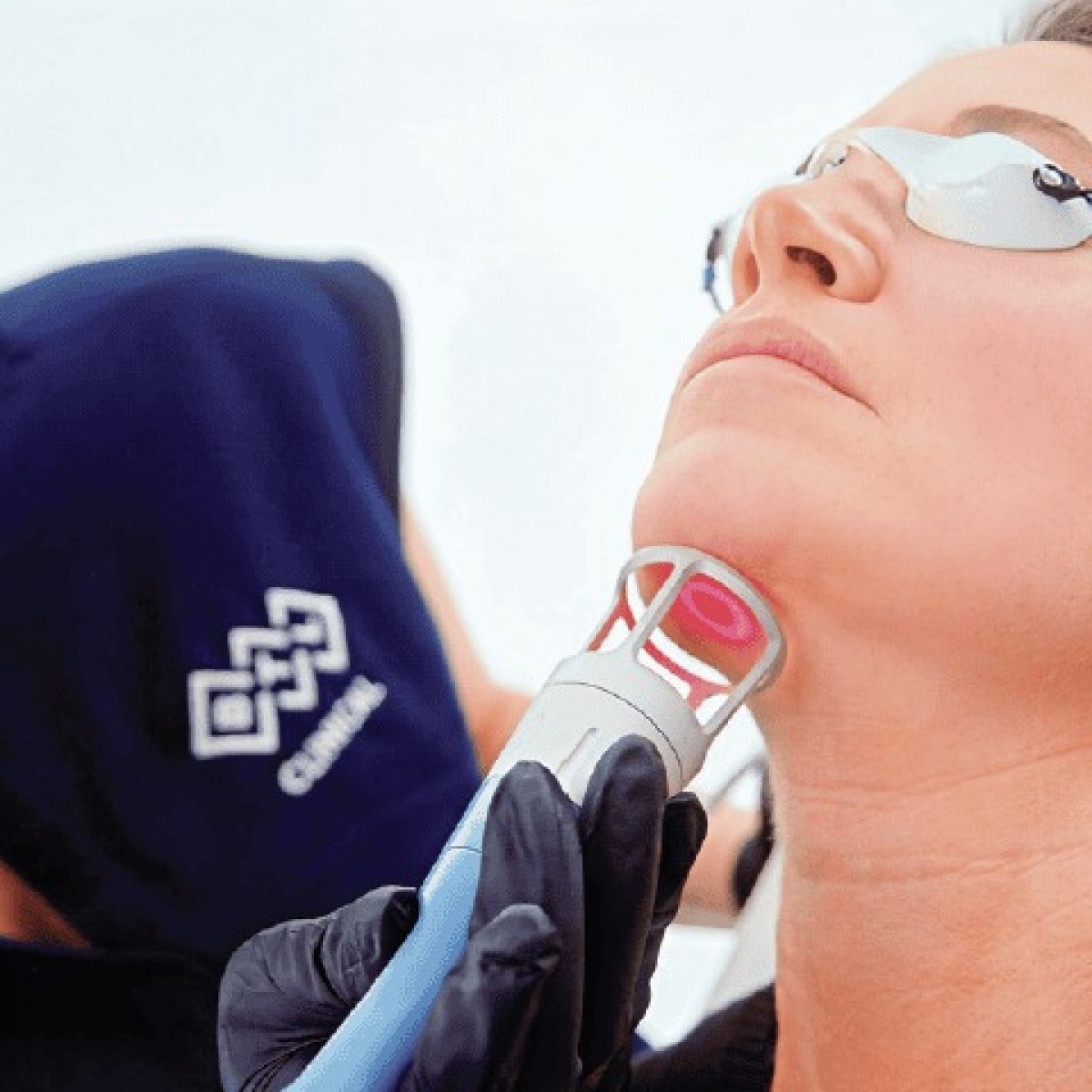
EMVITAL laser therapy may be incorporated by appropriately trained clinicians to address the acute pain and inflammatory component of a patient’s presentation. 5 The objective is to reduce the immediate barrier of discomfort and help the patient progress toward functional care. Dr. Graham added that she has had great success using EMVITAL with patients suffering with facial pain.
For patients with a chronic neuromuscular component, EMFACE TMJ provides a noninvasive, hands-free therapy designed to support muscle re-education, increase local circulation, relieve muscle spasm and improve range of motion. Rather than simply shielding the teeth from the effects of clenching, the technology allows dentists to address muscles involved in jaw movement, stability and function. This reaches deep to target the lateral and medial pterygoids, which are tough to get to, and areas that fillers definitely aren’t reaching. This is a much more comprehensive and noninvasive approach according to Dr. Graham.
In a preliminary evaluation of 25 patients who received four 20-minute EMFACE Functional TMJ treatments, 100% reported improved jaw relaxation and patients reported an 89% improvement in their ability to perform daily activities, including brushing and flossing. No adverse events were reported. 6 Appropriate diagnosis and patient selection remain essential, and individual results vary.
EMVITAL and EMFACE TMJ represent different points within the care continuum: addressing acute discomfort while supporting longer-term neuromuscular function.
Menopause-related oral and TMJ symptoms represent a potentially underserved need among one of dentistry’s most established patient populations. These women already know and trust their dental providers and are actively looking for solutions that may improve comfort, movement and quality of life.
EMVITAL and EMFACE TMJ can be offered as cash-pay services that complement—not replace—conventional dental care. This creates a potential revenue stream without depending on insurance reimbursement. EMFACE TMJ’s hands-free delivery also supports practice efficiency. Once an appropriate patient has been assessed, prepared and treatment is initiated, the technology does not require continuous hands-on delivery by the dentist. The practice can provide treatment while maintaining productivity elsewhere, creating a more scalable model with meaningful return-on-investment potential.
“EMFACE TMJ allows us to provide a hands-free, noninvasive treatment without requiring the dentist to remain chairside throughout the procedure. Patients gain access to a different level of functional care, while the practice can introduce a cash-pay service efficiently and without relying on insurance reimbursement,” added Dr. Graham.
The opportunity is not simply to sell another procedure. It is to create a structured TMJ and facial-wellness pathway combining screening, diagnosis, acute symptom management, neuromuscular therapy and ongoing care.
Women can spend years moving among providers before recognizing that seemingly unrelated symptoms may be connected to the same life transition. Dentists are uniquely positioned to shorten that journey because they routinely evaluate oral tissues, facial muscles, jaw movement, periodontal health and bone.
This does not require dentists to become menopause specialists. It requires them to recognize menopause as relevant medical history and understand when hormonal changes may be influencing the conditions appearing in their chairs.
“As a TMJ Dentist, if patients exhibit TMD symptoms, I routinely take a CBCT to check on their anatomy, from their teeth, nasal passages, sinus, airway, joint position and evaluate any deterioration. In some cases, there can be degenerative joint disease and in others, it can be within normal limits,” stated Tina Chandra, DDS, who is a LVI trained Physiologic Dentist in Ocala, Florida with an emphasis on TMJ, sleep dentistry and reconstructive dentistry. “In those instances, their symptoms can mainly be muscular in nature due to hormonal stress from clenching and sleep issues. Before EMFACE and EMVITAL, the only immediate option was medications, Botox, palliative care, or de-stressing.
“Now I have an amazing solution with a non-invasive devices to get quick, easy results to help my patient get better faster. EMFACE and EMVITAL laser is a routine part of my TMJ protocols for the past 2 1/2 years. Before I make appliances, I use these devices to get the bite for a more harmonious, balanced and comfortable bite position for the orthotic/biteguard. To have these options has really elevated my TMD and sleep practice.”
The menopause mouth is already showing up in dental chairs. The question is whether the profession is prepared to recognize—and respond to—it. For more information, visit bodybybtl.com .
1. Labunet A, Objelean A, Kui A, Rusu L, Vigu A, Sava S. Oral manifestations in menopause—A scoping review. Medicina (Kaunas). 2025;61(5):837. doi:10.3390/medicina61050837.
2. Mazareanu A, Grigorov C, Pandea A, et al. Estrogen status and temporomandibular disorders: A systematic review. Int J Environ Res Public Health. 2026;23(6):717. doi:10.3390/ijerph23060717.
3. Mursu E, Yu J, Karjalainen E, et al. Association of climacterium with temporomandibular disorders at the age of 46 years—A cross-sectional study. Acta Odontol Scand. 2023;81(4):319-324. doi:10.1080/00016357.2022.2146746.
Source: http://bodybybtl.com
 Related articles
There are several disorders that arise related to menopause including osteoporosis and a predisposition to heart disease. In menopause, women can also frequently develop various disorders of the oral...
Amelogenesis imperfecta (AI) is a group of hereditary developmental disorders that affect the structure and clinical appearance of dental enamel, with an estimated prevalence rangi
Products 12 June 2026

Now available nationwide, the range hits the road as the brand kicks off the Swish Tour at The Governors Ball (NYC, June 5–7)
CaviSense Inc., a Harvard/Tufts spin-out and developer of a radiation-free diagnostic technology for active tooth demineralization.

SuperMouth, the dentist-founded brand known for its advanced oral care solutions for all ages, is bringing indulgence to the bathroom sink with its new, limited-edition Dubai Choco
Read more
News 06 October 2026
America’s ToothFairy Launches 2026 My Smile Matters Campaign
Dental Hygiene Month campaign invites dental professionals and community advocates to celebrate dental hygienists, recognize outstanding service, and help children build healthier
News 06 October 2026

Lightwave Dental, a leading doctor-led dental platform in Virginia and the Carolinas, recently announced that Dr.
Editorials 06 October 2026
Students recently headed back to class for the current academic year, but Texas A&M College of Dentistry is looking ahead as deadlines approach for the dental Class of 2031 and the
Oral pathology 06 October 2026
This peer-reviewed oral pathology article summarizes clinical evidence from Oral oncology (2026). It focuses on findings that may help dental professionals evaluate treatment decisions, patient...
Products 05 October 2026


Copyright © 2026 - All Rights Reserved
ISSN 2767-1178