


Strategy for Material Selection and Cementation
Dinesh Sinha, BDS, PhD, interviews Jae Seon Kim, DDS, MSD, a board-certified prosthodontist, about his preferred strategy for handling prosthodontic cases.
Q: Can you tell us about yourself and your dental practice?
A: I received my prosthodontic training from the University of Washington School of Dentistry. Then I worked as an assistant professor at the Dental College of Georgia at Augusta University, educating dental students, residents from numerous specialties, and other general dentists. Now I have my own private practice in Seattle and also work as an affiliate assistant professor in the restorative department at the University of Washington. My private practice is diverse, treating everything from patients’ simple restorative procedures, such as fillings and single crowns, to the most complex oral rehabilitation cases involving dental implants.
Q: What is your strategy for treating patients needing fixed prosthodontic treatment?
A: I like to take a step back and look at the big picture so as not to get lost in the minute details. The end goal of fixed prosthodontic treatment is to deliver restorations that blend into the patient’s smile and function in harmony with his or her existing dentition. After I visualize and map out the treatment outcome, I emphasize educating the patient about his or her conditions to bring the patient on board with the treatment process. When patients understand their conditions and are involved in the treatment process, they seem to appreciate the results even more.
Q: How do you select materials for anterior/posterior cases?
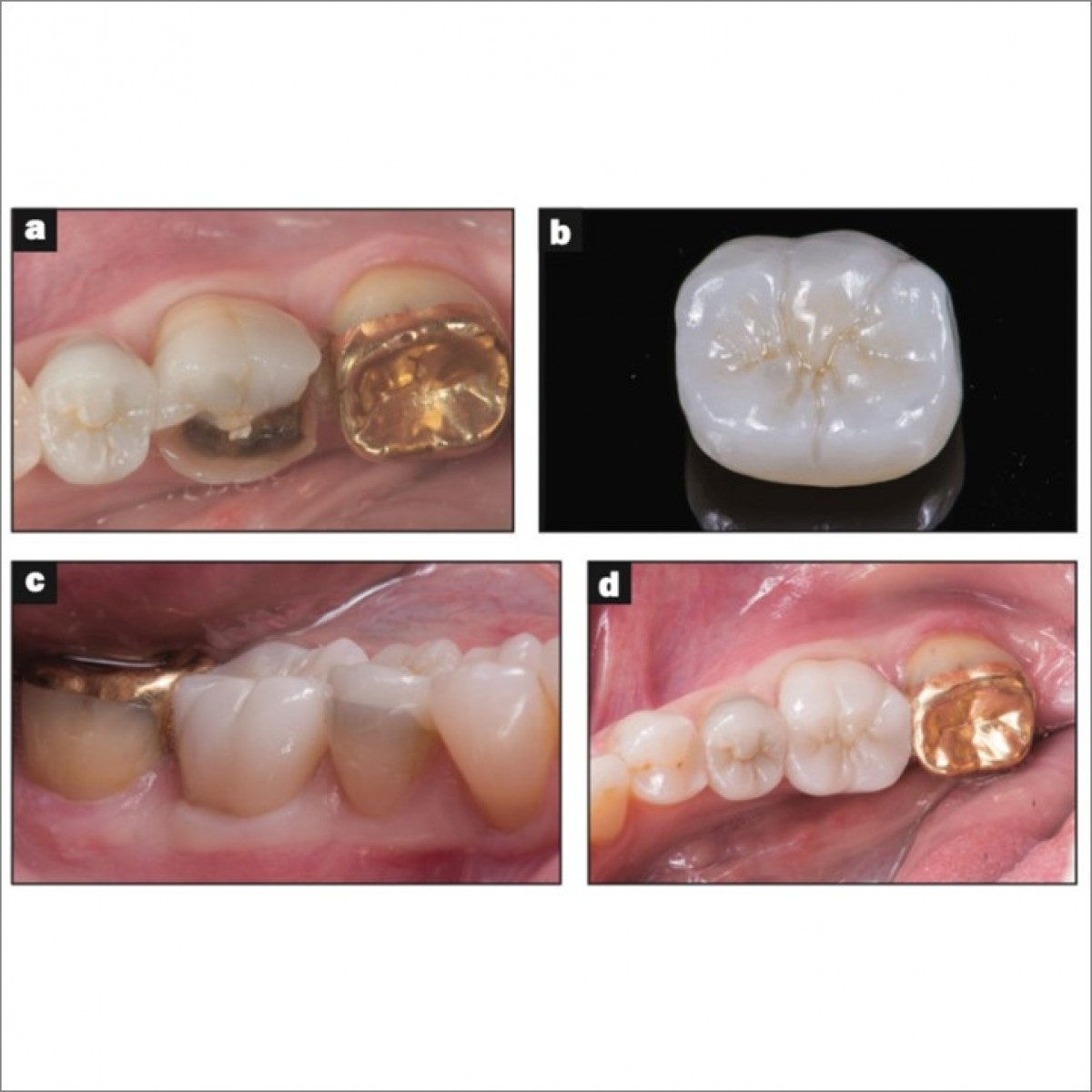
A: As I noted above, every patient’s condition is unique. But in general, anterior teeth (Figure 1) demand aesthetics, while posterior teeth (Figure 2) demand more function or strength. Glass oxide ceramics (eg, IPS e.max [Ivoclar]) with higher glass content often become the material of choice for anterior cases. Aesthetic zirconia with well-balanced translucency and strength (KATANA Zirconia STML [Kuraray Noritake]) is currently my choice for most posterior cases. When it comes to full-mouth rehabilitation with multiple long-span units, zirconia, either in monolithic or layered form, becomes my material of choice.
Q: What is your strategy for cementation?
A: Adhesive dentistry has improved so much over the last few decades. Many materials provide strong, stable bonds to enamel/dentin and almost all prosthetic surfaces. Material technique sensitivity is also very important since there are many errors that can happen during usage. PANAVIA family products with the original MDP technology are my materials of choice. In the anterior case shown in Figure 1, I used PANAVIA V5 (Kuraray Noritake), a cement that features great color stability and well-known adhesive strength. For the posterior zirconia case shown in Figure 2, I used PANAVIA SA Cement Universal and CLEARFIL Universal Bond Quick (Kuraray Noritake). PANAVIA SA Cement Universal contains MDP and a silane monomer in its paste, so I can bond to zirconia directly without relying on a separate primer.
Dr. Sinha is senior technical and marketing manager, Dental Division, of Kuraray America.
Dr. Kim is a board-certified prosthodontist practicing in Seattle.
Source: www.kuraraydental.com
 Related articles

SprintRay, the global leader in dental 3D printing, is proud to announce the appointment of Dr. Meena Barsoum as its new Global Head of Clinical Strategy.

The trend of increasing integration and hybridization between public and private markets will continue at an incessant pace.
Restorative dentistry 11 July 2022
Which adhesive strategy and dental material can reduce secondary caries risk?

The accumulation of plaque, which determines poor oral hygiene in the patient or the presence of incongruous restorations, can lead to the development over time of a secondary caries, or a carious...
Editorials 27 September 2026
Dentistry33 survey highlights replacement care, deep caries and evolving restorative workflows
Reader survey finds direct composites remain dominant, secondary caries is the leading reason for restoration replacement, and clinicians want more training in pulp preservation
Reader survey finds direct composites remain dominant, secondary caries is the leading reason for restoration replacement, and clinicians want more training in pulp preservation
Implantology 22 April 2026
To update in new biopolymers and innovations for ocular prostheses and visual implants for visual care.
Read more
Products 08 October 2026
Cementation remains one of the most nuanced and decisive phases in restorative dentistry, where small deviations can significantly influence long-term success.
News 08 October 2026

The Minnesota Dental Association (MDA) installed its 2026-2027 officers and trustees during the Association’s Leadership Conference on September 18 in Shoreview, marking the beginn
News 08 October 2026
Report finds dental practices struggling to hire even as professionals show broad interest in flexible work opportunities
Editorials 08 October 2026

It is with great sadness that Texas A&M College of Dentistry announces the passing of former staff member, Kenneth Howell, who died Wednesday, Sept.
Periodontology 08 October 2026
This peer-reviewed periodontology article summarizes clinical evidence from BMC oral health (2026). It focuses on findings that may help dental professionals evaluate treatment decisions, patient...



Copyright © 2026 - All Rights Reserved
ISSN 2767-1178