


Cementation: The Point of No Return!
Cementation remains one of the most nuanced and decisive phases in restorative dentistry, where small deviations can significantly influence long-term success.
Major challenges with cementation include achieving durable adhesion in less-than-ideal conditions, managing excess material, and ensuring complete seating of the restoration. Despite these challenges, I generally prefer cement-retained restorations over screw-retained ones in many cases because they offer better aesthetics, more passive fit, and fewer mechanical complications. However, case selection is critical; screw-retained options are advantageous when retrievability is a priority.
Cement shades also play a significant role in the final outcome, especially with translucent restorations like veneers and thin ceramic crowns. The underlying tooth color, restoration thickness, and cement shade all interact to influence the final appearance. Even a slight variation in shade can alter value and chroma.
There are several cementation techniques available today, broadly categorized into total-etch adhesive, self-etch adhesive, and self-adhesive systems. My preferred approach depends on the clinical situation: for highly aesthetic anterior restorations or cases with significant enamel, I favor a total-etch or selective-etch adhesive protocol for maximum bond strength and marginal integrity. For posterior zirconia crowns with adequate retention form, I may opt for a self-adhesive cement to streamline the process without compromising durability.
Not every case demands maximum bond strength, and not every situation is suitable for simplified systems. I evaluate factors such as retention form, occlusal load, and aesthetic requirements. When maximum adhesion is critical, I do not hesitate to use a more technique-sensitive approach.
The most common clinical mistakes I see include inadequate isolation, improper surface treatment, and incorrect cement selection. For example, failing to properly clean and prime zirconia can lead to debonding. Over-etching dentin or leaving it too dry can collapse the collagen matrix and reduce bond strength. Another frequent issue is incomplete removal of excess cement, which can cause gingival irritation or peri-implant complications. Timing errors—such as curing too early or too late—can also affect marginal adaptation and cleanup.
Due to the technique-sensitivity surrounding cementation, my current workflow is built around consistency, isolation, and material-specific protocols. I begin by evaluating the restoration type—whether it is lithium disilicate, zirconia, or metal-based—as each demands a tailored surface treatment. The bulk of my indirect restorations are zirconia, I air abrade with aluminum oxide and apply a universal primer containing MDP. On the tooth side, I assess whether I am working with enamel, dentin, or a combination. Selective enamel etching is followed by adhesive application when indicated. Isolation—preferably rubber dam—is non-negotiable for adhesive cases. I then apply the resin cement, seat the restoration with controlled pressure, remove excess during the gel phase, and complete light curing from multiple angles. The most critical steps for predictable outcomes are surface preparation, moisture control, and timing—especially during cleanup and polymerization.
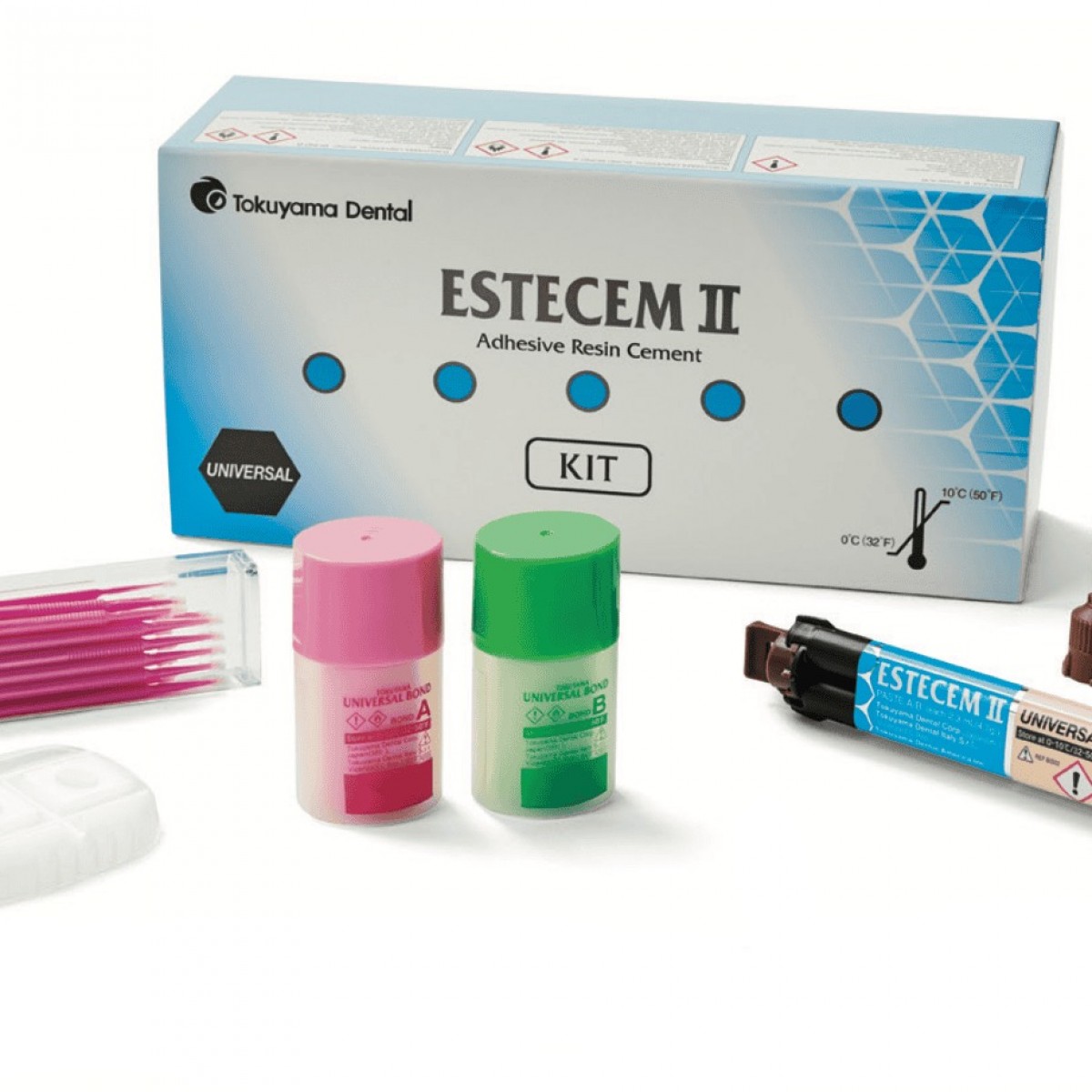
I began using Estecem II (Tokuyama Dental America) as I sought a balance between simplicity and reliable adhesion. Previously, I encountered challenges with postoperative sensitivity and occasional debonding when using more complex multi-step systems, especially in posterior cases. Estecem II addressed these issues by offering a dual-cure, resin cement with improved handling and consistent performance. What I appreciate most is its ease of use without sacrificing bond strength. The automix delivery reduces errors, and the working time allows for controlled placement and cleanup.
To ensure dependable, lasting results, I incorporate several strategies. First, I standardize my workflow to minimize variability. Second, I strictly follow manufacturer guidelines for each material. Third, I prioritize isolation and contamination control, using retraction cords, rubber dams, or isolation systems as needed. I also verify fit and contacts before cementation to avoid seating issues. Finally, I educate my team so that every step—from preparation to cleanup—is executed consistently.
Successful adhesive cementation goes beyond bond strength. While laboratory values are important, clinical success is defined by marginal integrity, absence of sensitivity, durability of the restoration, and patient satisfaction. A well-cemented restoration should function comfortably, maintain its aesthetics over time, and integrate seamlessly with surrounding tissues. Longevity and biocompatibility are just as important as initial retention.
If I could offer one piece of advice to clinicians struggling with cementation, it would be this: simplify and standardize your protocol.
Dr. Shuman maintains a general, reconstructive, and aesthetic practice in Pasadena, He has lectured and published numerous articles. He is a Master of the Academy of General Dentistry, an Associate Fellow of the American Academy of Implant Dentistry, a Fellow of the Pierre Fauchard Academy and one of Dentistry Today ’s Leaders in Continuing Education.
Source: http://tokuyama-us.com
 Related articles

Dinesh Sinha, BDS, PhD, interviews Jae Seon Kim, DDS, MSD, a board-certified prosthodontist, about his preferred strategy for handling prosthodontic cases.

A comprehensive pulpal health assessment should be completed prior to the placement of new restorations, as several studies have shown that vital teeth have a 9% chance of becoming necrotic after...
Restorative dentistry 26 April 2023
Selective adhesive luting: a hybrid technique for universal resin cements

Breschi et al. introduce the concept of “Selective Adhesive Luting,” a hybrid technique to exploit the benefits of universal resin cements, relying on simultaneous adhesive and self-adhesive...
Prosthodontics 12 February 2020
Which is the best adhesive cementation protocol for glass ceramic restoration?

Dentists must regularly determine the best adhesive cementation protocol for glass-ceramic restorations on posterior teeth. A few in vivo follow-up...
Prosthodontics 11 September 2019
Cementation of zirconia crowns: effectiveness of self-adhesive dual cements

The cementation of zirconia crowns is always the subject of considerations; the inability to have an adhesive bond with the material makes the fixing process always problematic. Many authors have...
Read more
News 08 October 2026

The Minnesota Dental Association (MDA) installed its 2026-2027 officers and trustees during the Association’s Leadership Conference on September 18 in Shoreview, marking the beginn
News 08 October 2026
Report finds dental practices struggling to hire even as professionals show broad interest in flexible work opportunities
Editorials 08 October 2026

It is with great sadness that Texas A&M College of Dentistry announces the passing of former staff member, Kenneth Howell, who died Wednesday, Sept.
Periodontology 08 October 2026
This peer-reviewed periodontology article summarizes clinical evidence from BMC oral health (2026). It focuses on findings that may help dental professionals evaluate treatment decisions, patient...
Continuous innovation across the DEXIS ecosystem helps clinicians work with greater clarity, confidence, and efficiency



Copyright © 2026 - All Rights Reserved
ISSN 2767-1178