


RevBio Awarded a $2 Million Follow-On NIH Grant to Reduce Opioid Use and Addiction with TETRANITE

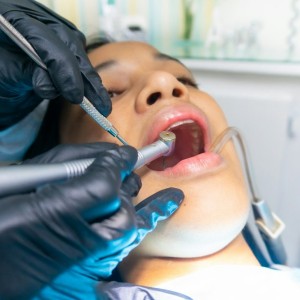
RevBio announced that it has received a grant from the National Institutes of Health through its Helping to End Addiction Long-term Initiative, or NIH HEAL Initiative, to improve strategies for the prevention and treatment of opioid misuse and addiction. This $2 million Phase II Small Business Innovation Research (SBIR) grant (2R44DE029369-02) will fund the pre-clinical development of a dental bone graft formulation that will include the release of locally acting non-opioid pain medication. This product is intended to be used to fill extraction sites and mitigate post-operative pain following the removal of wisdom teeth.
“Data shows that there is a statistically significant absolute risk increase in persistent opioid use and abuse following a single course of opiates prescribed after wisdom tooth extractions,” said George Kay, DMD, MMSc, RevBio’s Chief Scientific Officer and co-principal investigator. Approximately 10 million third molars (wisdom teeth) are removed annually in the United States.1
“Preliminary studies have shown that medication can be incorporated into our patented Tetranite bone adhesive biomaterial and released over time,” said Rahul Jadia, PhD, who is RevBio’s R&D Manager of Technology Development and co-principal investigator for this grant, “and the release profile of a target drug can be tailored to elicit an ideal time-dose curve.” Previously, both Drs. Kay and Jadia served as co-principal investigators on a Phase I SBIR grant (1R43DE029369-01) which investigated the release of pain management medication from RevBio’s adhesive dental bone scaffold.
A recent study conducted on 70,942 patients showed that approximately 79.9% of patients filled perioperative opioid prescription for wisdom tooth extractions.4 In a similar study conducted on a larger sample of 754,002 individuals, there was a statistically significant 6.8% absolute increase in persistent opioid use and a 5.4% increase in the subsequent diagnosis of opioid abuse.5 As a result, there is a compelling need for the development of non-opioid-based acute pain management strategies for patients undergoing outpatient oral surgery procedures, preferably via the local delivery of medications to target tissues.
In addition to the pain from the surgery, 10% of all wisdom tooth extractions sites develop a painful condition known as “dry socket” which can occur three to four days after a wisdom tooth is removed.6,7 This condition develops when the blood clot that should form after a tooth extraction is dislodged or dissolves before the wound heals, exposing underlying bone and nerves.
“Not only will Tetranite locally release pain medication, avoiding the need for a potentially addictive prescription, but the material will occlude the socket and reduce the potential for dry socket,” said Dr. Kay.
This grant complements the existing funding that RevBio has received from the NIH-funded Michigan-Pittsburgh-Wyss Regenerative Medicine Resource Center (U24DE0294162) which was formed to improve the translation of promising tissue engineering and regenerative medicine technologies for dental, oral, and craniofacial clinical practice.
This also expands upon a Phase II SBIR grant (1R44DE032564-01) which RevBio received from the National Institute of Dental and Cranial Research (NIDCR).
About RevBio, Inc.
RevBio, Inc., is a clinical stage medical device company engaged in the development and commercialization of a patented, synthetic, injectable, self-setting, and osteoconductive bone adhesive biomaterial called Tetranite®. The company is initially developing this technology for use in the dental, cranial, and broader orthopaedic markets as well as applications in the animal health market. RevBio’s Tetranite technology is not yet approved for commercial use.
Source: https://heal.nih.gov/news/stories/sealing-the-deal
 Related articles
Editorials 11 May 2026

Gwendelyn Tran, a second-year dental student at Texas A&M College of Dentistry, was among 37 recipients of travel grants from The American Association for Dental, Oral, and Craniof
Editorials 29 April 2026

Gwendelyn Tran, a second-year dental student at Texas A&M College of Dentistry, was among 37 recipients of travel grants from The American Association for Dental, Oral, and Craniof
Editorials 11 February 2026

The University of Pittsburgh has received a grant from the Richard King Mellon Foundation to support the project “Dental Antibiotic Stewardship: Doctors' Needs,” led by Deborah Polk, AB, PhD,...
Editorials 24 July 2025
Pitt Dental Medicine Awarded Innovation Grant in Education Award for AI-Powered Radiograph Education
The University of Pittsburgh School of Dental Medicine Department of Restorative Dentistry and Comprehensive Care has been named the recipient of a 2025–2026 Innovation in Education Award

Rutgers School of Dental Medicine (RSDM) Vice Dean Kim Fenesy has been awarded the prestigious 2025 EJI Excellence in Medicine Award in the Outstanding Medical Educator category.
Read more
Products 15 October 2026
The belief in the healing power of light goes all the way back to ancient Egypt and the worship of Rah, the sun god.
Nearly half the world’s population is affected by oral disease—and the number of cases is rising.
News 15 October 2026

New office at 3170 R Street adds walk-in availability and same-day care options in a region where dental providers are in short supply
Each year, the University of Colorado Anschutz School of Dental Medicine (SDM) Excellence Awards recognize individuals whose dedication, leadership and innovation strengthen our mi
Oral surgery 15 October 2026
This peer-reviewed oral surgery article summarizes clinical evidence from International journal of oral and maxillofacial surgery (2026). It focuses on findings that may help dental professionals...


Copyright © 2026 - All Rights Reserved
ISSN 2767-1178