


An Expert’s Views on Comparing Fair Value Versus Fair Market Value of Dental Practices

There are a number of states that use fair value for determining the valuation amount of a dental practice, and it’s important for dental practice owners to understand the factors at play when a division of assets of the dental practice is being determined.
A major difference between a fair market value approach and a fair value approach is that utilizing a fair value approach does not take discounts such as the minority interest into account. It also does not take a lack of control or lack of marketability when determining the value of the dental practice under scrutiny.
Fair market value valuations do use the above type of discounts and may use other types of discounts when determining the value of the dental practice under consideration for whatever the purpose of the valuation may be based on the law in that particular state’s reasoning. One reason that a fair value valuation is used is that the law in a particular state mandates that one or the other valuation method must be used.
In legal contexts such as divorce, estate planning or corporate buyouts, a legal authority such as a state supreme court ruling may insist that the approach to the presentation of the dental practice valuation be that of a fair value basis and not a fair market value approach. Discounting or not discounting may account for thousands of dollars of difference in the valuation of the dental practice in question. Basically, the use of the fair value approach means that the potential division of the assets of the dental practice must be negotiated at an acceptable price outside the boundaries of the dental practice valuation to take any discounting into effect no matter what the practice valuation purports to suggest. In essence the fair market value approach to the dental practice may include discounting while the fair value approach does not include it in the paperwork being presented.
Discounting or not discounting when determining a division of assets of the dental practice
Remember that discounting means that the value being reported on the papers would be reducing. During divorce proceedings or other related decisions where fair value measurements are used, the value of a minority interest is always a question. In the event that there are 3 shareholders all of whom are equal owners, all in agreement as to the issue at hand, then there won’t be a point to be argued at a sale price hypothetically of $1,000,000. In the event that one of the stakeholders wants to sell his or her share, that means that a 33% shareholder wants out of the organization.
Under the rules of using a fair value presentation, the minority shareholder would be entitled to 33% of the hypothetical $1,000,000 valuation, or $333,333. Using a fair market value approach, the minority shareholder may receive with a hypothetical minority discount of 10% and a hypothetical lack of marketability or hypothetical lack of control discount of 5%, a total hypothetical discount of 15%, or $50,000 of the $333,333 value. The total to be received would then be $333,333 minus the hypothetical $50,000, or $283,333 compared to the $333,333 under the fair value approach.
The fair value approach recognizes that a minority interest is equal to what it would have been had the entirety sold as a whole. The fair value approach may or may not be considered to be a proper way of valuing the minority interest but in a state where fair value is the guideline, that is the approach that must be used. Besides the argument for the use of this method during divorce proceedings in a state that mandates the use of fair value rather than fair market value, many feel that it is the proper approach when an owner with a minority interest loses the right to change from the fair market value approach. Selling a minority interest in a business in a state where fair value is the guideline may make the seller of the minority interest feel like he or she is getting the proper effect in the valuation without any type of discounting.
An example of a dental practice where the owner first had a 100% interest and now is selling a minority interest
Using another hypothetical situation, a dentist would have purchased 100% of a dental practice as he or she rose from the ranks of associate to owner. The price paid for the entire dental practice was a hypothetical amount of $1,000,000. Now a buyer has been found years later who wants to acquire a 25% interest in this same practice. The owner thinks back to when $1,000,000 was paid for the entire practice and now the value of the dental practice is $1,500,000. Using the same theory as the initial acquisition price, a 25% interest today would seem to be $1,500,000 times 25%, or, $375,000 according to the owner.
However, there are objections from the potential buyer’s dental CPA as well as the attorney that there should be discounts included since the sale is for a minority, non-controlling interest which also is saddled with a lack of marketability. Since this particular state uses a fair market value approach, there should be discounts included in the dental practice valuation report.
At a discount rate for the minority interest and the discount for the lack of control and lack of marketability, even at 15%, instead of being $375,000 for the 25% interest, the buyer wants to pay $318,750. Of course, the dental practice valuation may state the value as a certain amount whether it be a fair value or a fair market value approach. No matter what the stated value in the dental practice valuation is, the buyer always has the right to say no to a purchase price based on that amount. He or she can challenge the valuation and request a lower figure for the minority interest. The seller can request a higher amount, but the dental practice valuation will certainly be the base and starting point that is reviewed especially when the attorneys and dental practice CPAs get involved.
Editor’s Note: Bruce Bryen is a certified public accountant with over 45 years of experience and is a part of Baratz & Associates CPAs. He is a regular contributor to Dentistry Today and more articles on finance and practice acquisitions can be found at dentistrytoday.com. Bryen specializes in deferred compensation, such as retirement planning design; income and estate tax planning; determination of the proper organizational business structure; asset protection and structuring loan packages for presentation to financial institutions. He is experienced in providing litigation support services to dentists with Valuation and Expert Witness testimony in matrimonial and partnership dispute cases. You may contact him at Bryenb@baratzcpa.com .
Source: https://dentalcetoday.com/
 Related articles
Products 23 September 2026
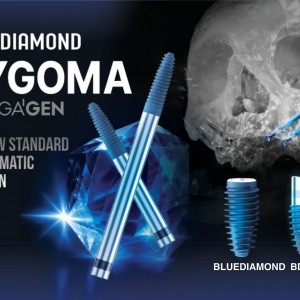
New zygomatic implant system brings MegaGen’s BLUEDIAMOND engineering, XPEED® surface technology, and flexible prosthetic solutions to complex full-arch rehabilitation.
News 21 September 2026

The Aspen Group (TAG), a leading healthcare support organization headquartered in Chicago’s West Loop, today announced two key additions to its marketing leadership team: David Chr
News 21 September 2026

BlancOne® Click+ introduces a simple 10-minute professional teeth-whitening experience designed to integrate into existing hygiene appointments, helping dental practices create new
Editorials 20 September 2026
Dentistry33 survey shows small practices balancing growth, costs and technology modernization
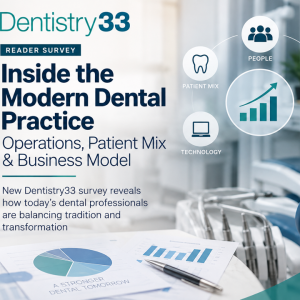
Reader survey finds solo and small practices remain prominent while staffing, rising costs and digital adoption shape business priorities
Reader survey finds solo and small practices remain prominent while staffing, rising costs and digital adoption shape business priorities
News 18 September 2026

Partnership leverages BioHorizons’ commercial network to broaden availability of Xtant’s allogeneic growth factor technology, OsteoFactor Pro™, which BioHorizons will private brand
Read more
Products 24 September 2026
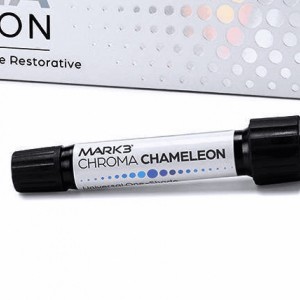
Cargus International recently announced the launch of MARK3® Chroma Chameleon™ One Shade Composite, an advanced universal restorative composite engineered to simplify shade selecti
News 24 September 2026

Trust AI wires VELMENI’s FDA-cleared dental AI directly into Isaac PracticeOS — turning radiographs your practice already took into documented, reviewed, submitted claims.
Editorials 24 September 2026

They studied hard and aced their entrance exams and interviews to gain admission to dental school or the dental hygiene program.
Periodontology 24 September 2026
This peer-reviewed periodontology article summarizes clinical evidence from BMC oral health (2026). It focuses on findings that may help dental professionals evaluate treatment decisions, patient...
Products 23 September 2026
New zygomatic implant system brings MegaGen’s BLUEDIAMOND engineering, XPEED® surface technology, and flexible prosthetic solutions to complex full-arch rehabilitation.



Copyright © 2026 - All Rights Reserved
ISSN 2767-1178