


Zirconia treatment for efficient cementation process
Massimo Gagliani

Crown decementation are the most frequent failures in restorations using zirconia as an infrastructure. Increasing the roughness of the zirconia surface has been suggested to address this problem. The purpose of this systematic review and meta-analysis was to evaluate yttria-stabilized tetragonal zirconia polycrystal surface roughness produced with aluminum oxide airborne-particle abrasion and the erbium yttrium aluminum garnet (YAG), neodymium-doped YAG, or CO2 laser.
MATERIALS AND METHODS
A huge number of papers has been analyzed according the standards of the systematic review and data were extracted from 17 studies. The first analysis of the subgroups was performed using the aluminum oxide airborne-particle abrasion and lasers. The second analysis, methodologies were subgrouped into 4 modalities:
- polished with silicon carbide abrasive papers in the presintered stage and airborne-particle abrasion with aluminum oxide after the sintering process,
- polished with silicon carbide abrasive papers in the presintered stage and airborne-particle abrasion with aluminum oxide after the sintering process,
- polished with silicon carbide abrasive papers in the postsintered stage and airborne-particle abrasion with aluminum oxide after the sintering process,
- no polish and airborne-particle abrasion with aluminum oxide after the sintering process.
RESULTS
The roughness was higher in the experimental groups submitted to surface treatment and the group that used airborne-particle abrasion in the presintered stage presented an effect size of 2.71 as the value of greater surface roughness. Third analysis, the subgroups were examined according to the type of laser The effect size favored the Nd:YAG laser as the highest surface roughness value, 4.15, when compared with the Er:YAG laser, 0.60.
Techniques such as airborne-particle abrasion with aluminum oxide particles (Al2O3) were the most investigated surface treatment. In this systematic review, 94.7% of the airborne-particle abrasion was performed after the sintering process and only 5.3% before the sintering process. Airborne-particle abrasion with aluminum oxide before the sintering process was the most effective method because the presintered zirconia surface is softer.
CONCLUSIONS
Airborne-particle abrasion with aluminum oxide on presintered zirconia is currently the most efficient methodology. Irradiation with the Er:YAG, Nd:YAG, and CO2 la- sers was destructive due to the formation of a melted surface, large cracks, and a carbonized layer with silver pigments. Surface roughness is essential for the retention of dental restorations. These results provide a reference for the most researched and effective surface treatments.
For additional informations:
Evaluation of zirconia surface roughness after aluminum oxide airborne-particle abrasion and the erbium-YAG, neodymium-doped YAG, or CO2 lasers: A systematic review and meta-analysis
 Related articles
Digital Dentistry 25 July 2022
Digital approach to replicate aesthetic and functional parameters in complete implant rehabilitation

Authors: C. Monaco, N. Ragazzini, L. Card, E. Evangelisti
The introduction of digital technologies in implant-prosthetic dentistry has allowed an improvement in the predictability of clinical results, the reduction...
Prosthodontics 23 May 2021
The clinical success of three-unit fixed prosthetic restorations in zirconia with 14-year follow-up

Zirconia (ZrO2) is a high-strength polycrystalline ceramic and is considered a suitable material for single crowns (SC) and fixed multi-unit dental prostheses (FDP), as it tolerates higher occlusal...
Prosthodontics 29 September 2020
Fixed dental prostheses: which is the gold standard material?
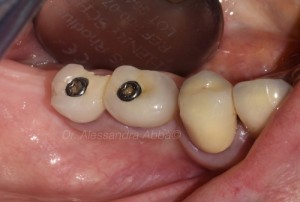
Metal ceramic has always been the golden standard for implant‐supported reconstructions in the past and the most investigated material in literature,...
Prosthodontics 12 February 2020
Which is the best adhesive cementation protocol for glass ceramic restoration?

Dentists must regularly determine the best adhesive cementation protocol for glass-ceramic restorations on posterior teeth. A few in vivo follow-up...
Prosthodontics 23 October 2019
Rehabilitation of endodontically treated molars: is better to choose endocrown or crown with post?

The restoration of endodontically treated teeth is always a topic of crucial attention for dentists. If until a few years ago, the therapeutic choice of...
Read more
Products 25 September 2026
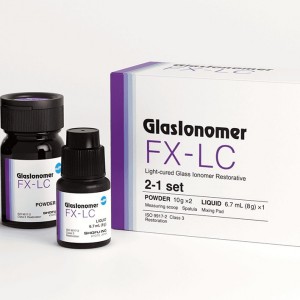
Shofu Dental’s line of dental restorative materials now includes FX-LC, a next-generation, light-cure, resin-reinforced glass ionomer formulated to deliver high strength, efficient 4
News 25 September 2026

The scholarships are part of an ongoing workforce solutions strategy to help address the need for skilled dental hygienists
News 25 September 2026

Michael Riccobene celebrates teamwork, community and more than 25 years of growth as one of sports’ most iconic trophies makes a special stop in Garner.
Editorials 25 September 2026

Oral surgery 25 September 2026
This peer-reviewed oral surgery article summarizes clinical evidence from International journal of oral and maxillofacial surgery (2026). It focuses on findings that may help dental professionals...



Copyright © 2026 - All Rights Reserved
ISSN 2767-1178