


The longevity of occlusal sealants
Lara Figini

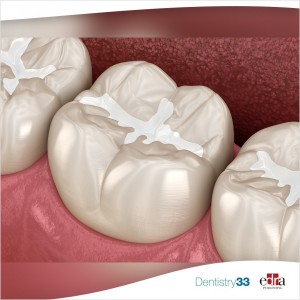
One of the milestones of preventing occlusal caries is the early application of sealants for pits and fissures. There are several types of sealants on the market, from self-curing to photopolymerizing ones, to fluorine-releasing ones. Recently, a new group of primed adhesive sealants have been introduced. These sealants are based on acid functional monomers, which simultaneously bite the enamel and create an adhesive compound on the outer prismatic layer. This approach aims to avoid conventional acid treatment by reducing its application time, resulting in greater patient comfort, a particularly important factor in pediatric dentistry.
Materials and methods
In a systematic review published in Dental Materials in May 2020, the authors compared the retention strength and survival of primed sealants compared to that of conventional sealants. The team performed a literature search via MEDLINE, EMBASE and CENTRAL of all relevant studies and identified 3707 abstracts published before 31/12/2017, of which 335 clinical publications were analyzed in detail. A total of 67 studies included information on sealant retention after 24, 36, or 60 months of follow-up. A meta-analysis was conducted using a random effects model to calculate the pooled estimate of retention rates for the five sealant groups.
Results
Primed sealants showed an estimated 2-year RRE retention rate of 43.2% (95% CI), significantly lower than that of self-curing sealants (80.8%, 95% CI) and that of light-curing sealants (68.4%, 95% CI: 60.2–76.7). Fluorine-releasing sealants and lightweight polymers demonstrated the highest 3-year RREs (86.4%, 95% CI and 83.1%, 95% CI respectively).
Conclusions
From the meta-analysis, researchers concluded that primed sealants cannot yet be fully recommended for clinical practice due to their moderate survival rates.
Auto-polymerizing, light-polymerizing and fluoride-releasing sealants continue to be considered the reference standards for pit and fissure sealants. However, future generations and developments of primed sealant materials may change this position.
Jan Kühnisch et al. "Meta-analysis of the longevity of commonly used pit and fissure sealant materials." Dent Mater. 2020 May;36(5): e158-e168. doi: 10.1016/j.dental.2020.02.001. Epub 2020 Feb 12.
 Related articles
Pediatric dentistry 25 January 2024
Fluoride supplements, gels, varnishes and sealants reduce the risk of juvenile tooth decay

Preventive interventions regarding oral health and in particular dental caries in young people between five and 17 years old, concluding that fluoride gels and supplements, but also fluorinated...
Pediatric dentistry 28 February 2023
CariedAway school-based trial prevented 80% of cavities with non-invasive treatment

A single dose of either of the two topical treatments administered in elementary schools prevented about 80% of cavities and 50% of cavities from worsening.
Market 12 May 2022
The market for dental sealants is expected to reach a value of $11.1 billion in the next decade, according to a report by market research firm, Future Market Insights. The valuation follows a 2022...
Pediatric dentistry 09 October 2026
This peer-reviewed pediatric dentistry article summarizes clinical evidence from BMC oral health (2026). It focuses on findings that may help dental professionals evaluate treatment decisions,...

Roll-out supports parent education, provider communication, and coordinated specialty care at scale
Read more
Products 14 October 2026
Royal Philips (NYSE: PHG, AEX: PHIA) announced that the Philips Sonicare Next-Generation DiamondClean 9900 Prestige, its most advanced and intelligent toothbrush to date, is now av

Key transaction by Heartland Dental and its supported practices expands opportunities for supported doctors, teams, and practices while strengthening Heartland Dental’s supported f
News 14 October 2026
Henry Schein Cares Celebrates 25 Years of Corporate Citizenship
Henry Schein Cares, Henry Schein, Inc.’s global corporate citizenship program, is celebrating a quarter century of bringing together Team Schein Members, customers, supplier partne
Editorials 14 October 2026
Scholarship at the CU Anschutz School of Dental Medicine reflects the collective contributions of our faculty, staff, residents and students.
Oral Hygiene & Prevention 14 October 2026
Propolis-containing formulations in caries prevention - a systematic review and meta-analysis.
This peer-reviewed oral hygiene & prevention article summarizes clinical evidence from Clinical oral investigations (2026). It focuses on findings that may help dental professionals evaluate...


Copyright © 2026 - All Rights Reserved
ISSN 2767-1178