


Esthetic outcomes in orthodontics through digital customization with a lingual appliance system
Background
Contemporary fixed orthodontic appliances are shifting from non-customized pre-adjusted appliances to custom-designed and printed appliances with novel digital setup systems. We are one step closer to precision dentistry and orthodontics using personalized mechanics and custom appliances. However, despite the evidential enhancement and other improvements to fixed appliances, tooth movement is still limited to five degrees of freedom. Opening or closing spaces still requires manually placing elastomeric chains or coil springs.
Aim
In this article, we aimed to demonstrate how advancements in CAD/CAM technology, reverse engineering, and digital customization are helping orthodontics constantly evolve, enabling treatment with enhanced esthetics and minimal compliance. The clinical system (InBrace®, Irvine, CA) described in this article uses a patient-specific, digitally designed multiloop NITI wire that delivers friction-free, light, and continuous forces and activates automatically whenever the malocclusion deviates from the digital setup.
Conclusion
Through digital customization, InBrace allows for automated tooth movement in all six degrees of freedom, including space opening or closure, via programmed non-sliding mechanics.
Clinical Significance
Precision orthodontics and personalized treatment have been significant developments in orthodontics recently. This article focuses on how a technologically advanced lingual appliance system could achieve targeted cosmetic results methodically via automation and personalization.
Authors: Andre Weissheimer, John Pham, Hongsheng Tong, Sercan Akyalcin
Source: https://onlinelibrary.wiley.com/
 Related articles
Orthodontics 21 August 2026
This peer-reviewed orthodontics article summarizes clinical evidence from Dental press journal of orthodontics (2026). It focuses on findings that may help dental professionals evaluate treatment...
Products 07 August 2026
Partnership with Eversmile makes o scillating s ystem available through HSO in the United States.
Orthodontics 07 August 2026
This peer-reviewed orthodontics article summarizes clinical evidence from Dental press journal of orthodontics (2026). It focuses on findings that may help dental professionals evaluate treatment...
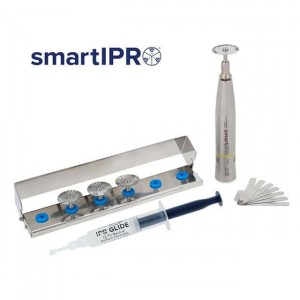
Partnership with Eversmile makes o scillating s ystem available through HSO in the United States.
Orthodontics 25 June 2026
This peer-reviewed orthodontics article summarizes clinical evidence from PloS one (2026). It focuses on findings that may help dental professionals evaluate treatment decisions, patient outcomes, or...
Read more
Products 23 September 2026
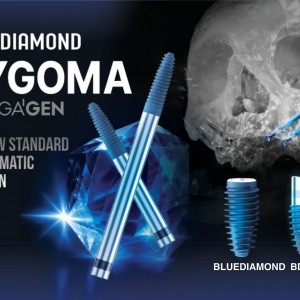
New zygomatic implant system brings MegaGen’s BLUEDIAMOND engineering, XPEED® surface technology, and flexible prosthetic solutions to complex full-arch rehabilitation.
News 23 September 2026
Inaugural GPO Partners include Unified Smiles, the Dentist Entrepreneur Organization (DEO), and Dental Purchasing Partners (DPP)
News 23 September 2026
Growing national network helps patients find local dentists trained to provide oral appliance therapy for obstructive sleep apnea.
Editorials 23 September 2026
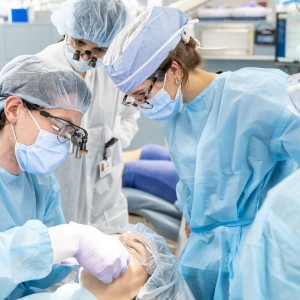
Students recently headed back to class for the current academic year, but Texas A&M College of Dentistry is looking ahead as deadlines approach for the dental Class of 2031 and the
Oral Hygiene & Prevention 23 September 2026
Propolis-containing formulations in caries prevention - a systematic review and meta-analysis.
This peer-reviewed oral hygiene & prevention article summarizes clinical evidence from Clinical oral investigations (2026). It focuses on findings that may help dental professionals evaluate...


Copyright © 2026 - All Rights Reserved
ISSN 2767-1178