


Perception of orthodontic treatment need in children and adolescents
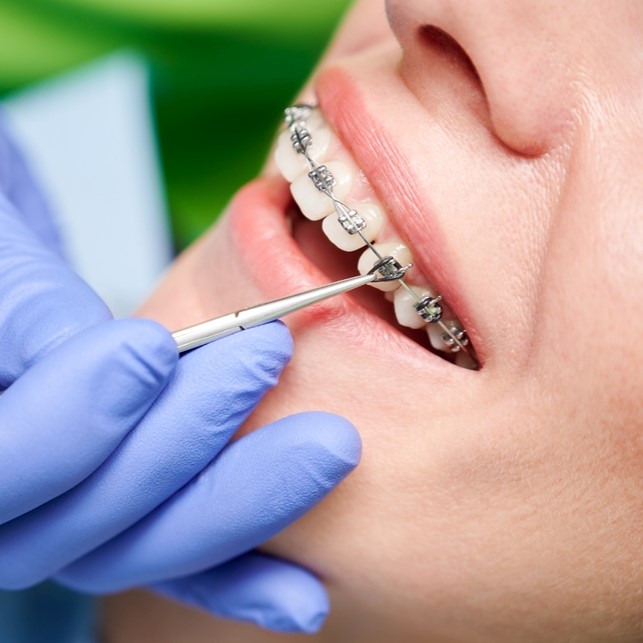
Patients’ and parents’ perception of malocclusion are important in determining orthodontic treatment demand, motivation, and cooperation. The aim of this study was to investigate differences in perception of treatment need in currently orthodontically treated, previously treated, and untreated subjects.
The sample comprised 3196 children and adolescents (1593 males and 1603 females) aged 8–19 years (mean age 13.0 ± 3.6 years) from 24 randomly selected public schools in Zagreb, Croatia. Objective treatment need was assessed clinically using the Dental Aesthetic Index (DAI). Subjective treatment need was estimated separately by an orthodontic resident, the child/adolescent and his/her parent using the Standardized Continuum of Aesthetic Need (SCAN) procedure. The children/adolescents completed a questionnaire that had five questions with five-point Likert-type scale answers concerning satisfaction with dental appearance, importance of teeth for facial appearance, and malocclusion-related quality of life. Spearman correlation and logistic regression were used for statistical analysis.
Associations between objective and subjective orthodontic treatment need were weak but statistically significant (Rho from 0.20 to 0.50; P < 0.05). Malocclusion-related quality of life was poorly associated with treatment need. Satisfaction with tooth appearance showed the most frequent statistically significant correlation (Rho from −0.14 to −0.35; P < 0.05), while importance of aligned teeth for facial appearance and social contacts had the weakest correlation with treatment need. Perception of treatment need was greater in previously treated subjects. Parents’ perception had a low predictive value.
The findings of this study show that malocclusion has more impact on emotional well-being than on function or social contacts.
Authors: Stjepan Spalj , Martina Slaj , Suzana Varga , Mihovil Strujic , Mladen Slaj
Source: https://academic.oup.com/
 Related articles
Amelogenesis imperfecta (AI) is a group of hereditary developmental disorders that affect the structure and clinical appearance of dental enamel, with an estimated prevalence rangi
Editorials 04 November 2025
NIH grant helps ASOD researchers study TMD pain in adolescents

Adams School of Dentistry’s Caroline Sawicki, DDS, PhD, recently received an NIH-NIDCR R03 grant to study personalized treatment for temporomandibular disorder (TMD) pain in adolescents.
Oral Hygiene & Prevention 07 July 2025
The aim was to analyze oral health-related perceptions, attitudes, and behavior in relation to oral hygiene conditions among 19-yr-old Swedish subjects.
Oral Hygiene & Prevention 03 March 2025
Impact of oral hygiene instructions on plaque index in adolescents

The objective of the study, which consisted of a motivational lecture and hands-on training, was to evaluate the role of oral hygiene education for adolescents.

Patients’ and parents’ perception of malocclusion are important in determining orthodontic treatment demand, motivation, and cooperation.
Read more
Products 26 November 2026
Kairos Health Helps Dental Practices Turn Patient Follow-Ups Into Scheduled Appointments

Kairos Health, a Y Combinator-backed company, offers AI voice agents that help dental practices follow up with patients, manage incoming calls, and fill their schedules.
News 26 November 2026
News 26 November 2026

More than 6,000 doctors and team members at Aspen Dental-branded practices cared for veterans on Nov.
Editorials 26 November 2026
Learning Through Service: The Impact of UCSF Dentistry's Community Externships
For more than 20 years, the UCSF School of Dentistry has sent predoctoral students to community clinics across the Bay Area and beyond through its Community-Based Clinical Educatio
Periodontology 26 November 2026
This peer-reviewed periodontology article summarizes clinical evidence from Journal of clinical periodontology (2026). It focuses on findings that may help dental professionals evaluate treatment...


Copyright © 2026 - All Rights Reserved
ISSN 2767-1178