


Effects of distalization directions, methods on maxillary total distalization with clear aligners
Davide Elsido

As clear aligner technology has made dramatic progress in recent years, its use has become more practical even in mild-to-severe malocclusion cases. The key to nonextraction treatment of Class II malocclusion is maxillary molar distalization. As previously reported, CAT can provide molar distalization with high accuracy through sequential movement. In a study by Ravera et al., CAT was found to produce 2.25 mm of maxillary first molar distalization using Class II elastics and attachments without mesiodistal tipping of the molar.
To analyze the effects of maxillary tooth distalization by clear aligner (CA) treatment with variations in the angular direction of the distalization force, presence of attachments, and force application method used, a study with finite element model was published in January 2023 in The Angle Orthodontist.
A finite element model containing alveolar bone, dentition and periodontal ligament was constructed.
Analytical model groups were as follows: (1) distalization with buttons (without attachments), (2) buttons on canines (with attachments), (3) precision cuts on the canines (without attachments), and (4) precision cuts on the canines (with attachments). A distalization force of 1.5 N was applied to the button or precision cut at different degrees to the occlusal plane.
Results: As the direction of force approached +30°, the dentition inclined posteriorly. The posterior movement pattern was significantly influenced by the presence of an attachment and the direction of force, rather than the area where the force was applied. Distal inclination was dramatically reduced with attachments. A disengagement or deformation of the CA may reduce the distalization efficiency of the dentition or move the dentition in an inappropriate direction.
Conclusions: Attachments for efficient distalization by the CA are necessary. The use of mini screws in the direction of force parallel to the occlusal plane is more advantageous than the use of Class II elastics. Due to CA deformation, distalization with the button on the canines can be more effective for distal movement of the maxillary dentition.
Kyoung-Ho Kwak; Sewoong Oh; Youn-Kyung Choi; Sung-Hun Kim; Seong-Sik Kim; Soo-Byung Park; Yong-Il Kim. “Effects of different distalization directions and methods on maxillary total distalization with clear aligners: a finite element study.” Angle Orthod. 31 January 2023. DOI: 10.2319/072622-519.1
 Related articles
Products 07 April 2026
PreatLoc Overdenture Attachments Integrate Seamlessly With Existing Workflows
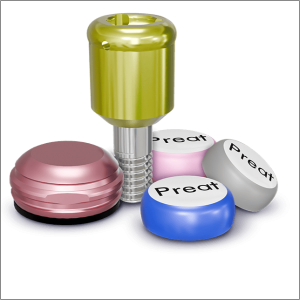
Backed by 45+ years of Preat expertise, PreatLoc overdenture attachments deliver reliable performance and long-lasting smiles.
Restorative dentistry 19 June 2024
.jpg)
This study aimed to determine the influence of coating material thickness on the attraction force of dental magnetic attachment (DMA).
Periodontology 27 April 2022
Inter-examiner concordance in periodontal clinical parameters measurements
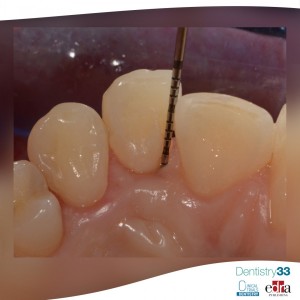
Authors: Stefano Corbella, Flavio Grimolizzi, Beatrice Zotti, Alice Alberti, Luca Francetti
The term “periodontal disease” define a group of problems affecting the tissues surrounding the tooth, which induce gingival bleeding and retraction of soft tis- sues and may result in bone loss...

As life expectancy continues, an increase in periodontal disease is also expected. In old patients, the concept of shortened or reduced dental arch (SDA) could offer options for solving these...

Ankyloglossia (ankylos – curved/tied; glossa – tongue), also known as tongue-tie, is an embryological anatomical malformation of the tongue, characterized by an abnormally short and thick lingual...
Read more
Europe 27 September 2026 - 30 November -0001
Digital Dentistry Society Global Congress 2026: Event Preview and Professional Highlights

The Digital Dentistry Society Global Congress 2026 will take place from October 22, 2026 to October 24, 2026 in TBD, Rotating Europe, offering dental professionals a focused environment for...
Editorials 27 September 2026
Dentistry33 survey highlights replacement care, deep caries and evolving restorative workflows
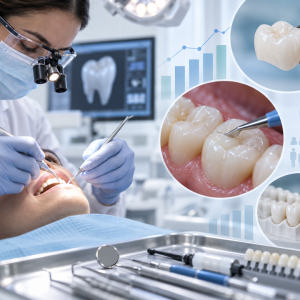
Reader survey finds direct composites remain dominant, secondary caries is the leading reason for restoration replacement, and clinicians want more training in pulp preservation
Reader survey finds direct composites remain dominant, secondary caries is the leading reason for restoration replacement, and clinicians want more training in pulp preservation
Edra Professional Books 26 September 2026
Manual of oral surgery: A Practical Reference for Dental Professionals
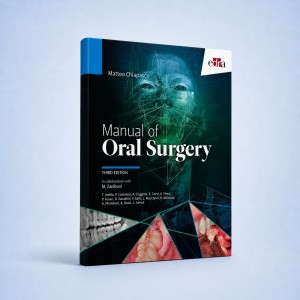
Manual of oral surgery is an Edra professional dentistry reference focused on clinical practice, education and treatment planning.
Products 25 September 2026
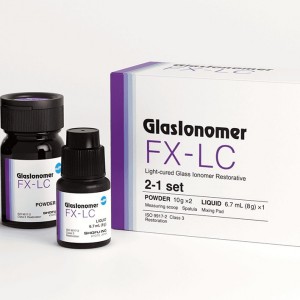
Shofu Dental’s line of dental restorative materials now includes FX-LC, a next-generation, light-cure, resin-reinforced glass ionomer formulated to deliver high strength, efficient 4
News 25 September 2026

The scholarships are part of an ongoing workforce solutions strategy to help address the need for skilled dental hygienists



Copyright © 2026 - All Rights Reserved
ISSN 2767-1178