


Canines included: different treatments compared
Lara Figini
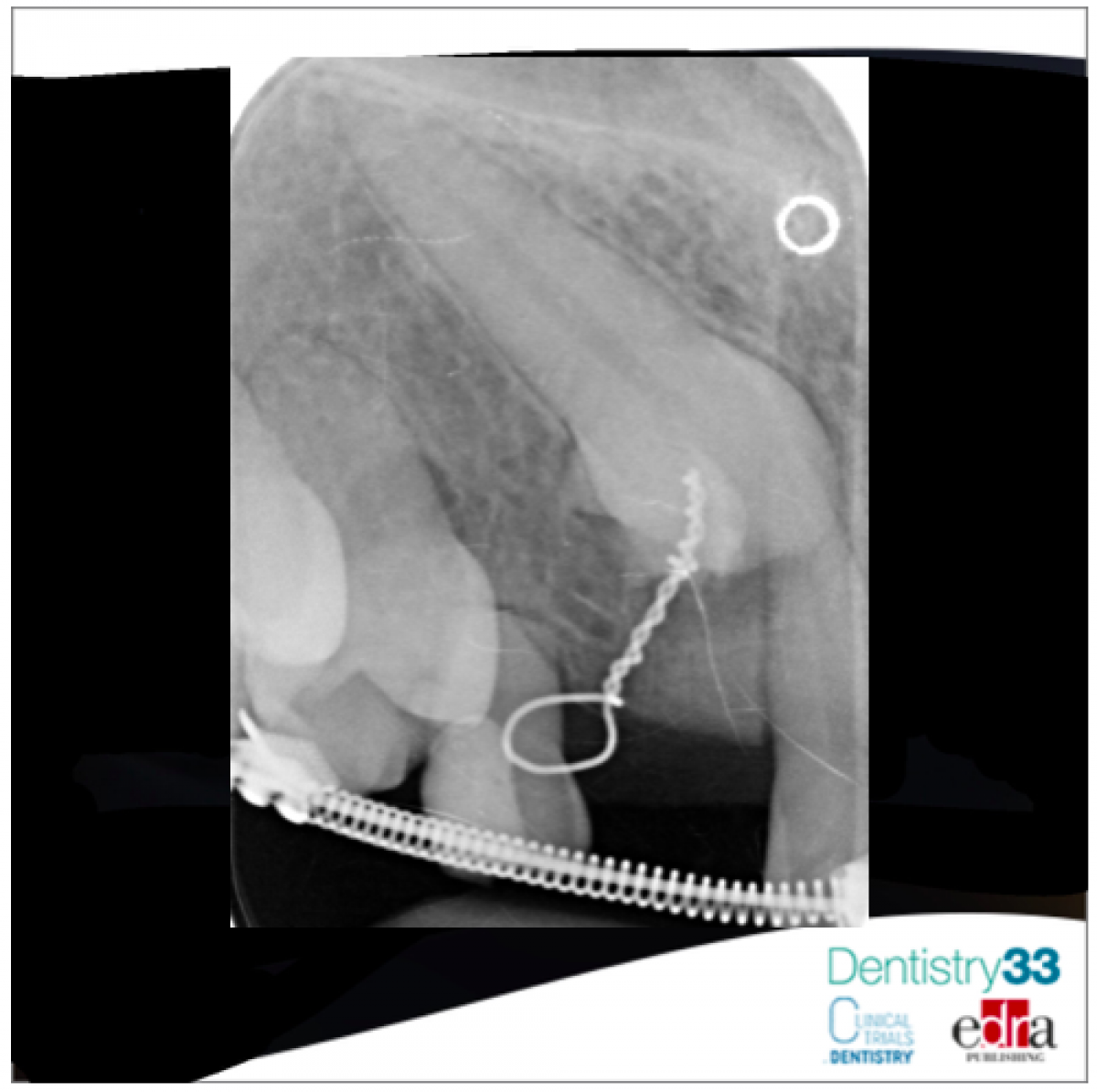
Canines are an important component of the aesthetics of a smile, and their abnormalities involving the morphology, position or absence of these teeth can negatively affect the patient's self-esteem. Impacted canines can produce adverse adverse effects such as resorption of adjacent incisors and development of cysts. The incidence of canines included in the white population is between 1% and 3.5% and they represent the second most commonly included permanent teeth after third molars. Treatment of impacted canines aims to achieve correct alignment in the dental arch without unfavorable sequelae for the canine itself, adjacent teeth and periodontal tissues. Diagnosis and treatment of severely impacted canines is often multidisciplinary, with orthodontic and surgical components. Treatment modalities for ectopically positioned canines include clinical observation, interceptive treatment, orthodontic extrusion, transalveolar transplant (surgical straightening of the tooth included) and canine extraction.
Materials and Methods
In a retrospective study, published in JADA in November 2021, the authors compared the different treatment methods and their results for the included maxillary and mandibular canines. The authors included 102 patients with 118 included canines (82 maxillary and 36 mandibular canines). The impacted canines were confirmed by clinical and radiological examinations. Eighty-five patients (83%) with 97 included canines started treatment. The authors analyzed the various types of treatment and the results. Extractions of two maxillary and 4 mandibular canines were planned.
Results
A total of 102 patients with 118 included canines (82 maxillary, 36 mandibular) were examined. Of the included maxillary canines, 65 (79.3%) were impacted palatally, 8 (9.8%) buccally, and 9 (10.9%) centrally in the alveolar processes. Among the included mandibular canines, 24 (66.7%) were impacted at the labial level, 5 (13.9%) at the lingual level and 7 (19.4%) at the central level in the alveoli. The diagnosis of impacted canine was confirmed during clinical examination and on radiographs (panoramic, CBCT) in all patients. Seventeen patients who attended a consultation did not continue any treatment. The following treatment options were chosen after clinical and radiographic analysis:
- interceptive treatment including the extraction of a primary canine and an opening of the orthodontic space with fixed appliances
- orthodontic extrusion
- transalveolar transplant
- canine extraction.
Orthodontic extrusion, after surgical exposure, was found to be the most frequently performed treatment for impacted maxillary canines. It was also chosen to extrude one third of the impacted mandibular canines. Several orthodontic traction techniques were selected. 72% of the impacted maxillary canines were extruded using a TPB transpalatal bar. Fixed traction devices were used in 21.5% of the extruded maxillary canines and all mandibular canines, which underwent orthodontic extrusion after surgical exposure. Transalveolar autotransplantation (9 canines) and orthodontic traction (8 canines) were the most frequently chosen treatment methods in patients with included mandibular canines. In all patients, the canines were aligned after surgery with fixed appliances. Canine extraction was planned in 6 patients (3 females, 3 males) 2 maxillary and 4 mandibular. Treatment was successful for 87 canines (96%) in 79 patients. Spontaneous canine rash was successful in all cases. Opening the orthodontic space for spontaneous canine eruption was performed only for buccally included maxillary and lingually included mandibular canines. Orthodontic extrusion failed in 3 patients with 3 impacted maxillary canines (4.6% of all included maxillary canines) in palatally included canines, which were extruded using a TPB. A canine was extracted and replaced with a dental implant; another was extracted and the space was orthodontically closed; and the third remained in its initial position in the palate with the presence of a retained primary canine. Transalveolar transplantation was performed only for included mandibular canines with developing roots, with an 89% success rate.
Conclusions
From the data from this study, which need to be confirmed in other similar studies, it can be concluded that there are different treatment methods for the included maxillary and mandibular canines and their overall success rate is high.
(Photocredit: Dr. Filippo Semprini Cesari)
For additional information: Comparisons of different treatment methods and their outcomes for impacted maxillary and mandibular canines. A retrospective study
 Related articles
Oral surgery 15 October 2026
This peer-reviewed oral surgery article summarizes clinical evidence from International journal of oral and maxillofacial surgery (2026). It focuses on findings that may help dental professionals...
Oral surgery 07 October 2026
This peer-reviewed oral surgery article summarizes clinical evidence from International journal of oral and maxillofacial surgery (2026). It focuses on findings that may help dental professionals...
Oral surgery 25 September 2026
This peer-reviewed oral surgery article summarizes clinical evidence from International journal of oral and maxillofacial surgery (2026). It focuses on findings that may help dental professionals...
Oral surgery 18 September 2026
This peer-reviewed oral surgery article summarizes clinical evidence from International journal of oral and maxillofacial surgery (2025). It focuses on findings that may help dental professionals...
Oral surgery 11 September 2026

This peer-reviewed oral surgery article summarizes clinical evidence from International journal of oral and maxillofacial surgery (2026). It focuses on findings that may help dental professionals...
Read more

Continuous innovation across the DEXIS ecosystem helps clinicians work with greater clarity, confidence, and efficiency
News 23 October 2026
CrownPoint Partners announced the successful closing of a $9.2 million, five-property dental sale-leaseback portfolio located throughout Michigan.
News 23 October 2026
Dentsply Sirona, Midwest Dental Expand Technology Relationship

Beginning November 1, Dentsply Sirona will expand its long-standing relationship with Midwest Dental Equipment & Supply beyond consumables to include its complete technology portfo
Editorials 23 October 2026
Honoring Excellence: Graduation Awards for CU Anschutz Dental Students and Faculty

As the University of Colorado Anschutz School of Dental Medicine celebrates the graduating DDS Class of 2025, we are proud to recognize the students and faculty members whose excep
Implantology 23 October 2026
This peer-reviewed implantology article summarizes clinical evidence from Clinical oral implants research (2026). It focuses on findings that may help dental professionals evaluate treatment...



Copyright © 2026 - All Rights Reserved
ISSN 2767-1178