


Oral Chronic Mucositis in a Known Lichen Planus Pigmentosus Patient
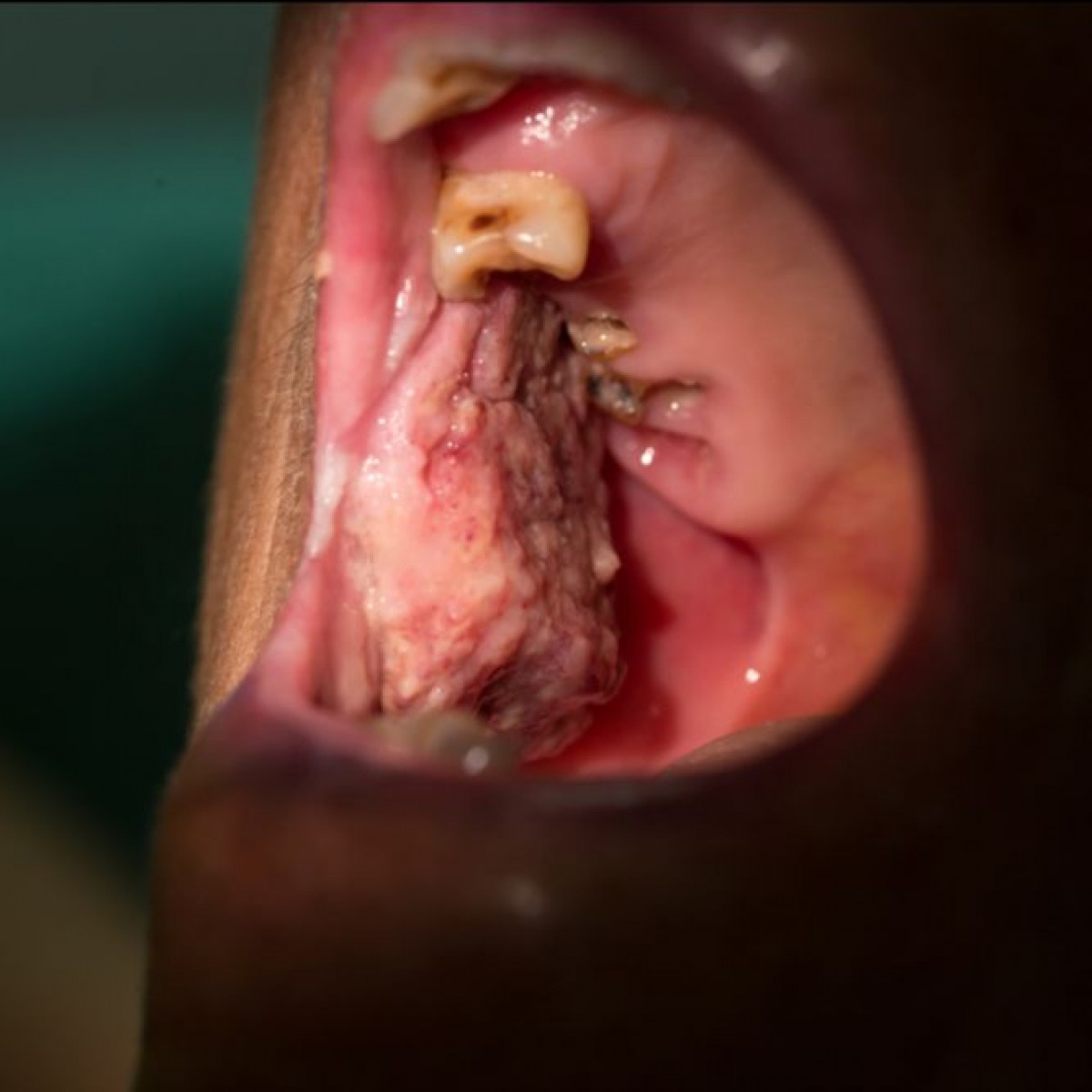
Oral manifestations of mucocutaneous inflammatory diseases such as lichenoid dermatoses often affect the patient’s quality of life through the symptoms of pain and burning sensation. In this case report, a patient with known lichen planus pigmentosus (LPP), a variant of lichenoid dermatoses that rarely affect oral mucosa, presented with chronic pain in the oral cavity for 2 months. Her intraoral examination revealed multiple pseudomembranous ulcers with erythematous areas and white striae similar to erosive lichen planus.
The histological assessment revealed chronic mucositis, while the direct immunofluorescent examination showed negative results, contradicting the diagnosis of both lichen planus and LPP. Thus, the diagnosis was given as chronic mucositis, and the topical steroid was given. After 6 weeks of steroid application, the lesion resolved. To the best of our knowledge, this is the first report of chronic mucositis in LPP patients. This report could raise the awareness of clinicians to carefully take history as the patient with LPP may suffer from chronic mucositis in the oral cavity as well.
Introduction
Lichen planus pigmentosus (LPP), a rare subvariant of lichenoid dermatoses, is a group of mucocutaneous inflammatory diseases of unknown etiology consisting of lichen planus (LP), which is the most common, and lichen planopilaris. This idiopathic inflammatory condition of the skin is characterized by chronic-acquired dark brown to gray macular pigmentation at sun-exposed areas of the face and neck and sun-protected flexural skin in dark-skinned middle-aged patients which rarely involves oral mucosa. Although the etiology and pathogenesis are still unclear, it has been discovered that some of them are associated with the hepatitis C virus and other variants of LP. Affected patients may suffer from emotional stress due to the manifestation of the lesion in an aesthetic area and the chronic nature of the disease, which impact their quality of life.
This case report details the presentation of a 70-year-old female patient initially diagnosed with oral lichen planus (OLP), alongside LPP as her known underlying condition. However, an incisional biopsy yielded findings indicative of chronic mucositis instead. One week later, without any treatment, the lesions improved, and then, with the aid of a topical steroid supplement, the lesions eventually resolved.
Authors: Dalad Pinchaleaw, Pirawish Limlawan
Source: https://onlinelibrary.wiley.com/
 Related articles
Nearly half the world’s population is affected by oral disease—and the number of cases is rising.
Oral surgery 15 October 2026
This peer-reviewed oral surgery article summarizes clinical evidence from International journal of oral and maxillofacial surgery (2026). It focuses on findings that may help dental professionals...
Oral Hygiene & Prevention 14 October 2026
Propolis-containing formulations in caries prevention - a systematic review and meta-analysis.
This peer-reviewed oral hygiene & prevention article summarizes clinical evidence from Clinical oral investigations (2026). It focuses on findings that may help dental professionals evaluate...
Oral pathology 13 October 2026
This peer-reviewed oral pathology article summarizes clinical evidence from Oral oncology (2026). It focuses on findings that may help dental professionals evaluate treatment decisions, patient...
Products 09 October 2026

Oral-B and Crest, Official Oral Care Partners of the NFL, recently announced the launch of new special-edition products, giving fans even more ways to celebrate their love of the g
Read more
Products 15 October 2026
The belief in the healing power of light goes all the way back to ancient Egypt and the worship of Rah, the sun god.
Nearly half the world’s population is affected by oral disease—and the number of cases is rising.
News 15 October 2026

New office at 3170 R Street adds walk-in availability and same-day care options in a region where dental providers are in short supply

Each year, the University of Colorado Anschutz School of Dental Medicine (SDM) Excellence Awards recognize individuals whose dedication, leadership and innovation strengthen our mi
Oral surgery 15 October 2026
This peer-reviewed oral surgery article summarizes clinical evidence from International journal of oral and maxillofacial surgery (2026). It focuses on findings that may help dental professionals...



Copyright © 2026 - All Rights Reserved
ISSN 2767-1178