


OSA Wellness Scale: A new quality of life test in obstructive sleep apnea patients

The OSA Well-being Scale (OWS) is a questionnaire created to quantify the state of the malaise of the apneic patient with a mathematical number. It is a quick and easy-to-understand tool aimed at all social classes for screening and final post-therapy control, to be combined with the Epworth scale, medical history, and polysomnography or cardio-respiratory monitoring to try to obtain a broader view of the impact of OSA pathology on the malaise of the apneic patient as this may present absence of symptoms ( OSA patient) or, conversely, be symptomatic (OSAS patient), regardless of the number of apneas and hypopneas (AHI) present, which however determine their clinical severity.
Obstructive sleep apnea (OSA) is a respiratory disease characterized by repeated episodes of upper airway collapse and obstruction during sleep associated with awakening from sleep, with or without oxygen desaturation. The obstruction can be complete (apnea) or partial (hypopnea) during sleep. The consequences of OSA are linked to two important aspects: the modification of the quality of sleep time and the alteration of respiratory gaseous exchanges.
Continuous nocturnal awakenings alter the physiological sleep cycle, modifying sleep quality, daytime life, and health-related quality of life. Nocturnal awakenings also generate unsettling and unrefreshing sleep, which causes daytime sleepiness, head and neck pain, loss of concentration, anxiety or depression, weakness, and nocturnal bruxism.
Untreated obstructive sleep apnea (OSA) requires medical intervention and is related to impaired work performance and workplace injuries. The economic burden associated with untreated OSA is highly significant. The economic impact of untreated OSA patients is related to the limitation of work performance, the increase in the number of occupational accidents, road accidents, and frequent hospitalizations for cardiovascular diseases (stroke and heart attack). OSA is comparable to other chronic diseases, and it is very difficult to describe its economic effects exactly, but patients with OSA are estimated to cause a substantial economic burden on society (see focus on Dentistry33).
OSAs are associated with general increased respiratory effort, the presence of intermittent hypoxia, increased systemic blood pressure, and sleep disturbances. Most affected individuals are undiagnosed. Factors that increase susceptibility to the disorder include age, male gender, menopause, obesity, craniofacial abnormalities, family history, and health behaviors such as cigarette smoking and use of l 'alcohol.
Patients with OSA can present with several typical symptoms, including chronic snoring (often destructive to the sleeping partner), feeling unrefreshed upon awakening, excessive daytime sleepiness (EDS), psychological disturbances, and cognitive and emotional disturbances which may also give rise to conflicts with family and social. Perceived health-related quality of life is impaired and disturbed by obstructed breathing that occurs during sleep.
Patients with OSA often report poor quality human resources in social, emotional, and physical terms. We can have overlapping symptoms such as fatigue, loss of interest, decreased libido, and poor concentration.
OSA represents a chronic inflammatory pathology; consequently, the patient, over time, tends to get used to the general malaise that this pathology entails. The patient himself struggles to identify it as the main cause of the malaise because it is a nocturnal pathology that allows sleep as a number of hours of sleep but does not allow rest as there is a continuous fragmentation of sleep itself associated with intermittent hypoxia. This leads to a profound malaise and discomfort that is difficult to explain to everyone, including the partner. The patient tends to blame other external causes, such as heavy dinner, seasons, age, worries, etc... The clinician will have to try to interpret, which is always not easy, whether the discomfort is caused by the OSA pathology or not, such as depression in postmenopausal women. It will be up to the Clinician to make an objective general diagnostic evaluation with the help and use of all the aforementioned tools; the OWS scale is one of them.
The OSA Well-being Scale (OWS) questionnaire is an 8-item self-assessment questionnaire developed to assess the level of the general malaise of the OSA patient. The questionnaire takes into consideration various situations of daily life, and for each of them, the subject must establish a vote, the sum of which quantifies the degree of malaise of the issue himself. It is a self-administered test and returns the result on a numerical scale from 0 to 24: it is generally accepted that a score > 5 is indicative of the presence of a probable state of malaise. It was decided to apply the same number of questions and the same numerical scale of the Epworth Scale (a scale that is applied worldwide to quantify the level of daytime sleepiness present) in order to have a direct and immediate numerical comparison of the state of malaise and of excessive daytime sleepiness (EDS) on the same patient.
This need is due to the fact that sleepiness is indeed a cardinal sign of OSA, but it is not present in all apneic patients. The heterogeneous team composed of Dentists and Otolaryngologists experts in Sleeping Medicine has made possible the recognition, verification, development, and procedures to be able to arrive at the international publication of the OSA Wellness Scale (OWS).
 Related articles
News 30 June 2026

Programs added in five specialties: dental assistant, diagnostic medical sonography, pharmacy technician, radiologic technology, and surgical technology.
Implantology 18 February 2026
Correlation between thyroid hormones and peri-implantitis: state of the art

Today, implant restorations are the gold standard treatment for edentulous patients. However, short and long-term complications can also occur.
Editorials 13 January 2026
Pitt’s New Digital Dentistry Labs to Provide State-of-the-Art Education and Patient Care
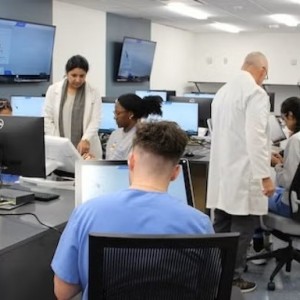
Three new dentistry labs at the University of Pittsburgh School of Dental Medicine will give students and residents hands-on experience with cutting edge digital dental technology while providing...
Digital Dentistry 29 August 2025
Digital dentistry: The new state of the art — Is it disruptive or destructive?

Summarizing the new state of the art of digital dentistry, opens exploration of the type and extent of innovations and technological advances that have impacted – and improved – dentistry.
Editorials 08 August 2025

Read more
Products 15 October 2026
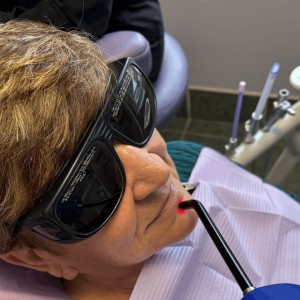
The belief in the healing power of light goes all the way back to ancient Egypt and the worship of Rah, the sun god.
Nearly half the world’s population is affected by oral disease—and the number of cases is rising.
News 15 October 2026

New office at 3170 R Street adds walk-in availability and same-day care options in a region where dental providers are in short supply

Each year, the University of Colorado Anschutz School of Dental Medicine (SDM) Excellence Awards recognize individuals whose dedication, leadership and innovation strengthen our mi
Oral surgery 15 October 2026
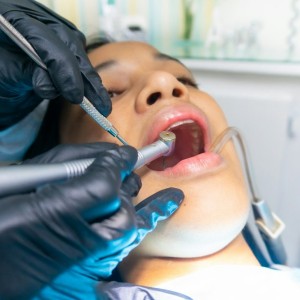
This peer-reviewed oral surgery article summarizes clinical evidence from International journal of oral and maxillofacial surgery (2026). It focuses on findings that may help dental professionals...



Copyright © 2026 - All Rights Reserved
ISSN 2767-1178