


Correlation between using remineralization agents, bleaching efficacy
Lara Figini
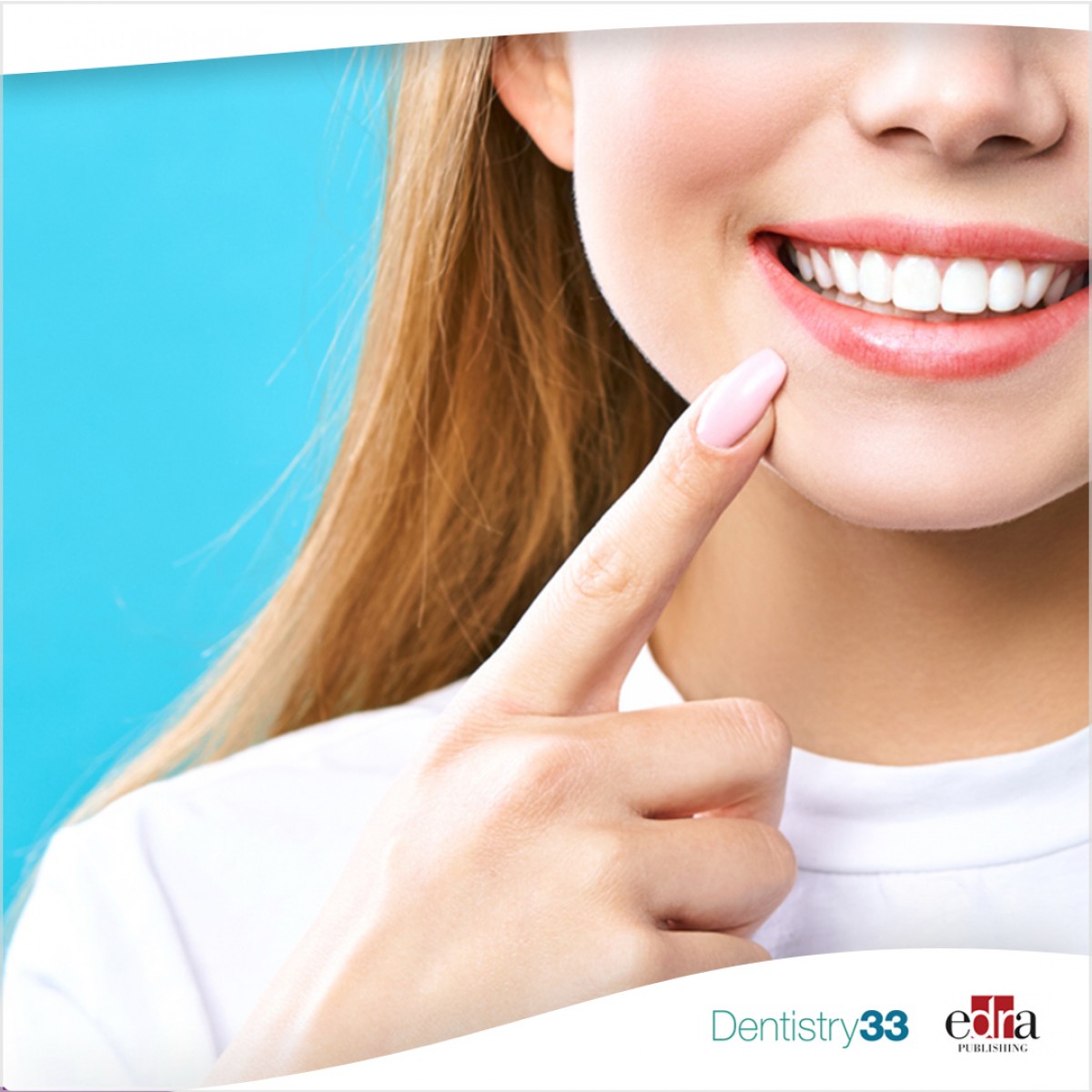
Traditional whitening procedures that involve the supervision of a dentist include home whitening, professional office whitening and a combination of both techniques.
In the outpatient technique, hydrogen peroxide is almost always used as a bleaching agent, in concentrations typically between 30% and 40%.
The effectiveness of the bleaching process is influenced by many factors, in particular by the concentration of the agent, the pH value, the application time, the activation by light and heat and the presence of a catalyst.
However, whitening processes, especially when applied with high concentrations of active ingredients, raise concerns as they can cause microstructural changes in tooth enamel by influencing the physicochemical properties of dental tissue.
Literature studies have shown that bleaching leads to changes in the mineral content of the enamel, causes an increase in the porosity of the enamel surface and a decrease in the elastic modulus, fracture toughness, abrasion resistance and microhardness of the enamel.
Materials and methods
In a study published in the European Journal of Oral Science in December 2022, the authors evaluated the effect of additional application of remineralization agents on whitening efficacy, enamel mineral changes and post-whitening color stability.
A total of 112 dentin-enamel blocks were prepared from bovine teeth.
After the first color measurements, the following types of treatment were performed:
- Group 1, negative control (no treatment)
- Group 2, positive control (bleach only: 37.5% hydrogen peroxide)
- Group 3, bleaching followed by application of 2% sodium fluoride NaF and xylitol
- Group 4, application of a mix of bleaching agent + NaF
- Group 5, bleaching followed by application of CPP-ACPF amorphous calcium-casein phosphopeptide-calcium phosphate fluoride paste
- Group 6, application of a mix of whitening agent + CPP-ACPF
- Group 7, whitening followed by application of nHAP+F fluoride nanohydroxyapatite paste
- Group 8, application of a mix of whitening agent + nHAP+F.
Researchers repeated color measurements after immersion in distilled water for seven days and again after staining with coffee solution for 14 days.
The CIELAB-based whiteness index was used to evaluate whiteness and the CIEDE2000 color difference formula was employed to evaluate color stability.
The chemical investigation was performed using scanning electron microscopy with energy dispersive spectroscopy and X-ray diffraction analysis.
Results
The experimental groups showed significant increases in whitening compared to the negative control. Staining after bleaching did not result in statistically significant differences between the various groups.
Energy dispersive spectroscopic analysis revealed that bleaching protocols had no impact on baseline levels as well as Ca/P ratio.
The combined use of bleaching agents with remineralization agents did not affect the bleaching efficacy and did not provide an additional contribution.
Conclusions
From the data of this study, researchers concluded that the application of remineralization agents such as fluoride, CPP-ACPF and nHAP after in-office whitening or mixing them in the whitening gel does not compromise the whitening efficacy, but it also makes no further contribution to the mineral content of the glaze or to the color stability.
For additional information on this study: The impact of remineralization agents on dental bleaching efficacy and mineral loss in bleached enamel.
 Related articles
Restorative dentistry 23 August 2023
Effects of in-office bleaching agents on nanofilled resin composite

This study investigates the effects of in-office bleaching agents on the color change and surface roughness of nanofilled resin composite finished by various polishing procedures.

By Lorenzo Breschi and Annamaria Forte
Although the use of direct resin-based composite restorations is broad and can provide reliable and esthetic results, the higher mechanical properties and color stability of CAD/CAM restorations have...
Restorative dentistry 30 December 2022

Researchers evaluated the effect of pre-heating on wear and color stability of high-viscosity bulk-fill resin composites vs. conventional resin composites.
This study answered the research question “Is the risk of tooth sensitivity lower when calcium-containing bioactive desensitizers are used with dental bleaching in adults compared with...
Oral Hygiene & Prevention 21 March 2022
Short-time home whitening systems compared to traditional systems
Originally home whitening techniques used a low concentration 10% carbamide peroxide (CP) gel in custom masks (CT) worn overnight (6-8 h). Subsequently, the manufacturing companies have developed...
Read more

Jen Kim Field, chief sustainability officer at Henry Schein and president of the Henry Schein Cares Foundation, answers questions for Dentistry Today about the group’s achievements
News 12 October 2026
The education-first program offered learning for the entire dental practice, with practical insights spanning the full patient journey and focused on improving workflows, collabora
News 12 October 2026

AAO and Stand for the Silent Unite Communities This Month to Shine a Light on Bullying Prevention
Editorials 12 October 2026
Expanded coverage: Texas A&M’s Plemons named 2026 Texas Dentist of the Year

Sometimes a small act of generosity can make a tremendous impression, especially on a 7-year-old.
Endodontics 12 October 2026
This peer-reviewed endodontics article summarizes clinical evidence from Journal of dentistry (2026). It focuses on findings that may help dental professionals evaluate treatment decisions, patient...



Copyright © 2026 - All Rights Reserved
ISSN 2767-1178