


Is robotic implant surgery precise enough?
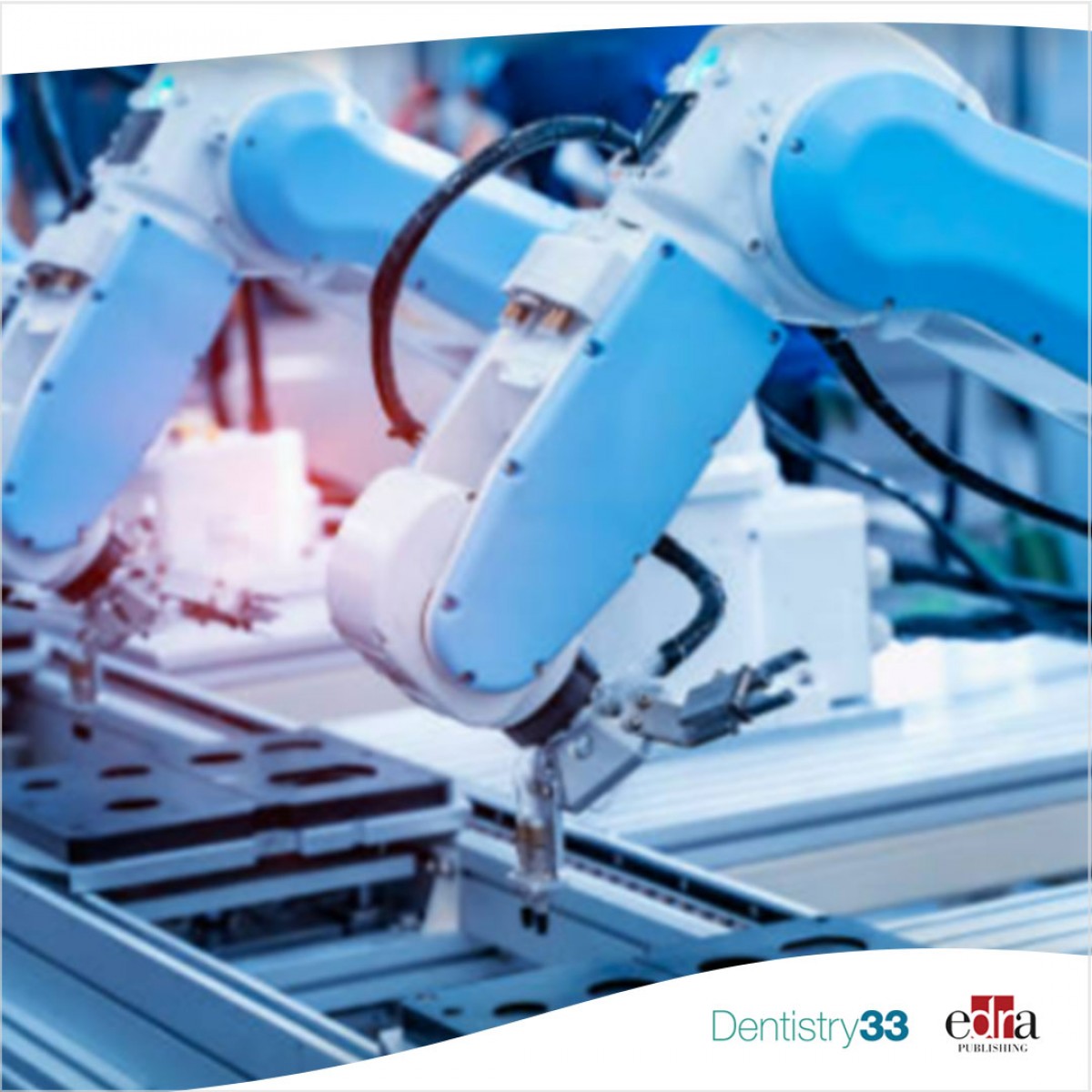
Computer-assisted robotic implant surgery (r-CAIS) has emerged very recently as a new digital technology in oral and maxillofacial surgery. It combines the benefits of real-time feedback and precise operational manipulation.
This technology involves a tactile guiding robot and a semi-active robotic assistance system, consisting of an operating arm and a coordinate measuring machine arm that provides visual guidance and tactile feedback during movement. In the robotic system, the dental surgeon has considerable control. For example, the surgeon indicates where an implant should be placed, and the robotic system autonomously performs the osteotomy task while the surgeon supervises and intervenes as necessary.
Materials and methods
In a clinical study published online in February 2023 in the Journal of Dentistry, the authors investigated the accuracy of computer-assisted robotic autonomous implant surgery (r-CAIS) for single-tooth implant placement.
The researchers enrolled patients with only one missing tooth for autonomous robotic implant surgery. Patients underwent cone beam computed tomography (CBCT) with marker placement. Before surgery, virtual preoperative implant placement and a drilling plan were created.
The autonomous robotic system included an operating system, a robotic arm, an optical tracking system and a positioning indicator. The robotic system automatically performed the osteotomy for implant placement and intraoperative positioning under the supervision of the surgeon. A postoperative CBCT scan was performed to assess deviations between the planned and placed implants.
Results
The team enrolled 10 patients with a single dental implant. They did not report adverse surgical events or postoperative complications (e.g., infection and early implant failure).
Robotic autonomous implant surgery showed an overall mean coronal deviation of 0.74 mm (95% CI: 0.53 to 0.94 mm), an overall mean apical deviation of 0.73 mm (95% CI: 0.53 to 0.93 mm) and an angular deviation of 1.11◦ (95% CI: 0.78 to 1.44◦), respectively.
Conclusions
From the data in this study, the researchers concluded that computer-assisted autonomous robotic implant surgery has high precision for placing single implants by controlling angular deviation and axial errors.
Clinical significance
The main findings of this study provide significant evidence to support the autonomous robotic implant surgery system as a potential alternative in dental implant surgery.
This article originally appeared on Odontolgia33.
Shuo Yang, Jiahao Chen, An Li, Ke Deng, Ping Li, Shulan Xu, "Accuracy of autonomous robotic surgery for single-tooth implant placement: A case series," Journal of Dentistry, Volume 132, February 2023, 104451, ISSN 0300-5712, https://doi.org/10.1016/j.jdent.2023.104451.
 Related articles
Editorials 27 September 2026
Dentistry33 survey highlights replacement care, deep caries and evolving restorative workflows
Reader survey finds direct composites remain dominant, secondary caries is the leading reason for restoration replacement, and clinicians want more training in pulp preservation
Reader survey finds direct composites remain dominant, secondary caries is the leading reason for restoration replacement, and clinicians want more training in pulp preservation
Editorials 20 September 2026
Dentistry33 survey shows small practices balancing growth, costs and technology modernization
Reader survey finds solo and small practices remain prominent while staffing, rising costs and digital adoption shape business priorities
Reader survey finds solo and small practices remain prominent while staffing, rising costs and digital adoption shape business priorities
Digital Dentistry 20 April 2026
To report a fully digital and guided immediate-load All-on-4 protocol conducted in Brazil on a 59-year-old male patient with an edentulous maxilla and a history of oropharyngeal cancer surgery,...
Digital Dentistry 03 April 2026
The purpose of this review is to provide the readers with current information and state-of-the-art of digital scanning systems within the orthodontics.
Digital Dentistry 16 February 2026
An original procedure for the ovoid pontic technique in ortho-restorative cases

In the multidisciplinary treatments, especially in case of missing teeth in aesthetic area, the compliance of patient during retention time post orthodontic therapy is evidently very high, even among...
Read more
Products 15 October 2026
The belief in the healing power of light goes all the way back to ancient Egypt and the worship of Rah, the sun god.

Nearly half the world’s population is affected by oral disease—and the number of cases is rising.
News 15 October 2026

New office at 3170 R Street adds walk-in availability and same-day care options in a region where dental providers are in short supply

Each year, the University of Colorado Anschutz School of Dental Medicine (SDM) Excellence Awards recognize individuals whose dedication, leadership and innovation strengthen our mi
Oral surgery 15 October 2026
This peer-reviewed oral surgery article summarizes clinical evidence from International journal of oral and maxillofacial surgery (2026). It focuses on findings that may help dental professionals...


Copyright © 2026 - All Rights Reserved
ISSN 2767-1178